
AeroGenie — Il tuo copilota intelligente.

Tendenze
Categories
GE Aerospace commits €110 million to expand European operations
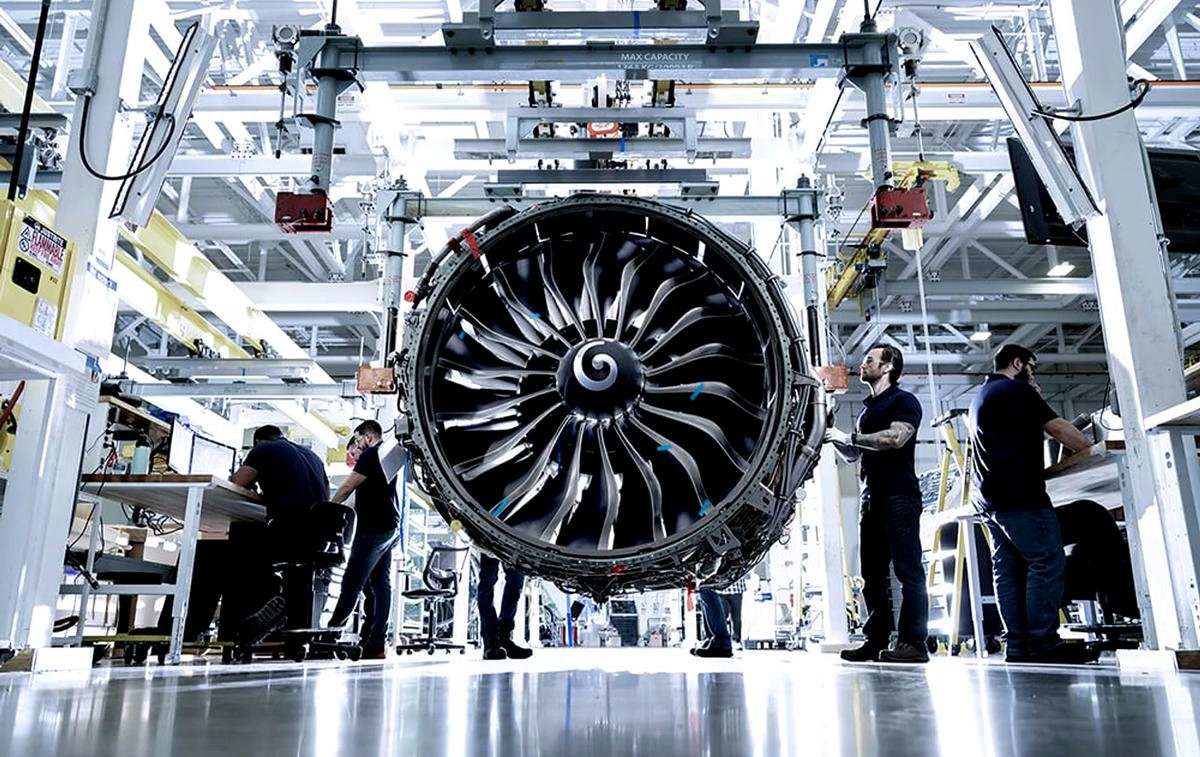
GE Aerospace Commits €110 Million to Expand European Operations
GE Aerospace has unveiled a significant investment plan exceeding €110 million to enhance its manufacturing capabilities across Europe in 2024. This strategic initiative is designed to increase production capacity, accelerate the adoption of advanced manufacturing technologies, and improve delivery performance for its diverse customer base. Central to this expansion is the recruitment of over 1,000 new employees by 2026, underscoring the company’s dedication to strengthening its regional footprint and maintaining technological leadership in the aerospace sector.
Investment Allocation and Technological Enhancements
The bulk of the investment will be directed towards the development of cutting-edge engine test cells, advanced machining equipment, additive manufacturing facilities, and comprehensive infrastructure upgrades. These enhancements will support a wide array of engine programs, including commercial narrowbody and widebody engines, as well as military fighter jet and helicopter engines.
The €110 million will be distributed among five European countries, each receiving targeted funding to bolster specific capabilities. Italy will receive the largest share, €77 million, aimed at expanding advanced manufacturing and testing infrastructure, including new and upgraded test cells, machining equipment, and additive manufacturing technologies to support both commercial and defense engine programs. Poland is allocated €15 million to enhance grinding and machining equipment, welding and inspection tooling, alongside facility improvements. The Czech Republic will see an €8 million investment focused on precision machining, grinding systems, quality inspection technologies, assembly tooling, and infrastructure upgrades. The United Kingdom is set to receive €10 million for the modernization of test and manufacturing equipment, expansion of electronics and component production, and facility enhancements. Romania will benefit from a €3 million investment dedicated to metal-cutting machines, tooling, fixtures, and building upgrades.
In addition to manufacturing investments, GE Aerospace plans to allocate approximately €40 million this year to its European maintenance, repair, and overhaul (MRO) and component repair facilities. This forms part of a broader global commitment of US$1 billion to enhance MRO capabilities worldwide.
Challenges and Workforce Development Initiatives
While the expansion presents significant growth opportunities, GE Aerospace must navigate a complex landscape of regulatory and logistical challenges across multiple countries. Integrating a rapidly growing workforce and ensuring supply chain resilience amid intensifying global competition will be critical to sustaining the company’s market position and technological advantage in Europe.
The aerospace sector is expected to witness heightened competition as rival firms may respond with increased investments in their European operations, potentially intensifying the race for market share and innovation.
To address the persistent shortage of skilled labor in high-technology industries, GE Aerospace is investing heavily in workforce development. The company plans to recruit new talent while supporting existing manufacturing personnel and future engineers through comprehensive training programs and educational grants. In the United Kingdom and Italy, these initiatives are projected to benefit over 800 students this year through partnerships with vocational schools. Meanwhile, in Poland, the expansion of the ‘Next Engineers’ program in Warsaw aims to engage more than 4,000 students, thereby strengthening the pipeline of skilled workers essential for the company’s long-term growth.
Through this multifaceted investment strategy, GE Aerospace seeks to reinforce its manufacturing infrastructure, cultivate workforce capabilities, and adeptly navigate the evolving dynamics of the European aerospace industry.
LEVEL Suspends San Francisco Flights Due to Engine Shortage
China Conducts First Flight Test of Megawatt Hydrogen Turboprop Engine

Oklahoma’s Aerospace Industry Expands and Its Impact on the State Economy

Archer Aviation Confronts Setbacks Amid Declining Air Taxi Interest

FAA and EASA Mandates to Influence Flight Line Testing Equipment Market Through 2035
Willis Lease Operates as a Leveraged Spread Business with Moderate Returns

Chinese Team Develops First Flight Control Software for Bamboo Drones
Government Moves Forward with Boeing Purchase, Considers Airbus Leasing
SkyHope Appoints Aviation Industry Leader to Board
The Challenges of Certifying Autonomous Aircraft
