
AeroGenie — Il tuo copilota intelligente.

Tendenze
Categories
Dubai Plans to Launch Commercial Air Taxi Services by Year-End
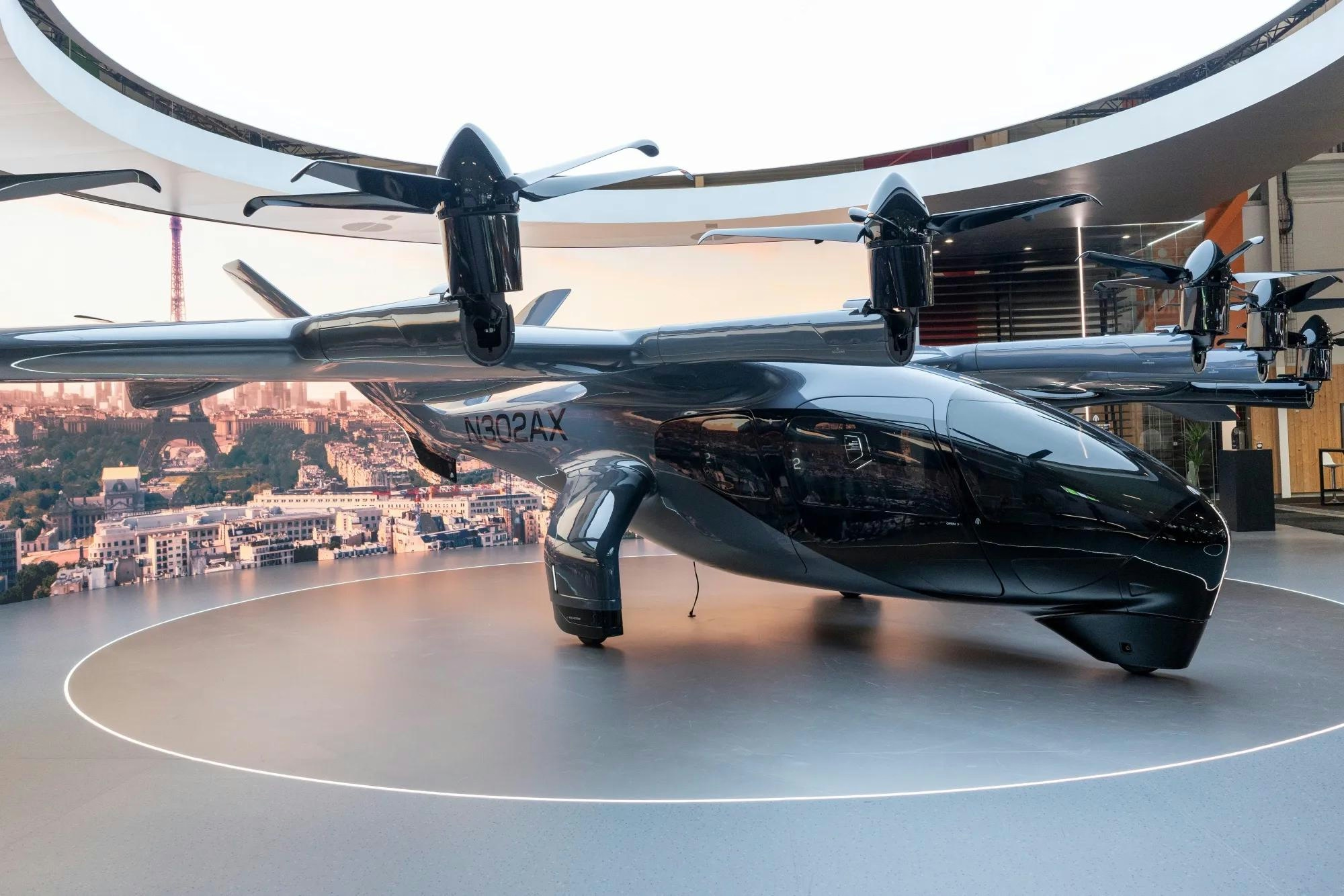
Dubai to Launch Commercial Air Taxi Services by Year-End
Dubai is set to introduce commercial air taxi services before the close of 2026, according to the emirate’s Roads and Transport Authority (RTA). Mattar Al Tayer, RTA Director General and Chairman, announced that electric air taxis developed by U.S.-based Joby Aviation will soon begin carrying passengers, marking a significant step in the city’s transportation evolution.
Advancing Urban Mobility with Electric Air Taxis
The new air taxis aim to provide a faster alternative to road travel, particularly during peak traffic hours. Journeys that currently take up to 45 minutes by car could be reduced to approximately 10 minutes by air. These fully electric aircraft produce zero operational emissions and are designed for quiet operation in densely populated urban environments. Each vehicle accommodates a pilot and up to four passengers, with a maximum range of 160 kilometers (100 miles) and speeds reaching 320 km/h (200 mph) on a single charge.
To facilitate the service, the RTA is developing several dedicated “vertiports.” The first vertiport will be located near Dubai International Airport, with additional sites planned in strategic locations such as Downtown Dubai, Dubai Marina, and Palm Jumeirah. The air taxi service will be integrated into Dubai’s existing public transport network, enabling passengers to book flights through digital platforms. While pricing has not yet been disclosed, officials have indicated that the service will be positioned as a premium transport option.
Challenges and Industry Context
Despite the ambitious timeline, the rollout faces several challenges. Regulatory approval remains a critical hurdle, as authorities work to ensure the safety and compliance of the new aircraft with aviation standards. Technological readiness is another concern, requiring reliable battery performance, robust infrastructure, and seamless integration with current transport systems. Market acceptance will also be essential, as residents and visitors adjust to this novel mode of urban mobility.
Dubai’s initiative comes amid rapid global advancements in electric vertical takeoff and landing (eVTOL) technology. Competitors such as Archer Aviation are making significant progress, forming strategic partnerships and accelerating research and development to establish themselves in this emerging market. The traditional aviation sector has responded with a mixture of skepticism and interest, closely monitoring regulatory developments and consumer demand.
As Dubai positions itself at the forefront of urban air mobility, the success of its commercial air taxi program may influence the development and adoption of similar projects worldwide.
Chinese Team Develops First Flight Control Software for Bamboo Drones
SkyHope Appoints Aviation Industry Leader to Board
The Challenges of Certifying Autonomous Aircraft
KLM to Receive First Airbus A350, Announces Initial Routes
Saxon Air Receives Clean and Green Energy Innovation Award
How BEB Tax Policies Impact Airlines’ International Leasing Contracts

Indonesia’s Danantara and Mandiri Partner with SMBC to Launch $800 Million Aviation Leasing Fund
South Korea’s SUM Air Places Order for New ATR Aircraft
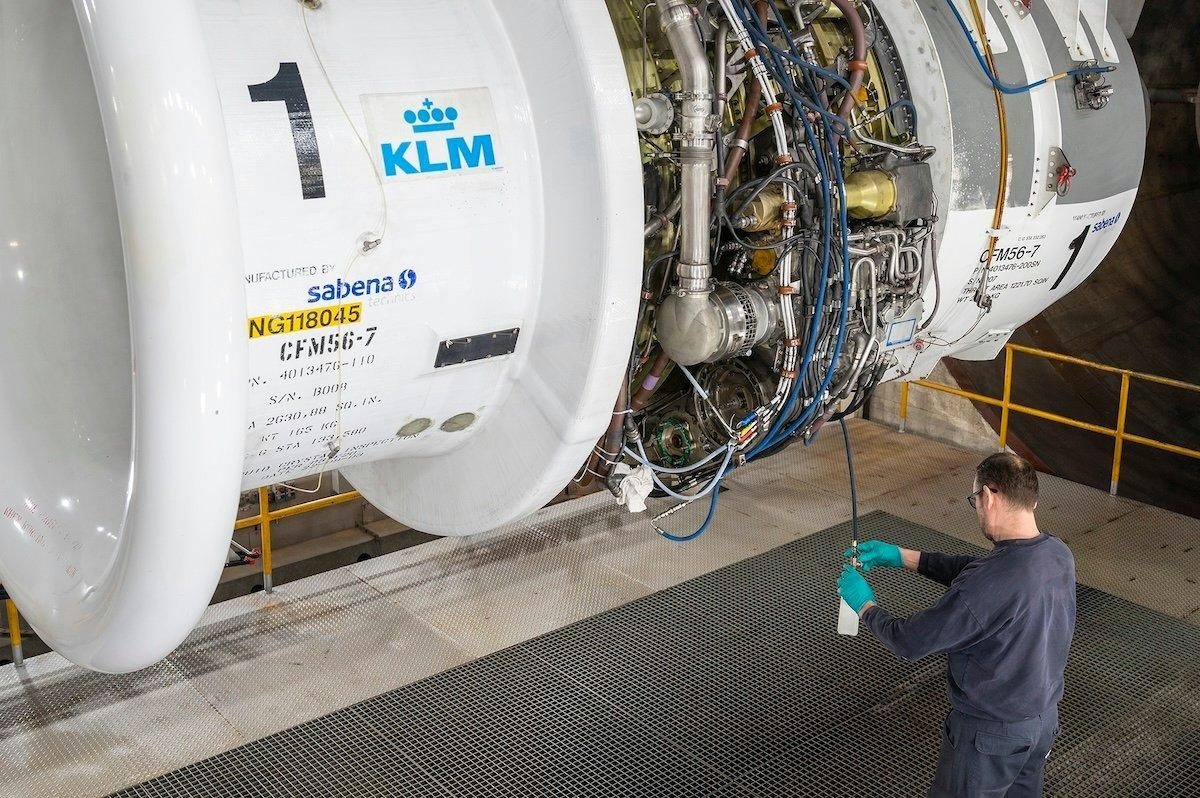
Benoît Rollier Named Vice President of KLM Engine Service
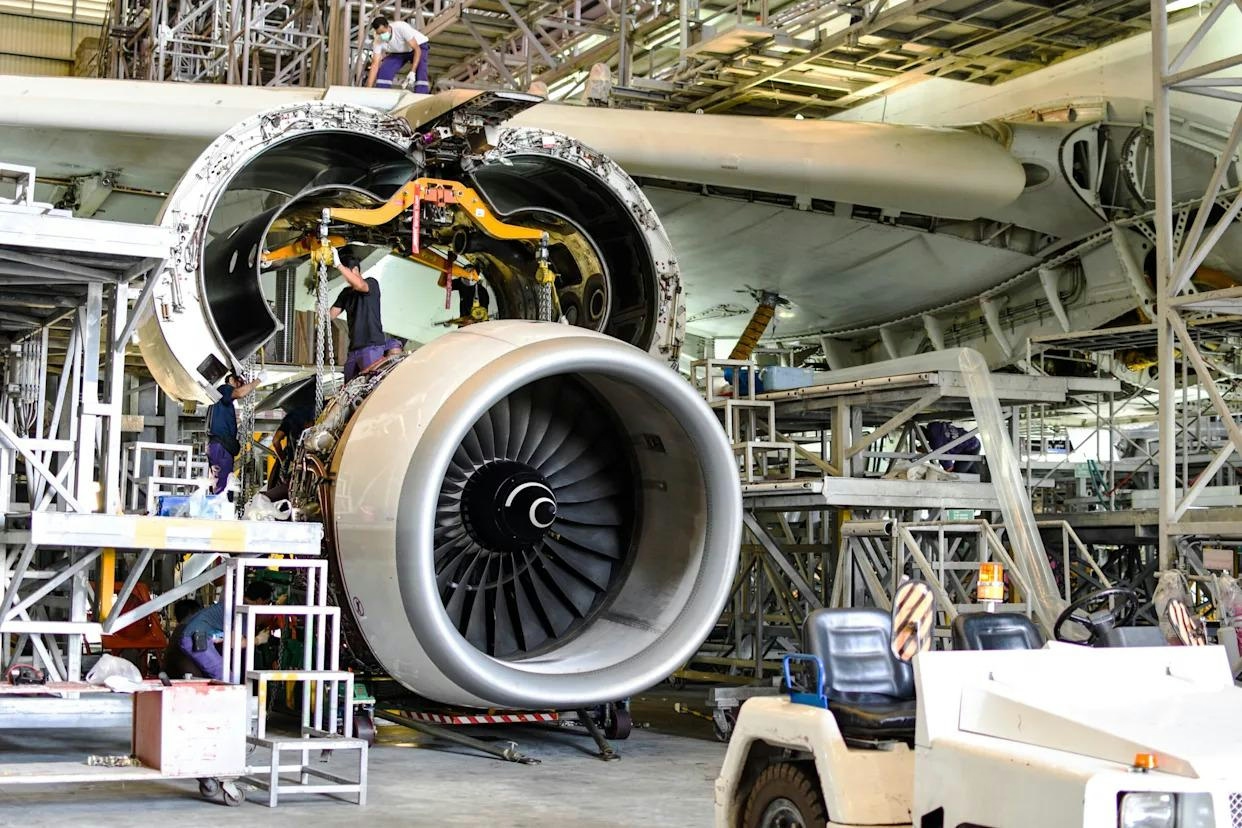
Azorra Expands Engine Portfolio Through Deal with DAE
