
AeroGenie — Il tuo copilota intelligente.

Tendenze
Categories
Could AI Cause a Jet Engine Shortage Similar to the Chip Crisis?
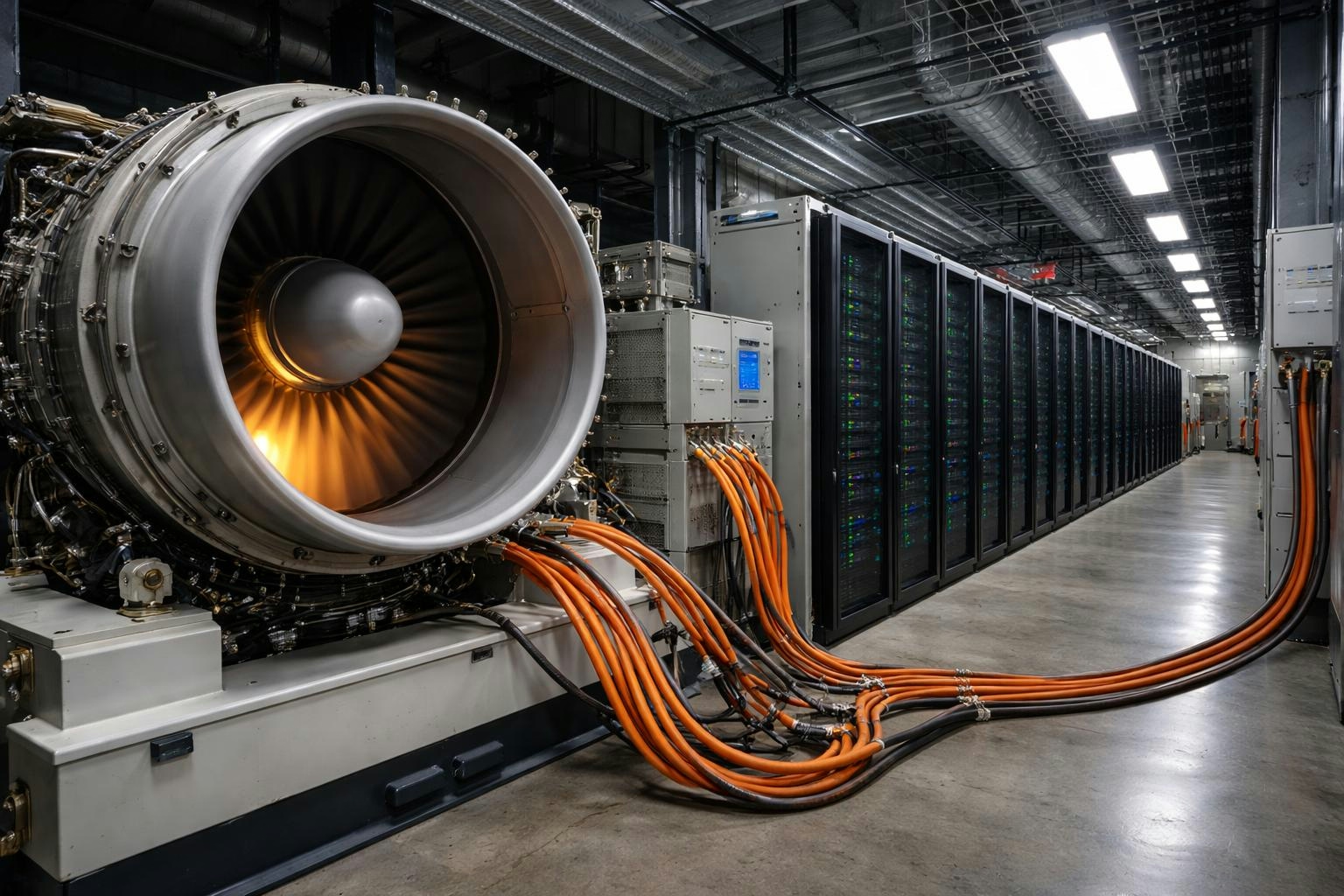
Could AI Cause a Jet Engine Shortage Similar to the Chip Crisis?
The rapid expansion of artificial intelligence is generating significant ripple effects across various industries, often in unforeseen ways. The surge in AI data centers has already placed considerable strain on the supply of DRAM and hard disk storage, resulting in shortages and price increases for memory chips commonly used in personal computers and smartphones. As AI’s energy consumption escalates, attention is now shifting to another critical component: jet engines.
Jet Engines Powering AI Data Centers
To satisfy the immense power requirements of AI infrastructure, some companies are increasingly turning to jet engines—specifically aeroderivative gas turbines—to generate electricity for data centers. Crusoe Energy recently announced a $1.25 billion agreement to acquire twenty-nine 42-megawatt turbines from Boom Supersonic, intended to support projects such as OpenAI’s Stargate. Similarly, Elon Musk’s xAI has purchased a power plant in Mississippi, equipping it with 18 methane gas turbines to fuel its AI operations. These developments underscore a growing trend in which jet engines, traditionally associated with aviation, are being repurposed to power the digital backbone of artificial intelligence.
Assessing the Risk of a Jet Engine Shortage
The memory chip crisis serves as a cautionary example. As manufacturers redirected production capacity to meet AI-driven demand, shortages in consumer electronics followed, causing market disruptions and soaring prices. This raises the question of whether a comparable shortage could occur in the jet engine market.
Industry analysts suggest that while rising demand from AI data centers may place pressure on the jet engine supply chain, a crisis on the scale of the semiconductor shortage is unlikely in the near term. Ross Maxwell, Global Strategy Operations Lead at VT Markets, explains that aeroderivative gas turbines share a specialized supply chain with aircraft engines, but production remains primarily focused on aviation due to higher profit margins. He notes, “Production capacity is limited and prioritized for aviation aftermarket support, where margins are highest.”
Maxwell further cautions that a surge in turbine orders for data centers could extend multi-year order backlogs rather than cause immediate shortages, given that these turbines are produced in relatively low volumes and sold on a project basis. Maintenance also presents a potential bottleneck; if AI power demand grows rapidly, constraints may shift from the availability of new units to service intervals and spare parts supply.
Amit Goel, Co-Founder and Chief Global Strategist at Pace 360, concurs with this assessment, highlighting the oligopolistic and high-value nature of the jet engine industry. He states, “I don't foresee a shortage of jet engines at all,” suggesting that the sector’s structure and profitability render it resilient to sudden demand shocks.
Market and Industry Implications
The memory chip shortage has already compelled manufacturers to reconsider production priorities, explore alternative suppliers, and invest in new technologies to mitigate future disruptions. Should AI-driven demand for jet engines intensify, similar strategies may emerge within the aviation and energy sectors. Market responses could include increased prices for turbines and related components, alongside a reassessment of AI infrastructure investments by companies cautious of supply chain vulnerabilities.
At present, while the AI boom is reshaping supply chains and prompting novel applications for jet engines, experts believe the industry is better equipped to absorb these pressures than the memory chip market was. Nonetheless, as AI’s energy demands continue to rise, sustained vigilance will be crucial to prevent a recurrence of the challenges witnessed during the recent chip crisis.
LEVEL Suspends San Francisco Flights Due to Engine Shortage
China Conducts First Flight Test of Megawatt Hydrogen Turboprop Engine

Oklahoma’s Aerospace Industry Expands and Its Impact on the State Economy
Archer Aviation Confronts Setbacks Amid Declining Air Taxi Interest

FAA and EASA Mandates to Influence Flight Line Testing Equipment Market Through 2035
Willis Lease Operates as a Leveraged Spread Business with Moderate Returns
Chinese Team Develops First Flight Control Software for Bamboo Drones
Government Moves Forward with Boeing Purchase, Considers Airbus Leasing
SkyHope Appoints Aviation Industry Leader to Board
The Challenges of Certifying Autonomous Aircraft
