
AeroGenie — Il tuo copilota intelligente.

Tendenze
Categories
Challenges Ahead for China's Flying Taxi Launch
Challenges Ahead for China's Flying Taxi Launch
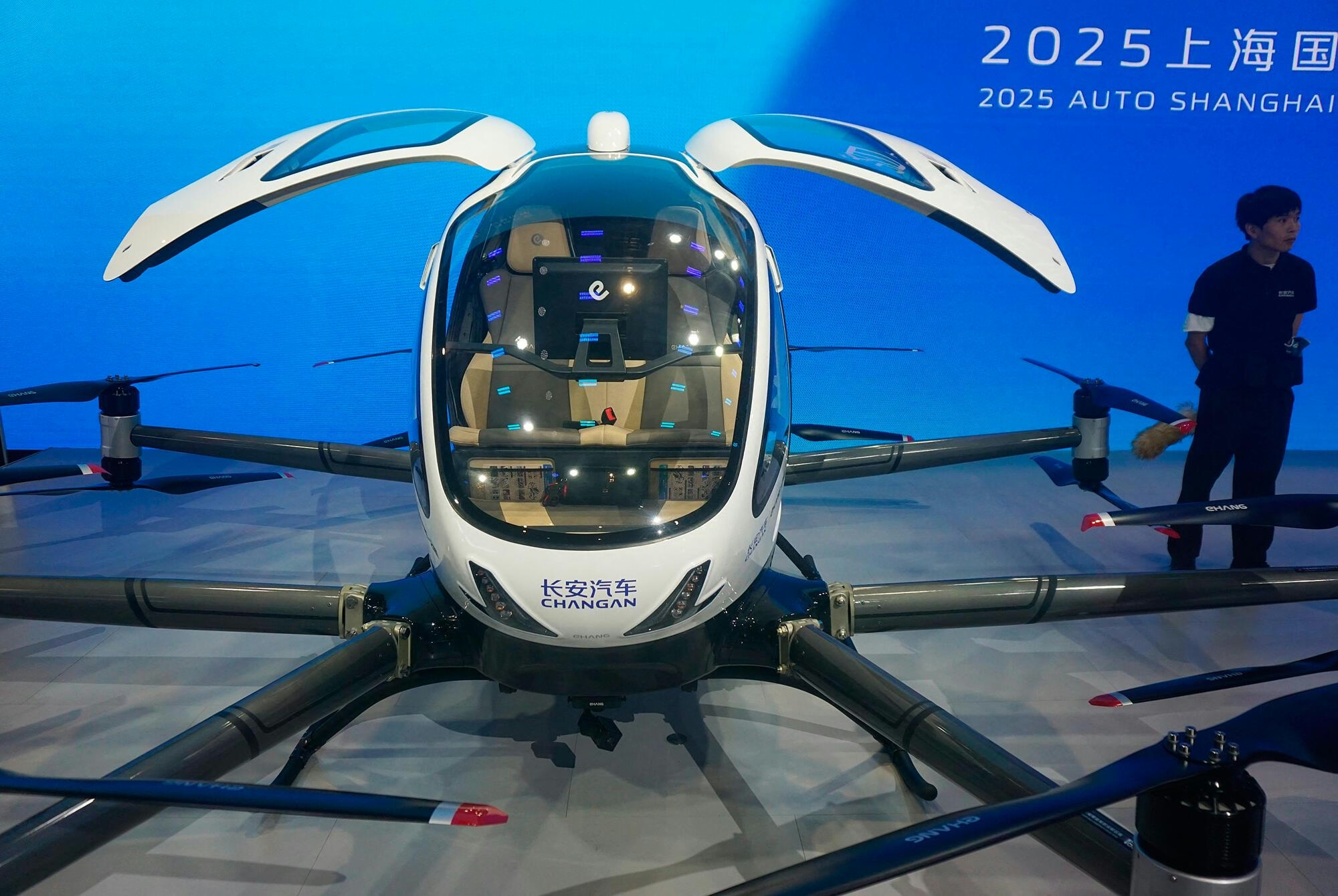
China is intensifying efforts to introduce low-flying vehicles and drones as part of its broader strategy to stimulate economic innovation. In southern cities such as Shenzhen, flying taxis—once the realm of science fiction—are now undergoing testing. These pilotless, oval-shaped crafts hover above urban landscapes, resembling miniature helicopters. Meanwhile, food-delivery drones have already become a familiar sight in Shenzhen, a city adjacent to Hong Kong, signaling the country’s growing reliance on autonomous aerial technology.
Regulatory and Technological Obstacles
Despite these advancements, the deployment of flying taxis faces considerable challenges. Regulatory approval remains a significant barrier, as authorities grapple with ensuring the safety and effective oversight of autonomous aerial vehicles. The development of reliable navigation systems and overcoming battery limitations present additional technological hurdles that complicate efforts to scale up operations.
Public and market responses to flying taxis have been varied. While some experts view the technology as a potential game-changer for urban transportation, others remain cautious about its practicality and safety. Concerns persist regarding the risk of mid-air collisions, the establishment of emergency response protocols, and the integration of flying taxis into already congested airspace.
Intensifying Global Competition
The competitive environment for flying taxis is becoming increasingly global. International companies such as Uber are advancing autonomous taxi initiatives in cities like San Francisco. At the same time, Tesla and Chinese automaker Xpeng are promoting their own concepts of flying cars. Brazilian aerospace manufacturer Embraer is also a key player, developing its Eve eVTOL (electric vertical takeoff and landing) aircraft with plans for a 2027 launch, emphasizing safety and affordability.
As Chinese firms continue to conduct pilot programs and public demonstrations, the future of flying taxis hinges on overcoming regulatory, technological, and societal acceptance challenges. The coming years will be pivotal in determining whether these futuristic vehicles can transition from experimental flights to routine urban transportation.
Chinese Team Develops First Flight Control Software for Bamboo Drones
SkyHope Appoints Aviation Industry Leader to Board
The Challenges of Certifying Autonomous Aircraft
KLM to Receive First Airbus A350, Announces Initial Routes
Saxon Air Receives Clean and Green Energy Innovation Award
How BEB Tax Policies Impact Airlines’ International Leasing Contracts

Indonesia’s Danantara and Mandiri Partner with SMBC to Launch $800 Million Aviation Leasing Fund

South Korea’s SUM Air Places Order for New ATR Aircraft
Benoît Rollier Named Vice President of KLM Engine Service
Azorra Expands Engine Portfolio Through Deal with DAE
