
AeroGenie — Il tuo copilota intelligente.

Tendenze
Categories
Archer Moves to Dismiss Joby Trade Secrets Lawsuit

Archer Seeks Dismissal of Joby Trade Secrets Lawsuit Amid Intensifying eVTOL Competition
Archer Aviation has formally requested a federal judge to dismiss a trade secrets lawsuit filed by its competitor, Joby Aviation. The lawsuit, which alleges misuse of proprietary information, is described by Archer as baseless and a strategic effort to hinder competition within the rapidly developing electric vertical take-off and landing (eVTOL) industry.
Background of the Legal Dispute
Joby initiated legal action last month in California state court, accusing Archer of misappropriating confidential information allegedly taken by George Kivork, a former Joby employee who joined Archer. The case was subsequently transferred to the US District Court for the Northern District of California. On January 23, Archer submitted a motion to dismiss, characterizing Joby’s claims as “opaque” and “legally insufficient.” Archer contends that the lawsuit relies on speculation rather than substantive evidence.
In its filing, Archer stated, “This lawsuit … rests on speculation and innuendo rather than plausible factual allegations,” further describing the suit as a “transparent attempt to slow its most-formidable competitor – Archer – who is repeatedly winning the race to commercialise air taxis across the world.” A hearing on the motion is scheduled for March 24 before Judge Susan van Keulen. Joby has not issued a public response to requests for comment.
Competitive Context and Allegations
The dispute arises amid an intense race between the two California-based companies to secure regulatory approvals and investor confidence for their eVTOL air taxis. Joby has made significant strides in operational planning and certification efforts, intensifying competitive pressures and prompting Archer to accelerate its own development initiatives.
Central to the lawsuit are allegations that Kivork, who formerly led Joby’s state and local policy efforts, departed with sensitive information concerning Joby’s aircraft design, operational strategies, business plans, regulatory approaches, infrastructure development, and site analyses for potential vertiports and airport access. Joby claims that shortly after Kivork’s exit, Archer approached a real estate developer with whom Joby held an exclusive agreement to design, build, and operate air taxi facilities. The developer reportedly informed Joby of a more lucrative proposal from Archer and sought to terminate its existing arrangement.
Archer has denied any wrongdoing, asserting that it did not steal or misuse Joby’s trade secrets. Kivork has also filed a separate motion seeking dismissal of the lawsuit.
Implications for the eVTOL Industry
The resolution of this legal conflict may carry significant consequences for the broader eVTOL sector. As investor interest in these emerging technologies intensifies, the dispute could affect perceptions of Archer’s ability to protect intellectual property and influence overall market confidence. The rivalry between Archer and Joby highlights the high stakes and rapid innovation driving the race to commercialize next-generation air taxi services.

Plane lands on Pennsylvania highway due to ‘engine issues,’ FAA says

LEVEL Suspends San Francisco Flights Due to Engine Shortage
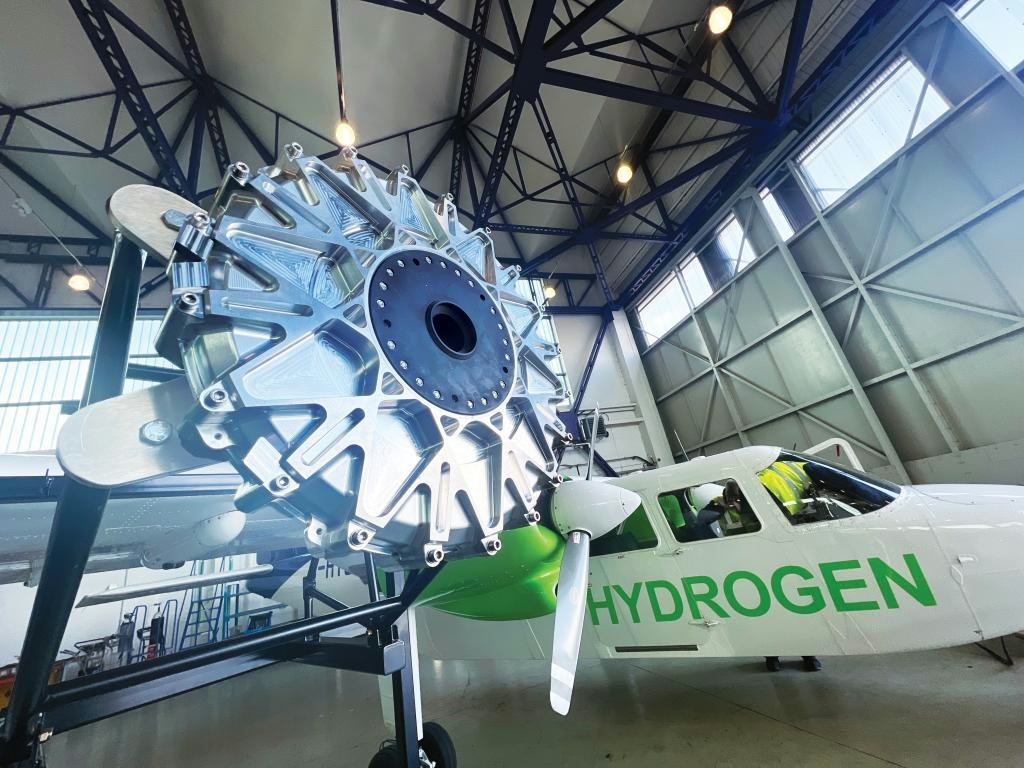
China Conducts First Flight Test of Megawatt Hydrogen Turboprop Engine

Oklahoma’s Aerospace Industry Expands and Its Impact on the State Economy

Archer Aviation Confronts Setbacks Amid Declining Air Taxi Interest

FAA and EASA Mandates to Influence Flight Line Testing Equipment Market Through 2035
Willis Lease Operates as a Leveraged Spread Business with Moderate Returns

Chinese Team Develops First Flight Control Software for Bamboo Drones
Government Moves Forward with Boeing Purchase, Considers Airbus Leasing

Changes in Airline Industry Leadership, Alliances, and AI
