
AeroGenie — Il tuo copilota intelligente.

Tendenze
Categories
AI to Enhance Data Integration for Fault Resolution in MRO Middle East

AI to Enhance Data Integration for Fault Resolution in MRO Middle East
The integration of industrialised artificial intelligence (AI) into aircraft maintenance is set to revolutionize fault resolution processes, industry leaders asserted at the recent MRO Middle East trade show in Dubai. Mark Buongiorno, president of aerospace and defence at IFS, emphasized the critical role of consolidating diverse data sets as airlines increasingly adopt predictive maintenance strategies.
Advancing Predictive Maintenance through AI
Buongiorno explained that as airlines move towards predictive approaches, AI offers the capability to provide comprehensive operational context, enabling proactive parts removal. By embedding AI into technical procedures, the automation of previously manual reporting becomes possible, ensuring the high-quality outcomes essential in aviation. He highlighted that predictive maintenance focuses on understanding fault characteristics before they manifest. Through monitoring multi-parameter shifts within permissible limits, AI can trigger inspections or facilitate the proactive removal of components when aircraft are stationed appropriately.
Following such interventions, AI systems can effectively “close the loop” by assembling detailed reliability data packages for original equipment manufacturers (OEMs) or maintenance, repair, and overhaul (MRO) providers. This approach allows operators not merely to report fault outcomes but to deliver a comprehensive snapshot of the aircraft’s status at the time of the incident.
Overcoming Data Integration Challenges in Aviation Maintenance
Historically, the aviation sector has grappled with a paucity of data during fault scenarios, leaving engineers without sufficient context to make informed decisions. The proliferation of sensors on modern aircraft now generates vast volumes of dynamic data, yet the principal challenge remains the effective integration of this information across multiple systems and maintenance stages.
IFS’s strategy centers on unifying discrete data sets to offer a full lifecycle perspective of each component or asset. Buongiorno described the aircraft’s journey as an “MRO continuum” spanning from manufacture to teardown, involving distinct systems managed by airlines, independent support organizations, or MRO providers. IFS’s solutions are designed to support all phases of MRO, facilitating data integration and enterprise resource planning to enhance efficiency and connectivity.
Despite these technological advancements, the adoption of AI-driven data integration in MRO faces significant hurdles. Substantial investment in technology and infrastructure is necessary, and resistance may arise from organizations accustomed to traditional maintenance methodologies. Furthermore, skilled personnel are essential to manage and interpret AI-generated insights, underscoring the continued importance of human expertise. Buongiorno cautioned that while AI can bridge knowledge gaps and enable technicians to operate with experience akin to decades of practice, human judgment remains irreplaceable.
Market Dynamics and Future Prospects
The market is responding to these developments with heightened competition among MRO providers, as companies strive to implement advanced AI solutions to secure a competitive advantage. Research and development efforts are accelerating, and numerous firms are forging partnerships with technology companies specializing in AI for maintenance and repair operations.
As the industry navigates these opportunities and challenges, the integration of AI is poised to transform fault resolution and operational efficiency across the MRO sector in the Middle East and beyond.

Oklahoma’s Aerospace Industry Expands and Its Impact on the State Economy

Archer Aviation Confronts Setbacks Amid Declining Air Taxi Interest

FAA and EASA Mandates to Influence Flight Line Testing Equipment Market Through 2035
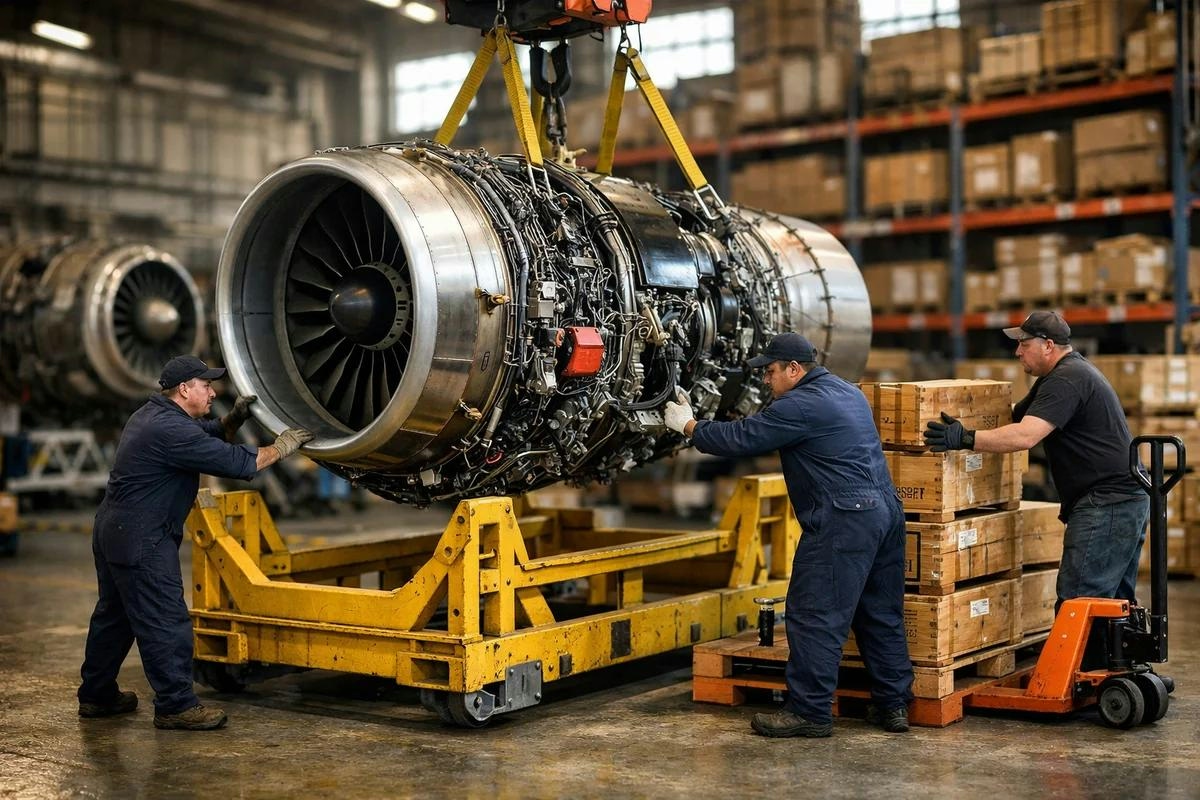
Willis Lease Operates as a Leveraged Spread Business with Moderate Returns

Chinese Team Develops First Flight Control Software for Bamboo Drones

Government Moves Forward with Boeing Purchase, Considers Airbus Leasing

SkyHope Appoints Aviation Industry Leader to Board
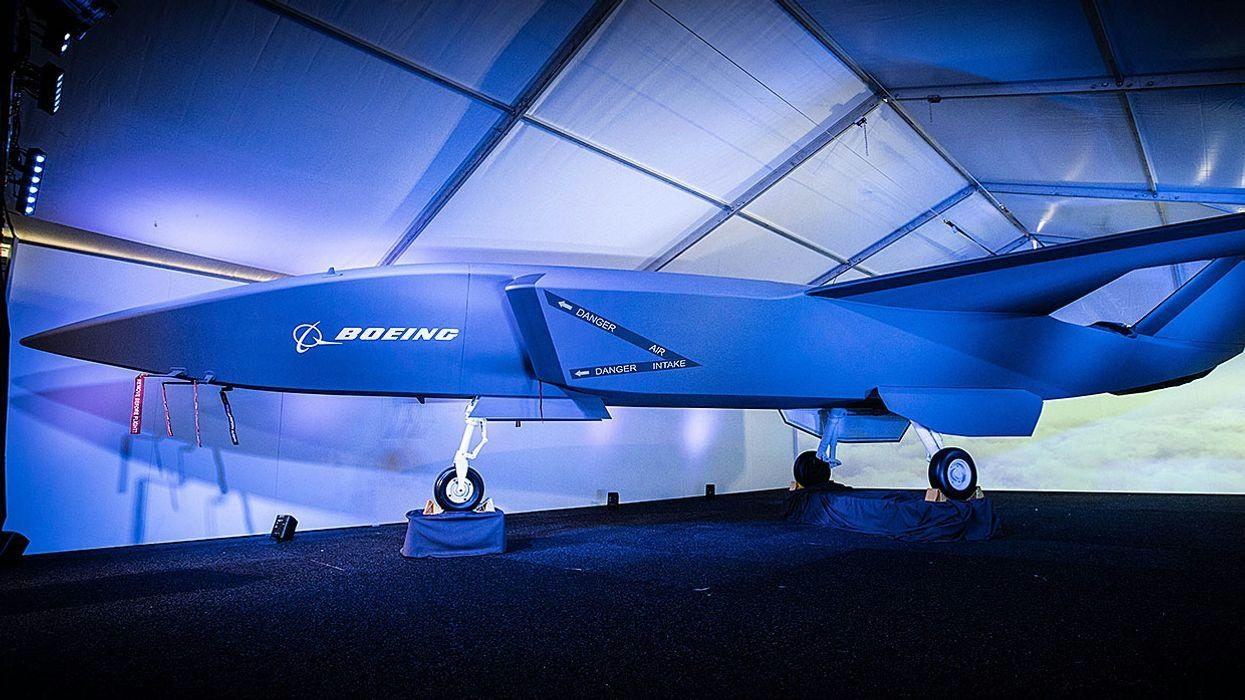
The Challenges of Certifying Autonomous Aircraft
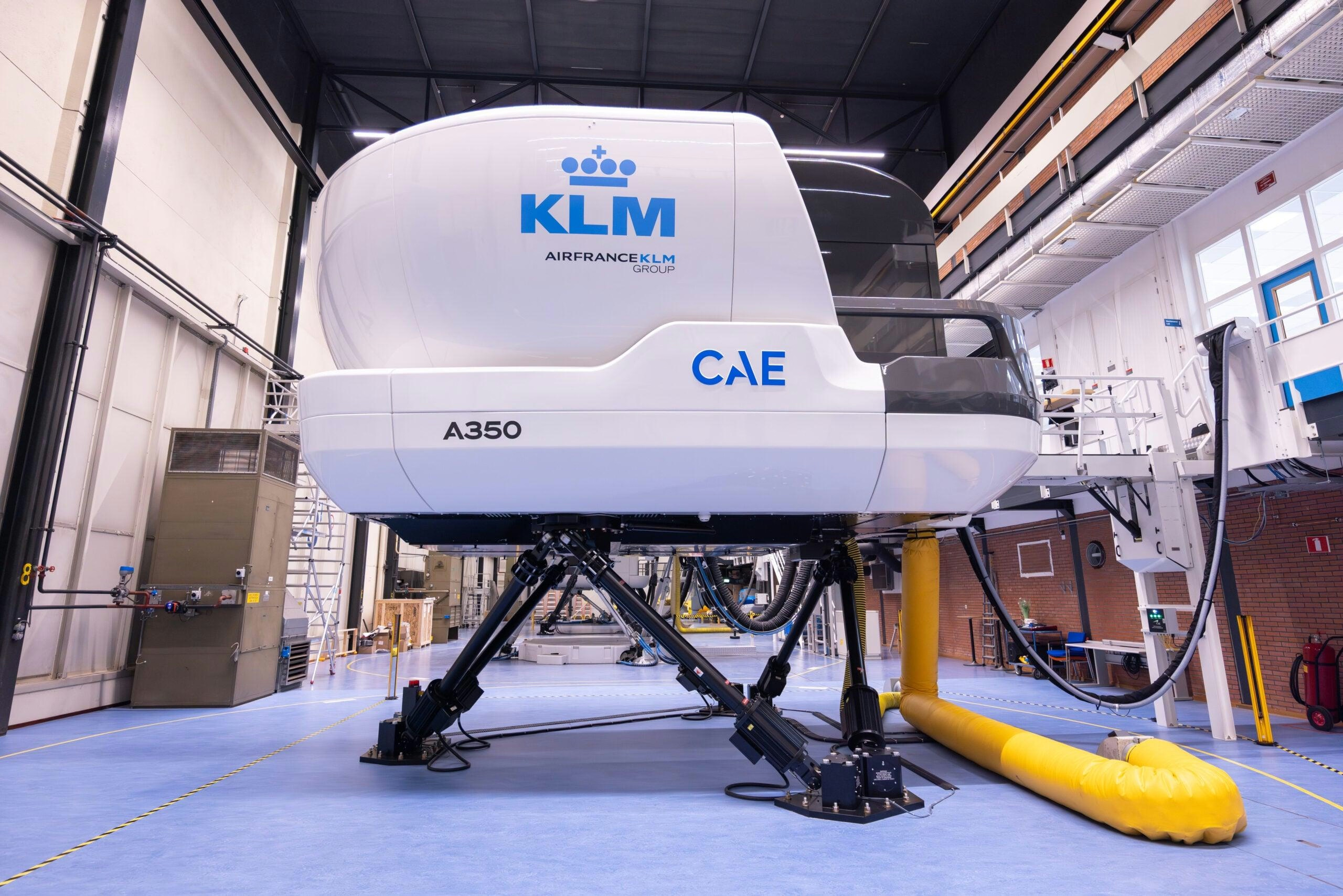
KLM to Receive First Airbus A350, Announces Initial Routes

Saxon Air Receives Clean and Green Energy Innovation Award
