
AeroGenie — Votre copilote intelligent.

Tendances
Categories
VietJet Negotiates Purchase of Approximately 100 Airbus Jets
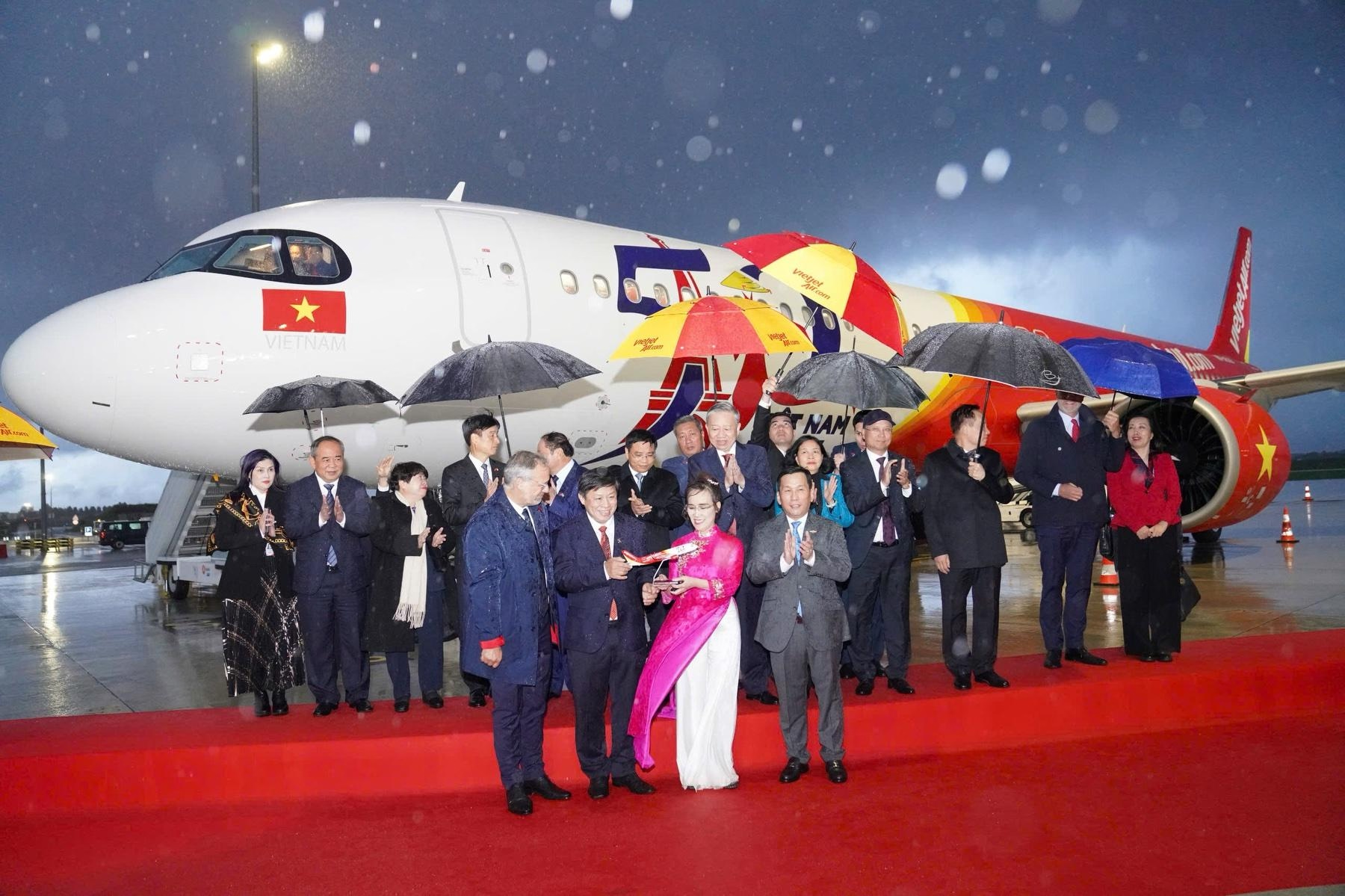
VietJet in Negotiations to Acquire Approximately 100 Airbus Jets
VietJet is engaged in discussions to purchase around 100 Airbus aircraft, a development that could substantially transform the airline’s fleet composition and influence regional aviation dynamics. These negotiations are unfolding amid significant economic uncertainties, prompting questions about VietJet’s capacity to secure the necessary financing for such a large-scale acquisition.
Financial and Competitive Challenges
Industry experts emphasize that large aircraft orders often invite rigorous examination of an airline’s financial stability and operational capabilities. For VietJet, the primary challenge lies in managing both the immediate financial outlay and the long-term obligations associated with expanding its fleet to this extent. The airline’s financial resilience is expected to be closely scrutinized, particularly as global economic pressures continue to mount.
The potential deal also emerges in a context of intensifying competition within the aerospace sector. Several major carriers, including prominent Chinese airlines, are reportedly contemplating substantial aircraft purchases themselves. This competitive environment may complicate VietJet’s efforts to negotiate favorable terms with Airbus, as rival airlines seek to leverage their own orders to secure advantageous conditions. Consequently, VietJet faces not only internal financial constraints but also external pressures from competitors adjusting their strategies in response.
Rival airlines are likely to monitor VietJet’s negotiations attentively, with some potentially responding by modifying route networks, enhancing service quality, or accelerating fleet renewal initiatives. Such strategic responses could further alter the competitive landscape in Southeast Asia’s aviation market.
Implications for Airbus and the Regional Market
For Airbus, securing a deal with VietJet would represent a significant achievement, reinforcing its market position in a region where demand for new aircraft is experiencing a resurgence. Nonetheless, the manufacturer must carefully manage its production capacity to accommodate multiple large orders from various global carriers.
As negotiations continue, industry observers will be watching closely for indications of how VietJet intends to finance the acquisition and integrate the new jets into its operations. The outcome of these talks has the potential to influence not only VietJet’s growth trajectory but also broader trends in airline competition and aircraft procurement across Asia.
While no final agreement has yet been announced, the prospective order highlights the complex interplay of opportunities and challenges confronting airlines and manufacturers in an evolving global aviation industry.
Archer Aviation Confronts Setbacks Amid Declining Air Taxi Interest

Chinese Team Develops First Flight Control Software for Bamboo Drones
Government Moves Forward with Boeing Purchase, Considers Airbus Leasing
SkyHope Appoints Aviation Industry Leader to Board
The Challenges of Certifying Autonomous Aircraft
KLM to Receive First Airbus A350, Announces Initial Routes
Saxon Air Receives Clean and Green Energy Innovation Award
How BEB Tax Policies Impact Airlines’ International Leasing Contracts

Indonesia’s Danantara and Mandiri Partner with SMBC to Launch $800 Million Aviation Leasing Fund
South Korea’s SUM Air Places Order for New ATR Aircraft
