
AeroGenie — Votre copilote intelligent.

Tendances
Categories
Spirit Airlines Seeks Funding Amid Aircraft Leasing Disputes
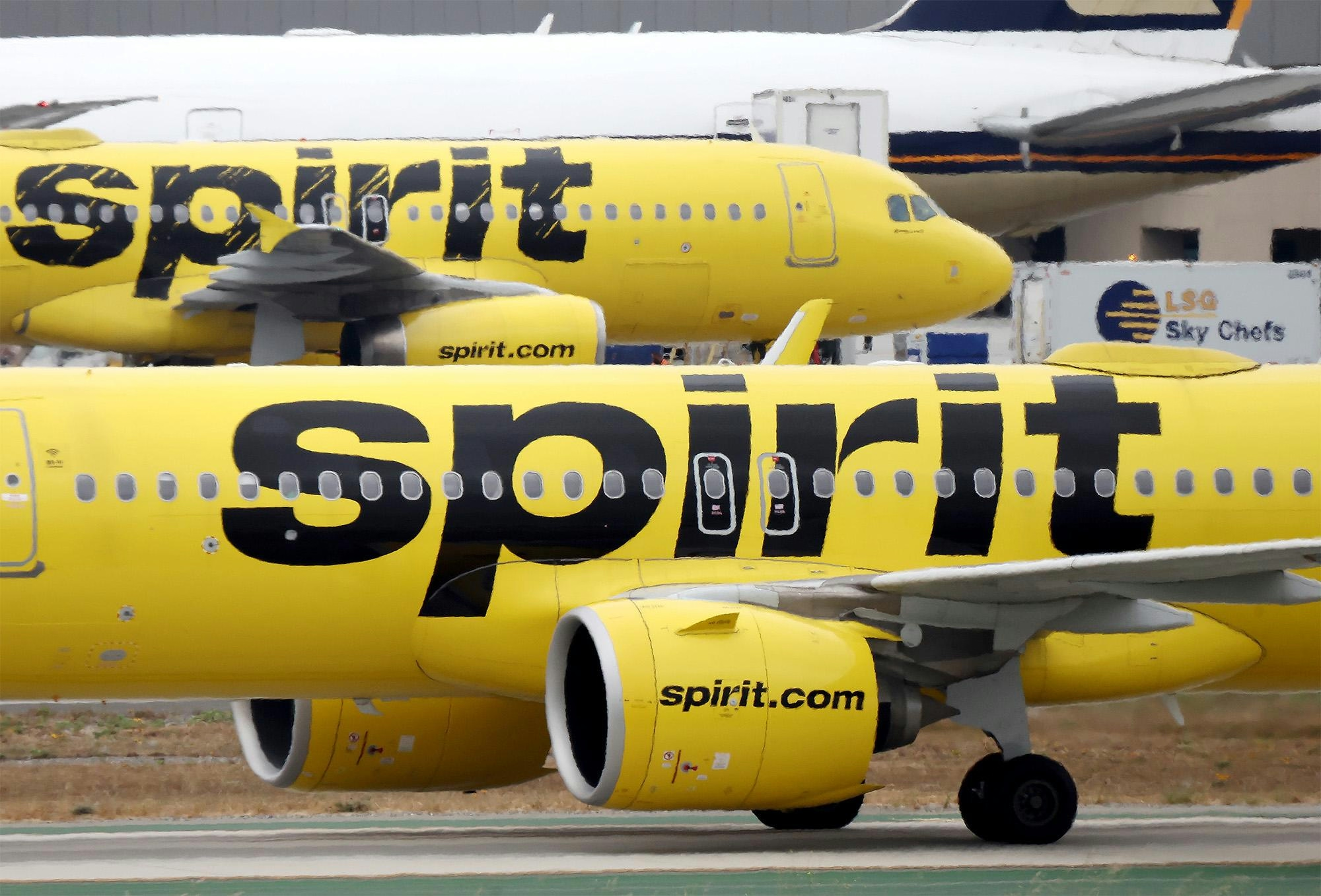
Spirit Airlines Seeks Funding Amid Aircraft Leasing Disputes
Background and Bankruptcy Filing
Spirit Airlines has entered into a series of proposed agreements with its primary aircraft leasing partner, AerCap Ireland Ltd., aimed at securing a vital cash infusion for the struggling low-cost carrier. These developments, revealed in heavily redacted filings submitted to a U.S. Bankruptcy Court on Tuesday, come as Spirit grapples with escalating financial difficulties and heightened competition within the airline sector.
The Dania Beach-based airline filed for Chapter 11 bankruptcy protection on August 29, marking its second such filing in under a year. This latest bankruptcy was precipitated by AerCap’s declaration that Spirit was in default on multiple aircraft leases. AerCap, which owns a significant portion of Spirit’s leased Airbus fleet, took this step after prolonged disputes, forcing the airline back into bankruptcy proceedings and highlighting the depth of its financial distress.
Terms of the Proposed Agreement and Operational Impact
Court documents filed in New York indicate that Spirit and AerCap have reached a tentative resolution following weeks of negotiations. The proposed restructuring would permit Spirit to continue leasing certain aircraft while rejecting others, thereby streamlining its fleet and addressing outstanding issues related to undelivered leased planes. Crucially, AerCap has agreed to provide Spirit with a substantial, though undisclosed, liquidity injection. Spirit has emphasized that this funding is essential to maintaining operations throughout the bankruptcy process. A hearing to approve the agreement is scheduled for September 30.
In response to its financial challenges, Spirit has implemented significant cost-cutting measures. The airline recently announced plans to furlough approximately 1,800 of its 5,200 flight attendants—roughly one-third of its cabin crew—as well as 270 pilots, alongside the demotion of 140 others. Additionally, Spirit is reducing the size of its fleet and scaling back its route network, moves that have increased its vulnerability to competitors.
Industry Implications and Future Outlook
Spirit’s downsizing has attracted attention from rival carriers such as United Airlines and Frontier Airlines, which have begun targeting Spirit’s customer base and may seek to acquire its assets, staff, and routes should the restructuring fail. This competitive pressure adds urgency to Spirit’s efforts to secure funding and optimize its operations.
At the time of its latest bankruptcy filing, Spirit operated a fleet of 214 aircraft, 166 of which were leased. The restructuring agreement aims to optimize this fleet composition, reduce equipment costs, and provide the liquidity necessary to sustain the airline through bankruptcy. Spirit has described the agreements as “a cornerstone” of its plan to emerge with a “new, slimmer fleet.”
Both Spirit and AerCap declined to comment ahead of the forthcoming court hearing. The outcome of the proposed agreements will be closely monitored by industry stakeholders, competitors, and employees as Spirit endeavors to navigate a challenging path toward financial recovery.

Archer Aviation Confronts Setbacks Amid Declining Air Taxi Interest

Chinese Team Develops First Flight Control Software for Bamboo Drones
Government Moves Forward with Boeing Purchase, Considers Airbus Leasing
SkyHope Appoints Aviation Industry Leader to Board
The Challenges of Certifying Autonomous Aircraft

KLM to Receive First Airbus A350, Announces Initial Routes

Saxon Air Receives Clean and Green Energy Innovation Award

How BEB Tax Policies Impact Airlines’ International Leasing Contracts

Indonesia’s Danantara and Mandiri Partner with SMBC to Launch $800 Million Aviation Leasing Fund

South Korea’s SUM Air Places Order for New ATR Aircraft
