
AeroGenie — Votre copilote intelligent.

Tendances
Categories
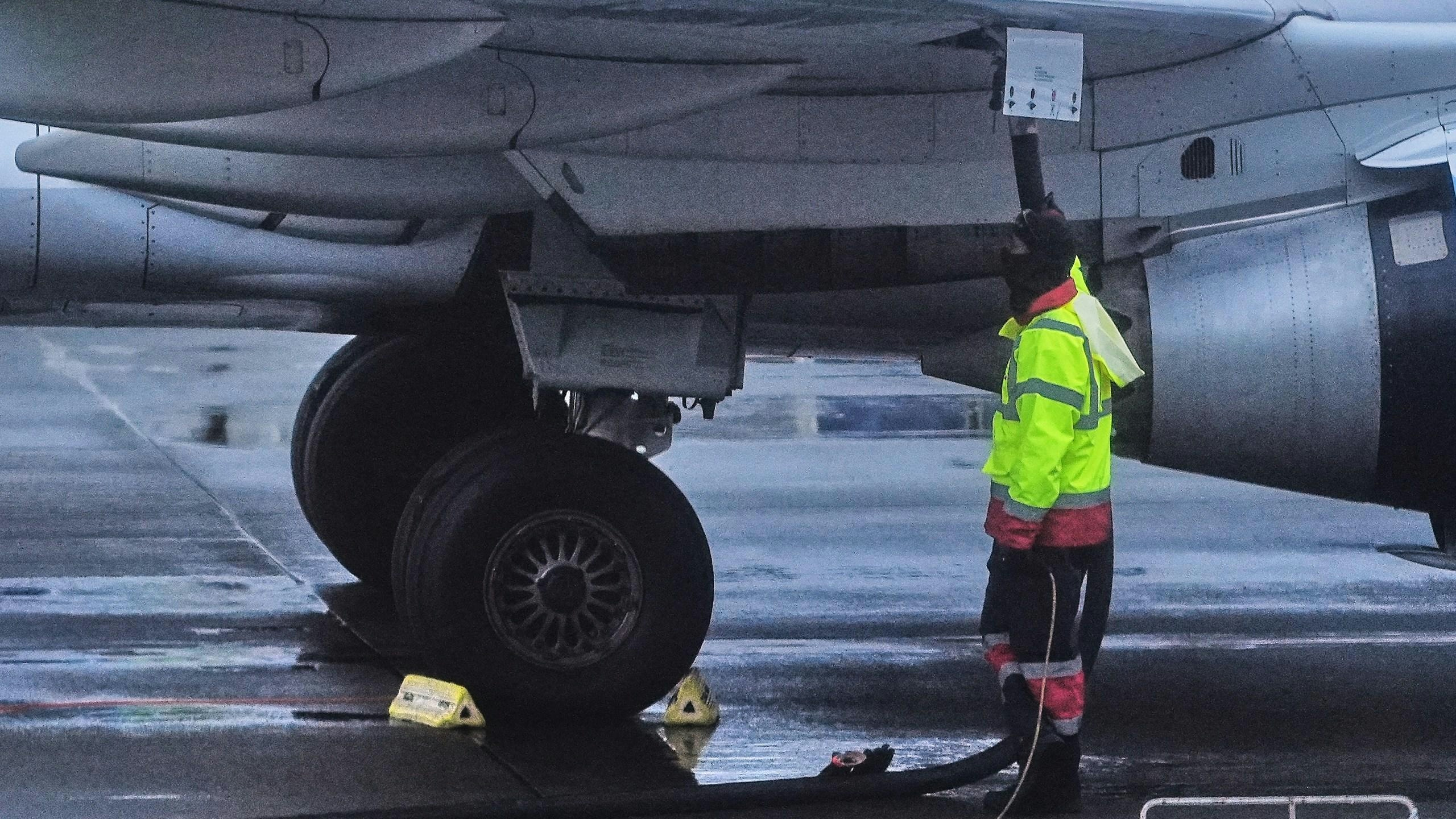
Rising Jet Fuel Prices Strain Aviation Industry and Markets
Rising Jet Fuel Prices Strain Aviation Industry and Markets
The aviation sector is currently facing significant challenges as jet fuel prices escalate to unprecedented levels, fundamentally altering cost structures and revealing vulnerabilities within global markets. This surge in jet fuel costs, largely attributed to ongoing conflict in the Middle East, has sent reverberations through airlines, consumers, and energy security frameworks worldwide.
Supply Chain Vulnerabilities and Market Disruptions
Fuel distribution networks today are heavily reliant on specialized chokepoints, where geographic constraints intensify market volatility well beyond fluctuations in crude oil prices alone. The concentration of critical energy infrastructure, particularly in the Middle East, has exposed systemic fragilities that affect multiple refined product categories simultaneously.
For instance, jet fuel prices in Singapore surged by 140% to approximately $230 per barrel in the week following February 28, 2026, a spike that far exceeds the volatility observed in crude oil markets. In Europe, northwest jet fuel traded at unprecedented premiums of $88 to $91 per barrel above North Sea Dated and ICE Brent futures, with jet fuel prices nearly doubling those of crude oil. Such extreme market conditions have historically been seen only during the most severe supply disruptions.
A significant point of vulnerability is the Strait of Hormuz, a critical maritime passage through which roughly 20% of global jet fuel exports transit. This geographic concentration effectively doubles the exposure risk compared to diesel shipments through the same route, creating an asymmetric risk profile for aviation fuel supplies.
Technical and Geographic Constraints on Jet Fuel Production
The refining characteristics of crude oil from Gulf producers further complicate the situation. Medium sour crude barrels from this region yield higher proportions of middle distillates, including jet fuel. When supplies from these sources are disrupted due to conflict or other factors, alternative crude oils from Africa and South America—typically lighter grades favoring gasoline and naphtha production—cannot easily substitute to maintain jet fuel output. This technical incompatibility limits the ability of global refining capacity to adjust quickly.
Unlike diesel and gasoline, which benefit from blending flexibility and multiple production pathways, jet fuel requires specific refinery configurations optimized for kerosene-range hydrocarbons. Additionally, jet fuel storage infrastructure demands specialized tanks with enhanced safety protocols, further restricting global inventory buffers during periods of disruption.
Market Impact and Industry Response
The jet fuel market’s acute price sensitivity is driven by stringent international standards, such as ASTM D1655 and DEF STAN 91-91, which mandate precise molecular characteristics for jet fuel and preclude substitution with alternative fuels. Consequently, refining margins have expanded dramatically, with jet fuel crack spreads increasing by 350% year-over-year. Current premiums of $88 to $91 per barrel far exceed the historical norm of $10 to $25.
These soaring fuel costs are already being reflected in higher airfares. Airlines, particularly across the Asia-Pacific region, have responded by raising base fares or implementing fuel surcharges. United Airlines CEO Scott Kirby has cautioned that rapid fare increases are imminent as carriers adjust to the surge in fuel expenses. Analysts anticipate that the financial strain on airlines will be most pronounced over the next 30 to 90 days as they recalibrate operations in response to elevated jet fuel prices.
With the Middle East conflict continuing to disrupt global oil supplies, jet fuel prices are expected to remain volatile. Should these high prices persist, further fare increases and operational adjustments across the aviation sector are likely, underscoring the industry’s acute vulnerability to energy market shocks.

Plane lands on Pennsylvania highway due to ‘engine issues,’ FAA says

LEVEL Suspends San Francisco Flights Due to Engine Shortage

China Conducts First Flight Test of Megawatt Hydrogen Turboprop Engine

Oklahoma’s Aerospace Industry Expands and Its Impact on the State Economy

Archer Aviation Confronts Setbacks Amid Declining Air Taxi Interest

FAA and EASA Mandates to Influence Flight Line Testing Equipment Market Through 2035
Willis Lease Operates as a Leveraged Spread Business with Moderate Returns

Chinese Team Develops First Flight Control Software for Bamboo Drones
Government Moves Forward with Boeing Purchase, Considers Airbus Leasing

Changes in Airline Industry Leadership, Alliances, and AI
