
AeroGenie — Votre copilote intelligent.

Tendances
Categories
Outlook for GE Aerospace in 2026
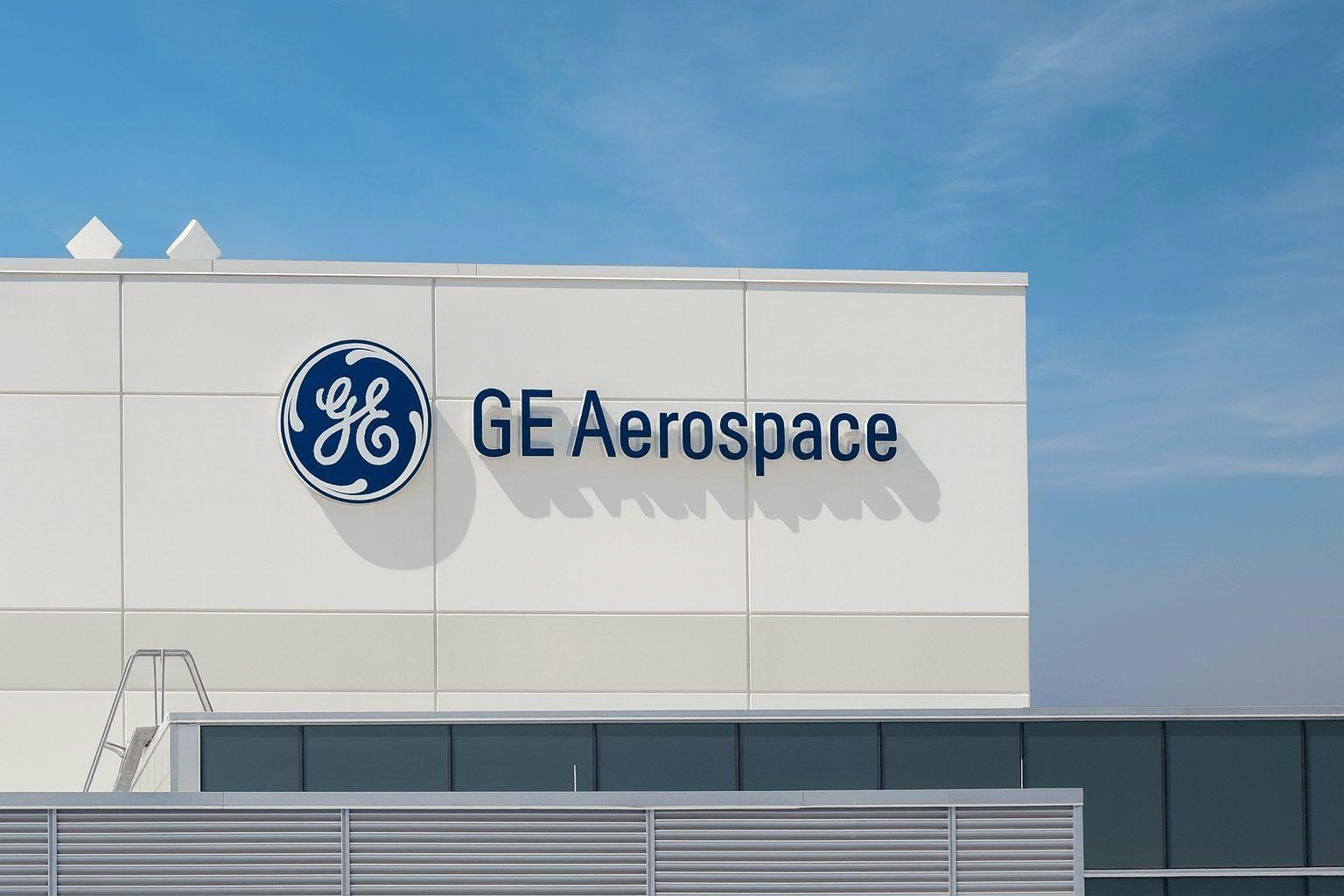
Outlook for GE Aerospace in 2026
Shares of GE Aerospace (GE) have surged nearly 90% over the past year, raising questions about the sustainability of the company’s valuation and the prospects as 2026 approaches. This impressive stock performance has been driven by strong demand for commercial jet engines and aftermarket services, prompting analysts to upgrade their ratings and set ambitious price targets. Nevertheless, the company faces several challenges that could influence its trajectory in the coming years.
Challenges and Operational Risks
GE Aerospace is likely to encounter headwinds related to supply chain constraints and production capacity limitations, which may restrict its ability to meet the growing demand. Additionally, concerns have emerged regarding the durability of the LEAP engine, especially under harsh operating conditions. These issues raise questions about long-term reliability and maintenance costs, potentially affecting customer satisfaction and profitability if not adequately addressed. Managing these operational risks will be essential for the company to sustain its performance.
Market Position and Competitive Landscape
Despite these challenges, GE Aerospace continues to hold a strong market position. Its scale, technological expertise, and well-established relationships with major airlines provide significant competitive advantages. While the aerospace industry remains highly competitive with active rivals, GE Aerospace’s commitment to innovation and its focus on mission-critical products have helped it maintain a leadership role. These factors underpin the company’s optimistic outlook as it navigates a complex and evolving market environment.
Investment Considerations
From an investment standpoint, GE Aerospace’s recent performance has attracted interest from investors seeking durable businesses with economic resilience and pricing power. Market participants are closely watching the company’s capital allocation strategies, margin trends, and unit economics to evaluate the sustainability of its growth and returns. The ability to overcome supply chain disruptions, resolve technical challenges related to engine durability, and leverage strong market demand will be pivotal in maintaining the company’s momentum moving forward.
In conclusion, while GE Aerospace’s stock has delivered exceptional returns and the outlook remains broadly positive, investors should remain vigilant regarding operational risks and industry dynamics as 2026 approaches. The company’s future success will depend on its capacity to address production and supply chain challenges, improve engine reliability, and sustain its competitive edge in a rapidly changing aerospace sector.

Archer Aviation Confronts Setbacks Amid Declining Air Taxi Interest

Chinese Team Develops First Flight Control Software for Bamboo Drones

Government Moves Forward with Boeing Purchase, Considers Airbus Leasing

SkyHope Appoints Aviation Industry Leader to Board
The Challenges of Certifying Autonomous Aircraft
KLM to Receive First Airbus A350, Announces Initial Routes

Saxon Air Receives Clean and Green Energy Innovation Award

How BEB Tax Policies Impact Airlines’ International Leasing Contracts

Indonesia’s Danantara and Mandiri Partner with SMBC to Launch $800 Million Aviation Leasing Fund

South Korea’s SUM Air Places Order for New ATR Aircraft
