
AeroGenie — Votre copilote intelligent.

Tendances
Categories
Marine Corps Unveils 2026 Aviation Strategy
Marine Corps Unveils 2026 Aviation Strategy
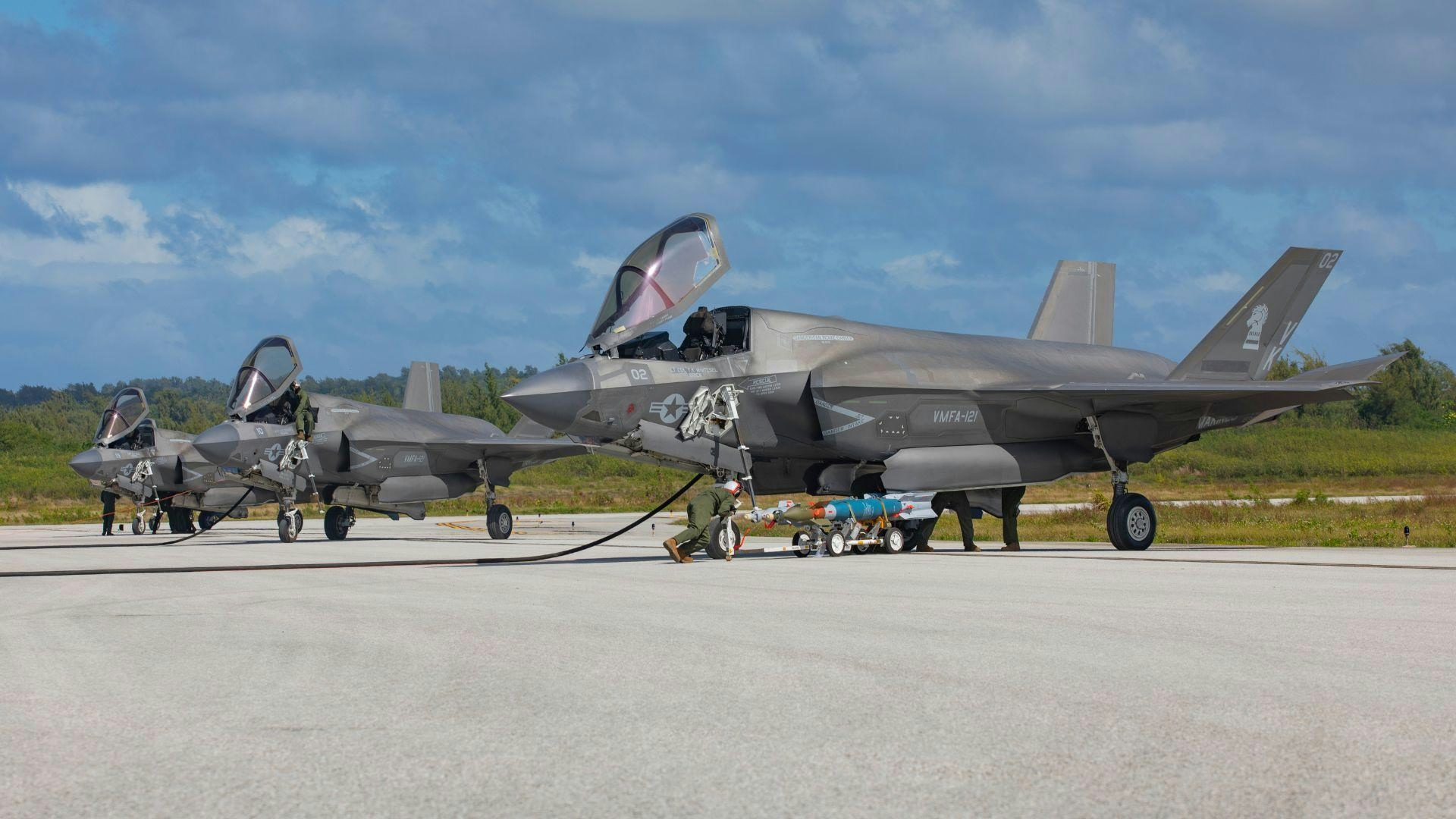
The U.S. Marine Corps has introduced its 2026 Aviation Plan, a detailed framework designed to enhance readiness, drive modernization, and guide future force development. Unveiled on Tuesday, the strategy marks a transition from broad policy directives to precise, data-driven implementation, with a particular emphasis on supporting the Marine Air-Ground Task Force (MAGTF).
Embracing Technology and Safety Initiatives
At the heart of the new plan is the integration of artificial intelligence (AI) and machine learning into aviation operations. These technologies are set to play a pivotal role in predictive maintenance, logistics, and operational planning, with the goal of increasing efficiency and reducing mishaps across the fleet. A prominent safety initiative, known as “26 in 26,” aims to significantly lower aviation accident rates within the Marine Corps.
The strategy seeks to balance immediate crisis response capabilities with sustained modernization efforts across fixed-wing, rotary-wing, and unmanned aircraft platforms. It outlines continued integration of the F-35 fighter jet, deployment of the CH-53K helicopter, and upgrades to the MV-22 Osprey and H-1 aircraft. Additionally, the plan expands unmanned capabilities, including MQ-9A drone operations and manned-unmanned teaming concepts. These efforts are projected to extend through future defense programs, with a horizon reaching as far as 2040.
Distributed Operations and Organizational Enhancements
A significant aspect of the plan is its focus on Distributed Aviation Operations, a warfighting concept that disperses support equipment and personnel across multiple expeditionary sites rather than concentrating resources at a limited number of large bases. This approach aims to enhance operational flexibility and survivability in contested environments. Furthermore, the plan formally recognizes Aviation Ground Support as the Marine Corps’ seventh aviation function, underscoring its critical role in sustaining aviation operations.
Lt. Gen. William H. Swan, deputy commandant for aviation, referred to the strategy as “Project Eagle,” describing it as the Corps’ strategic blueprint for the future Aviation Combat Element. He emphasized the dual imperative for Marine Aviation to remain combat-ready today while aggressively modernizing to address emerging threats.
Challenges and Broader Defense Context
Despite its ambitious goals, the 2026 Aviation Plan confronts significant challenges. Recent congressional hearings have drawn attention to declining readiness rates and an increase in mishaps involving current aircraft, highlighting the urgency of the plan’s safety and modernization measures. The integration of advanced technologies such as AI and next-generation platforms over the coming 15 years will require overcoming substantial technical and operational obstacles.
The Marine Corps’ initiative aligns with a wider Pentagon effort to accelerate the adoption of cutting-edge technologies. Innovations such as 3D-printed drones and AI-driven warfighting tools are transforming the defense landscape. Concurrently, other military branches are advancing their own modernization strategies, including the Air Force’s hub-and-spoke basing model in response to strategic challenges posed by China, and the Army’s integration of next-generation command-and-control systems. These developments may intensify inter-service competition and influence defense market dynamics.
As the Marine Corps advances its 2026 Aviation Plan, it aims to maintain a delicate balance between sustaining combat readiness and embracing innovation to effectively counter evolving threats.

LEVEL Suspends San Francisco Flights Due to Engine Shortage

China Conducts First Flight Test of Megawatt Hydrogen Turboprop Engine

Oklahoma’s Aerospace Industry Expands and Its Impact on the State Economy

Archer Aviation Confronts Setbacks Amid Declining Air Taxi Interest

FAA and EASA Mandates to Influence Flight Line Testing Equipment Market Through 2035

Willis Lease Operates as a Leveraged Spread Business with Moderate Returns

Chinese Team Develops First Flight Control Software for Bamboo Drones

Government Moves Forward with Boeing Purchase, Considers Airbus Leasing
SkyHope Appoints Aviation Industry Leader to Board
The Challenges of Certifying Autonomous Aircraft
