
AeroGenie — Votre copilote intelligent.

Tendances
Categories
Global Airlines Project $41 Billion Net Profit in 2024
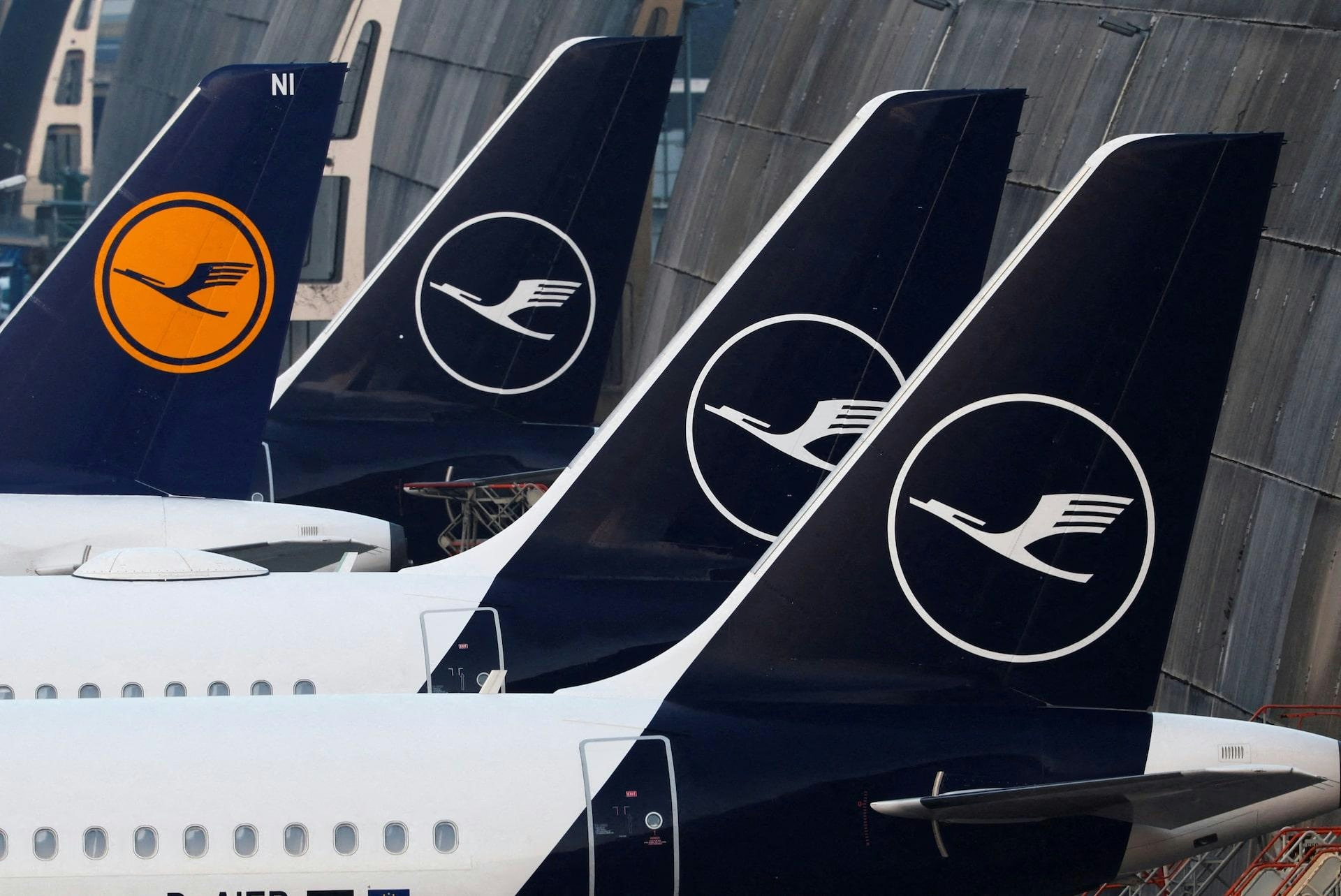
Global Airlines Project $41 Billion Net Profit in 2026 Despite Persistent Challenges
The global airline industry is poised to achieve a record net profit of $41 billion in 2026, according to the latest forecast from the International Air Transport Association (IATA). This optimistic projection emerges despite ongoing obstacles such as supply chain disruptions, slower aircraft deliveries, and delays in the rollout of more fuel-efficient jets.
Regional Profit Contributions and Market Dynamics
IATA’s outlook underscores strong performance in air cargo operations and the advantageous impact of a weaker US dollar, which has helped many carriers reduce operational costs. European airlines are expected to lead the profit contributions with an estimated $14 billion, surpassing North American carriers, who are projected to generate $11.3 billion. Meanwhile, Middle Eastern airlines are anticipated to achieve the highest profitability per passenger, with forecasts indicating $28.6 per traveler in 2026.
Nevertheless, the industry continues to confront significant challenges. Both Airbus and Boeing have experienced delivery delays in recent years. Airbus recently reduced its 2025 delivery target by 4% after uncovering quality issues with metal fuselage panels on its A320 series, confirming that deliveries had already slowed as of November. This setback followed a recall of 6,000 A320-series aircraft due to a software glitch linked to cosmic radiation. Although the A320 family, including the popular A321 model, has now surpassed Boeing’s 737 MAX as the most-delivered passenger jet in history, confidence in Airbus has diminished. In contrast, IATA Director General Willie Walsh noted improvements in Boeing’s performance, with airlines expressing increased confidence in the manufacturer’s ability to meet its commitments.
Walsh highlighted that engine manufacturers remain a critical bottleneck, as they have lagged behind airframe producers in delivering new and repaired engines. This has forced companies like Airbus to delay delivery schedules. The high costs associated with maintaining commercial fleets, coupled with intense competition among engine makers to develop sustainable propulsion technologies, further complicate the industry’s outlook.
Operational and Environmental Challenges
Despite the strong profit forecast, airlines are contending with softening yields and load factors, particularly on transatlantic routes. This trend was evident in the negative market reaction to British Airways’ third-quarter earnings. In Asia, Singapore Airlines’ financial results were adversely affected by losses at its associate Air India, which is facing mounting competition and financial difficulties.
The sector’s transition to greener operations also faces significant hurdles. IATA warned that the industry is likely to miss its targets for sustainable aviation fuel (SAF) usage in the coming years, attributing slow progress to fuel producers and regulatory delays. SAF, primarily derived from waste or used cooking oil, can substantially reduce emissions but remains two to five times more expensive than conventional jet fuel. IATA estimates that only 2.4 million metric tonnes of SAF will be available in 2026, covering a mere 0.8% of total fuel consumption. While the aviation sector remains committed to achieving net-zero emissions by 2050, progress depends heavily on scaling up SAF production and adoption.
“Airlines have successfully built shock-absorbing resilience into their businesses that is delivering stable profitability,” Walsh stated. However, he cautioned that regulatory costs, geopolitical uncertainty, and operational challenges continue to constrain the industry’s potential for even greater gains.

Oklahoma’s Aerospace Industry Expands and Its Impact on the State Economy
Archer Aviation Confronts Setbacks Amid Declining Air Taxi Interest

FAA and EASA Mandates to Influence Flight Line Testing Equipment Market Through 2035
Willis Lease Operates as a Leveraged Spread Business with Moderate Returns

Chinese Team Develops First Flight Control Software for Bamboo Drones
Government Moves Forward with Boeing Purchase, Considers Airbus Leasing
SkyHope Appoints Aviation Industry Leader to Board
The Challenges of Certifying Autonomous Aircraft
KLM to Receive First Airbus A350, Announces Initial Routes

Saxon Air Receives Clean and Green Energy Innovation Award
