
AeroGenie — Votre copilote intelligent.

Tendances
Categories
Flying Taxis Could Begin Operating in 2026, but Their Future Remains Uncertain
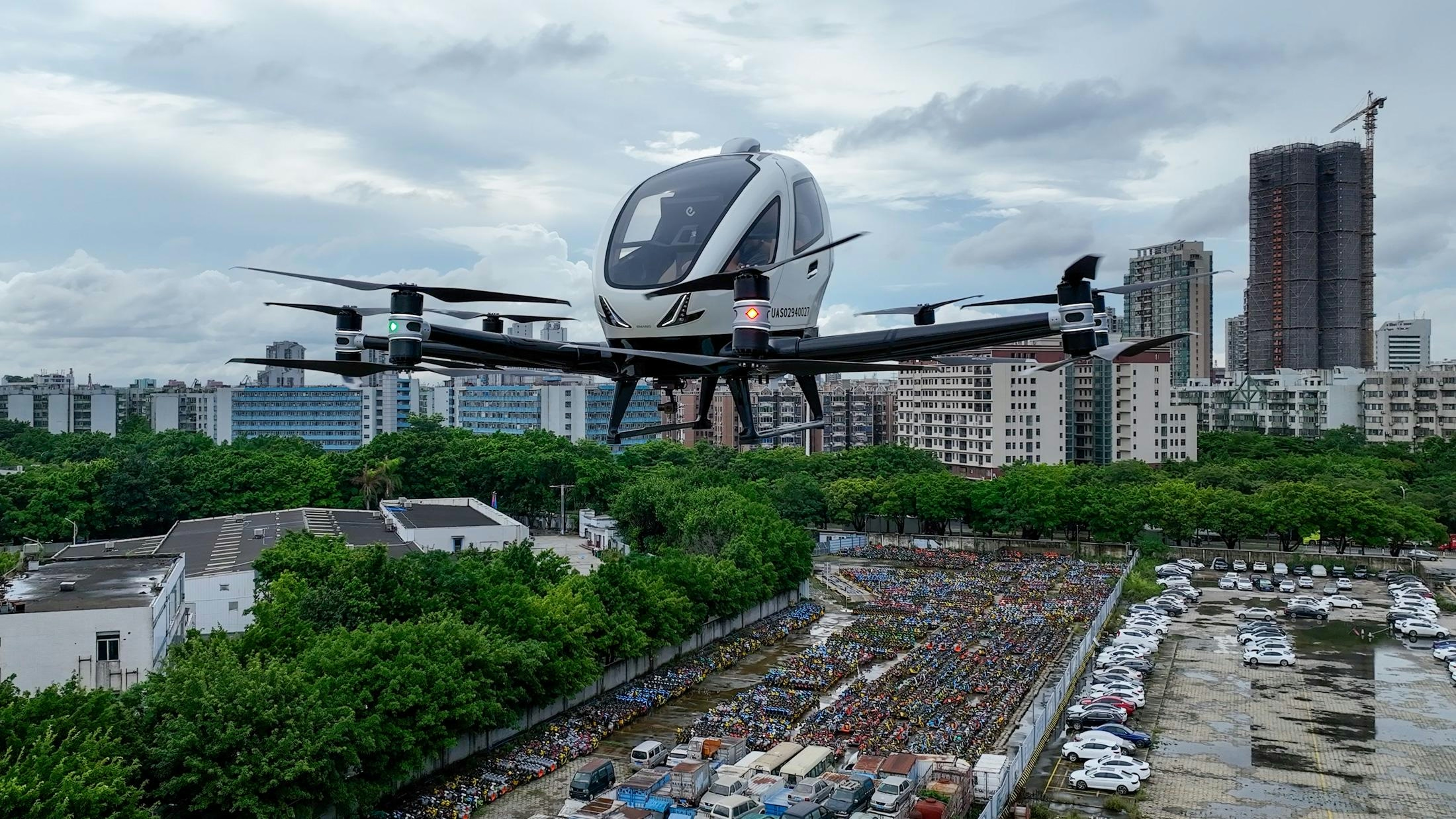
Flying Taxis Could Begin Operating in 2026, but Their Future Remains Uncertain
The concept of flying taxis, once confined to the realm of science fiction, is gradually approaching reality as technology companies accelerate efforts to commercialize electric vertical take-off and landing (eVTOL) aircraft. Firms such as Joby Aviation and Archer Aviation have announced plans to launch air taxi services in Dubai later this year, marking a potential milestone for the industry. Despite this progress and substantial investment, experts warn that widespread adoption of flying taxis remains several years away due to ongoing technical, regulatory, and economic challenges.
Technological Promise and Regulatory Challenges
eVTOL aircraft offer the promise of quieter, cleaner, and more efficient urban transportation compared to traditional helicopters. These vehicles, often resembling large drones equipped with multiple electric motors and propellers, are designed to transform urban mobility by providing rapid, on-demand air travel. However, the journey from prototype to commercial service is complex and fraught with obstacles.
Regulatory approval stands as one of the most significant barriers. The U.S. Federal Aviation Administration (FAA) recently initiated a new phase of its advanced air mobility program, which involves evaluating air taxi performance across 26 states during the summer. Nonetheless, full certification for passenger-carrying services has yet to be granted. Aviation authorities worldwide are engaged in developing comprehensive regulatory frameworks, but the process remains intricate and time-consuming.
Infrastructure, Safety, and Market Dynamics
Beyond regulatory hurdles, safety concerns and the need for robust infrastructure present additional challenges. Establishing a network of vertiports—dedicated takeoff and landing sites—and ensuring sufficient operational capacity require substantial investment and careful urban planning. Market responses have been varied: while companies like Archer and Joby have secured federal approval for pilot programs, others such as Lucid Motors have clarified that their flying car concepts are not currently under active development. Some competitors continue to focus on testing and deployment, whereas others remain in the conceptual stage.
Previous high-profile initiatives have encountered setbacks. Plans to introduce flying taxis for the 2024 Paris Olympics were abandoned due to delays in certifying vehicle engines. Similarly, Archer Aviation’s goal to launch services ahead of the upcoming FIFA World Cup in Los Angeles has been postponed, with the company now aiming for the 2028 Los Angeles Olympic Games.
Industry Outlook
Despite these challenges, optimism within the industry endures. Sergio Cecutta, founder and partner at SMG Consulting, which specializes in the advanced air mobility sector, remarked, “We think that full-scale services is more of a middle of the next decade kind of thing, not anytime soon.” The vision of airborne urban transport continues to inspire innovation, yet experts generally agree that it may take a decade or more before flying taxis become a common feature in city skies.
While pilot programs and regulatory initiatives are progressing, the future of flying taxis remains uncertain. The industry must navigate a complex landscape of regulatory, safety, and infrastructure issues before these vehicles can be deployed at scale. For now, the prospect of an airborne alternative to traditional ride-hailing services remains a distant but compelling possibility.
LEVEL Suspends San Francisco Flights Due to Engine Shortage

China Conducts First Flight Test of Megawatt Hydrogen Turboprop Engine

Oklahoma’s Aerospace Industry Expands and Its Impact on the State Economy
Archer Aviation Confronts Setbacks Amid Declining Air Taxi Interest

FAA and EASA Mandates to Influence Flight Line Testing Equipment Market Through 2035
Willis Lease Operates as a Leveraged Spread Business with Moderate Returns
Chinese Team Develops First Flight Control Software for Bamboo Drones
Government Moves Forward with Boeing Purchase, Considers Airbus Leasing
SkyHope Appoints Aviation Industry Leader to Board
The Challenges of Certifying Autonomous Aircraft
