
AeroGenie — Votre copilote intelligent.

Tendances
Categories
FAA Flight Reductions Tighten Freight Capacity During Peak Shipping Season
FAA Flight Reductions Tighten Freight Capacity During Peak Shipping Season
Impact on Airfreight and Passenger Travel
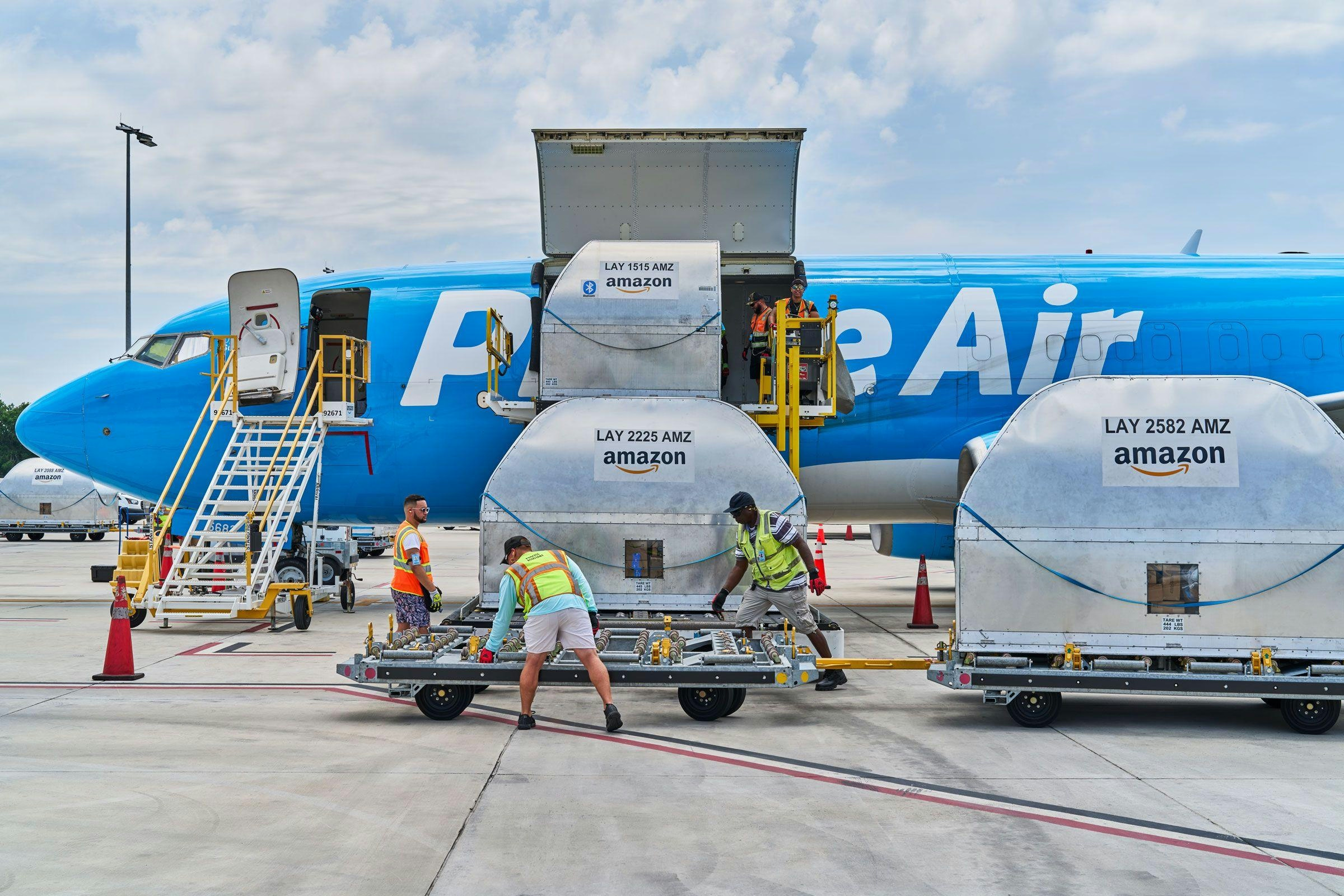
The Federal Aviation Administration (FAA) has mandated a 10% reduction in flight capacity at 40 major U.S. airports amid ongoing staffing shortages among air traffic controllers caused by the federal government shutdown. This directive has led to nearly 800 daily flight cancellations, significantly affecting major carriers such as American, United, and Delta. The reductions are concentrated at key hubs including New York’s JFK, LaGuardia, Newark, and Teterboro airports, as well as major airports in Atlanta, Chicago, Denver, and Los Angeles. While passenger travel disruptions have caused widespread uncertainty and stress, the cuts are also severely constraining air cargo capacity during the critical peak shipping season.
Airfreight plays a vital role in the supply chain, particularly for high-value and time-sensitive goods. Although it accounts for only about 1% of total shipped goods by weight, air cargo represents up to 35% of shipments by value, encompassing pharmaceuticals, electronics, perishables, and components essential for just-in-time manufacturing. These shipments rely heavily on both the cargo space in commercial passenger jets and dedicated freighter aircraft operated by companies such as UPS, FedEx, and DHL.
Challenges for Logistics and Freight Forwarders
Brandon Fried, executive director of the Airforwarders Association, emphasized the interconnected nature of the aviation ecosystem, noting that reductions in capacity and stretched federal staffing inevitably slow the supply chain. The longer the shutdown persists, the more severe the impact is expected to become. Some shippers have attempted to mitigate delays by rerouting flights to regional airports; however, many of these facilities lack the infrastructure to handle large volumes of freight efficiently. Anthony Pizza, vice president of commercial at AGS, an international freight forwarder, explained that while cargo airlines may consolidate shipments and operate fewer, higher-capacity flights, the limitations of regional airports pose significant operational challenges.
The National Air Traffic Controllers Association has cautioned that recovery from the shutdown’s effects on air traffic operations could take weeks. In response, logistics firms such as C.H. Robinson are activating contingency plans, including shifting certain shipments to ground transportation to reduce delays. Mike Short, president of global forwarding at C.H. Robinson, highlighted the critical importance of domestic air transport for customers moving high-value, time-sensitive goods, many of whom cannot afford disruptions to their supply chains.
Southwest Airlines is currently assessing the impact of the FAA’s restrictions on its flight schedule and has committed to keeping customers informed as the situation evolves.
As the federal shutdown continues, uncertainty grows for both shippers and travelers, with industry leaders urging a swift resolution to prevent further disruption to the nation’s supply chains and air travel networks.

Plane lands on Pennsylvania highway due to ‘engine issues,’ FAA says

LEVEL Suspends San Francisco Flights Due to Engine Shortage

China Conducts First Flight Test of Megawatt Hydrogen Turboprop Engine

Oklahoma’s Aerospace Industry Expands and Its Impact on the State Economy

Archer Aviation Confronts Setbacks Amid Declining Air Taxi Interest

FAA and EASA Mandates to Influence Flight Line Testing Equipment Market Through 2035
Willis Lease Operates as a Leveraged Spread Business with Moderate Returns

Chinese Team Develops First Flight Control Software for Bamboo Drones

Government Moves Forward with Boeing Purchase, Considers Airbus Leasing

Changes in Airline Industry Leadership, Alliances, and AI
