
AeroGenie — Votre copilote intelligent.

Tendances
Categories
Electric Air Taxis Added to Uber App
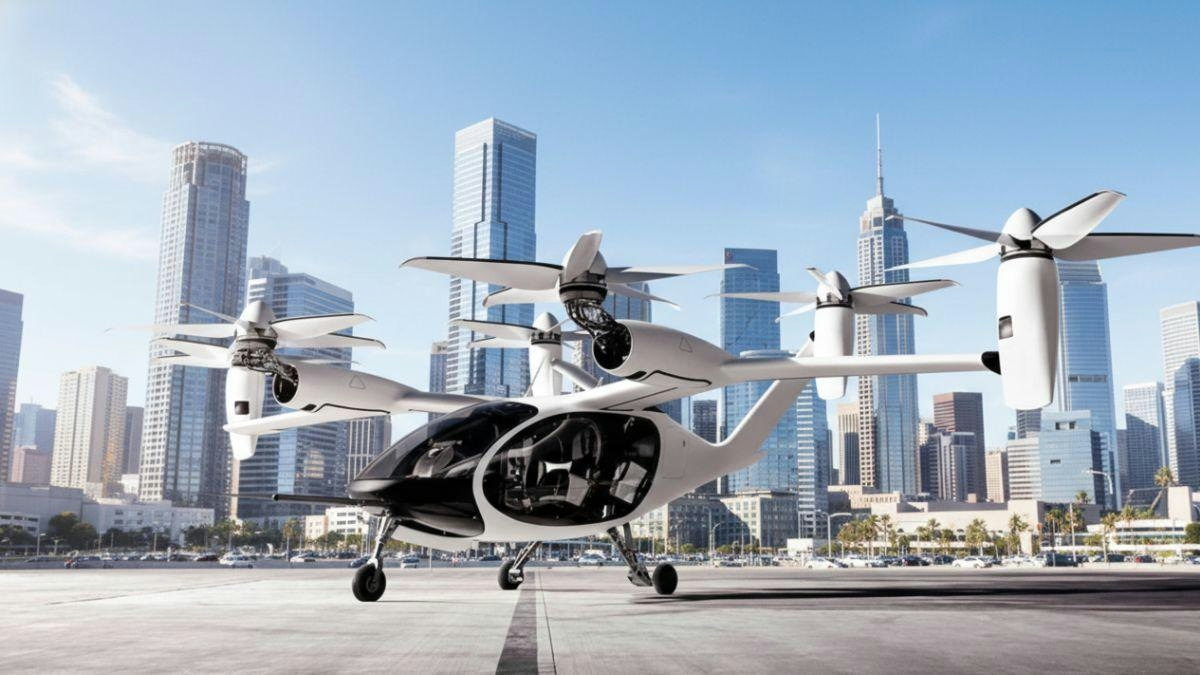
Electric Air Taxis Integrated into Uber App
A transformative development in urban transportation is underway as Uber and Joby Aviation prepare to launch all-electric air taxi services later this year in Dubai. This initiative represents a significant advancement in their partnership, aiming to introduce multi-modal, on-demand mobility solutions to cities globally and bring the concept of futuristic, “Jetsons”-style travel closer to everyday reality.
Booking and Aircraft Features
Users will soon be able to book electric air taxis directly through the Uber app. By entering a destination in the familiar “Where to?” search bar, eligible trips will present the option “Uber Air powered by Joby.” With a single tap, the app will seamlessly coordinate the entire journey, including ground transportation via Uber Black for both pickup and drop-off.
Joby’s electric aircraft is engineered to accommodate up to four passengers, providing spacious seating and expansive panoramic views of the city through large windows. Operated by certified commercial pilots, the aircraft employs six tilting propellers enabling vertical takeoff and landing, transitioning smoothly to forward flight. It can reach speeds of up to 200 miles per hour and cover distances of approximately 100 miles on a single battery charge.
Regulatory Challenges and Safety Considerations
While Dubai will host the inaugural commercial flights, expansion into the United States and other international markets faces considerable regulatory obstacles. The Federal Aviation Administration (FAA) mandates rigorous testing and certification before permitting commercial operations. Joby Aviation has completed over 50,000 miles of flight testing and is currently in the final stages of the FAA certification process, reflecting the industry’s commitment to safety and regulatory compliance.
Similar regulatory delays have affected other cities, including Paris, where planned public launches have been postponed. These challenges underscore the complexity of integrating electric air taxis into existing urban airspace and infrastructure.
Competitive Landscape and Industry Implications
Uber and Joby are part of a growing field of companies striving to revolutionize urban air mobility. Competitors such as Blade Air Mobility and Eve Air Mobility are advancing their own electric air taxi initiatives, intensifying competition within this emerging sector. The increasing number of entrants is expected to accelerate innovation and heighten the urgency to obtain regulatory approvals.
Market Response and Infrastructure Concerns
The announcement has garnered significant interest from investors and urban planners, particularly regarding the environmental advantages of electric air taxis and their potential to alleviate urban congestion. Nonetheless, concerns persist about the readiness of essential supporting infrastructure, including charging facilities and dedicated landing zones, which are vital for widespread adoption.
As the industry continues to address regulatory, safety, and infrastructure challenges, the integration of electric air taxis into the Uber app marks a pivotal moment in urban mobility, potentially ushering in a new era of airborne commuting for city residents worldwide.

Oklahoma’s Aerospace Industry Expands and Its Impact on the State Economy
Archer Aviation Confronts Setbacks Amid Declining Air Taxi Interest

FAA and EASA Mandates to Influence Flight Line Testing Equipment Market Through 2035
Willis Lease Operates as a Leveraged Spread Business with Moderate Returns
Chinese Team Develops First Flight Control Software for Bamboo Drones
Government Moves Forward with Boeing Purchase, Considers Airbus Leasing
SkyHope Appoints Aviation Industry Leader to Board
The Challenges of Certifying Autonomous Aircraft
KLM to Receive First Airbus A350, Announces Initial Routes
Saxon Air Receives Clean and Green Energy Innovation Award
