
AeroGenie — Tu copiloto inteligente.

Tendencias
Categories
Why Pilots Start Jet Engines Before Takeoff
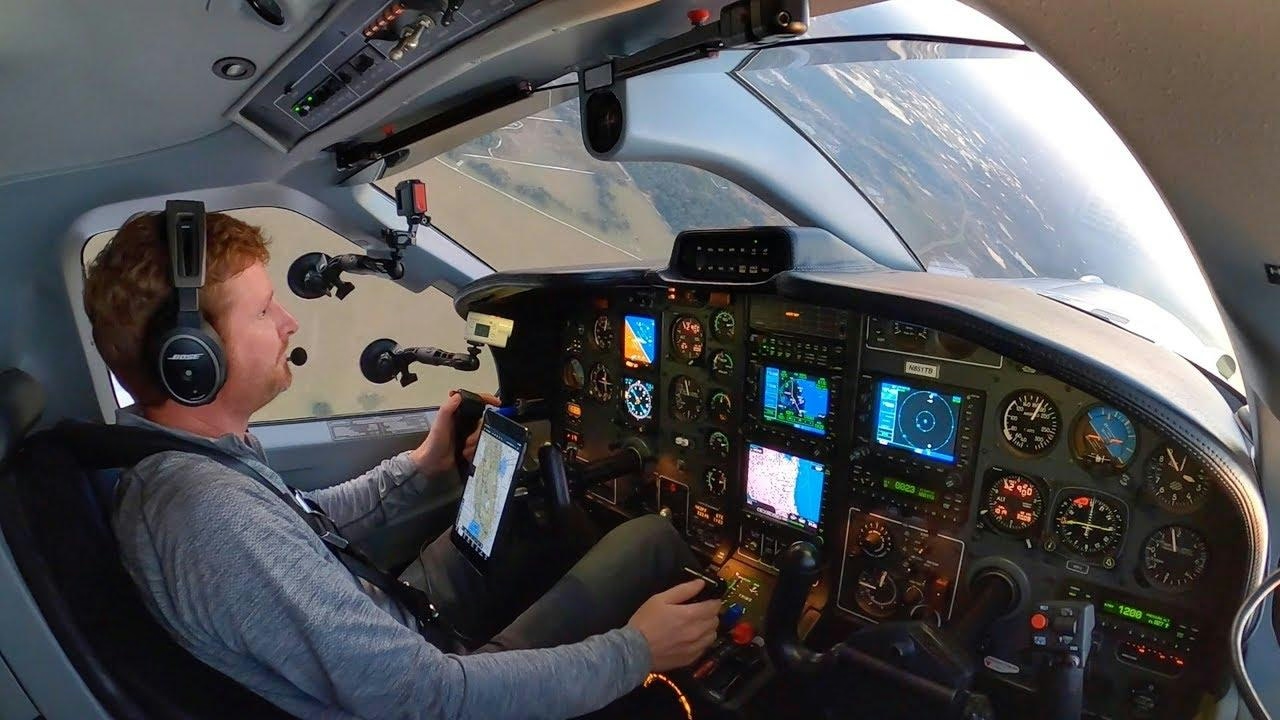
Why Pilots Start Jet Engines Before Takeoff
Before nearly every jet departure, a brief but deliberate pause occurs on the runway: the engines surge in power while the aircraft remains stationary. To passengers and observers, this moment may appear as hesitation, yet it is a critical and highly structured component of flight operations. Unlike automobiles, jet aircraft cannot simply accelerate from a stop with a quick push of the throttle. Pilots must carefully manage engine response time, thrust symmetry, and directional control, particularly during the initial seconds of the takeoff roll.
The Importance of Engine Spooling
This procedure, known as “spooling up” the engines, is essential to ensure that the aircraft’s actual performance aligns precisely with the calculations made during pre-flight planning. Prior to brake release, pilots advance the thrust levers to a predetermined setting and allow the engines to stabilize. Only after this stabilization do they release the brakes and commence the takeoff roll. This sequence is not merely about maximizing thrust; it is fundamentally about reducing uncertainty and mitigating risk at the critical moment when the aircraft transitions from ground movement to flight.
Takeoff represents the most performance-critical phase of flight. Once acceleration begins, pilots commit to a sequence governed by runway length, acceleration rates, and decision speeds—all predicated on the assumption that the engines are already delivering the required thrust. Allowing the engines to stabilize before movement ensures these assumptions remain valid, rather than relying on engines still in the process of ramping up.
This approach also serves to manage pilot workload effectively. By verifying engine performance while the aircraft is stationary, pilots can concentrate exclusively on engine indications and thrust symmetry without the simultaneous challenge of maintaining directional control. Once thrust is confirmed, their focus shifts to tracking the runway centerline and monitoring acceleration, thereby reducing cognitive load during a high-pressure phase where errors can have severe consequences.
Technical and Industry Considerations
Jet engines, particularly modern high-bypass turbofans, do not respond instantaneously. They generate thrust by accelerating a large mass of air, with the majority of force produced by the fan rather than the exhaust. The intricate system of turbines, compressors, and shafts requires time to reach the desired power setting, making the stabilization pause indispensable.
However, the spooling process is not without challenges. The North American aviation engine market, for instance, continues to grapple with maintenance, repair, and overhaul (MRO) issues, as recent industry analyses have highlighted. These challenges have influenced production rates and strategic decisions at major manufacturers such as Airbus and Boeing. Boeing’s recent industrial reset, aimed at enhancing safety and financial performance, has resulted in increased production rates—reaching 42 aircraft per month for the 737 MAX—and a renewed emphasis on engine reliability. This shift has driven heightened demand for advanced engines like GE Aerospace’s LEAP and GE9X models, as airlines and manufacturers prioritize both safety and operational efficiency.
Ultimately, the brief pause to spool up jet engines before takeoff exemplifies the precision, planning, and risk management that underpin modern aviation. It ensures that every takeoff begins with engines performing exactly as expected, supporting both safety and the complex demands of today’s airline industry.

Oklahoma’s Aerospace Industry Expands and Its Impact on the State Economy
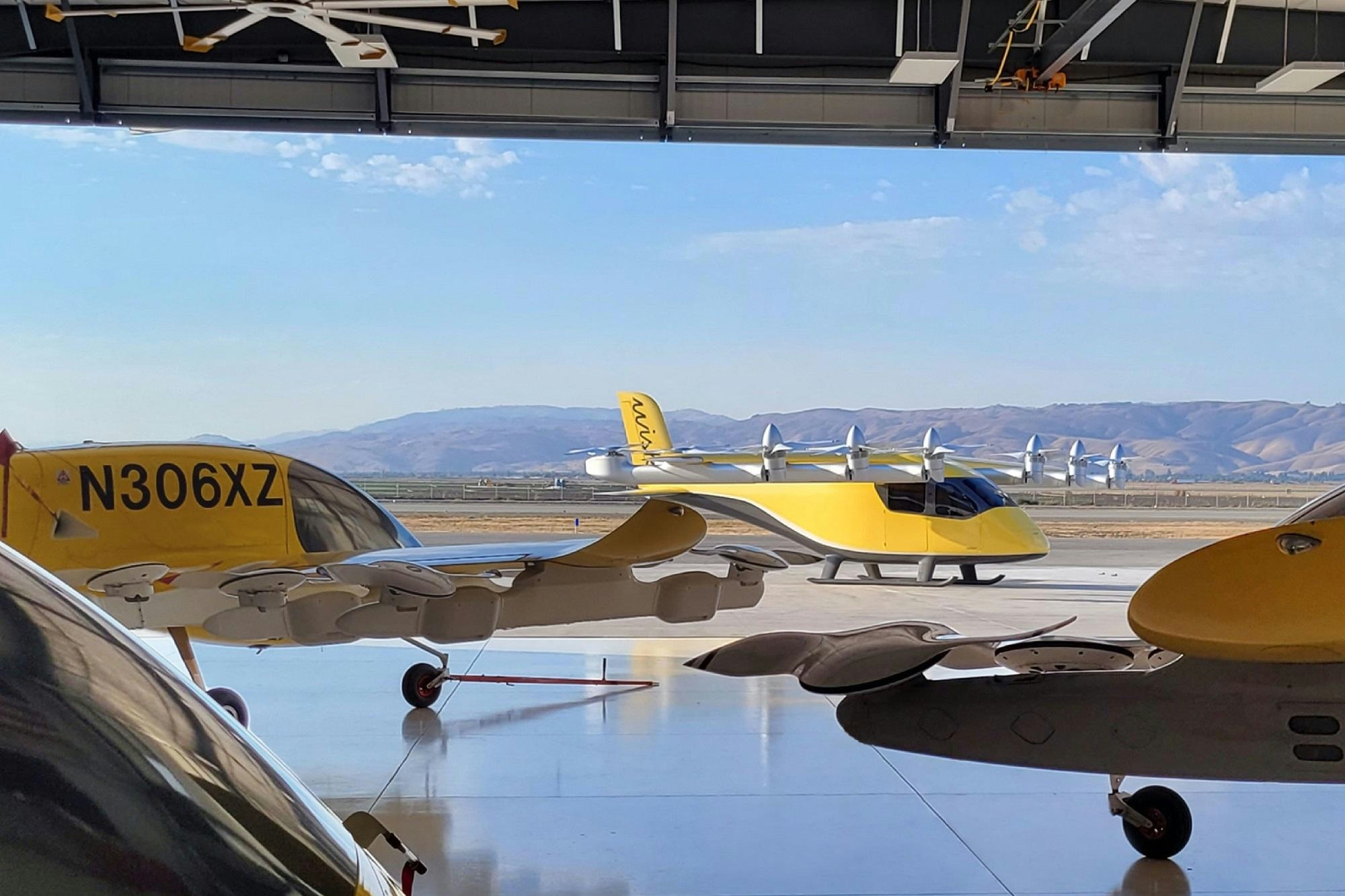
Archer Aviation Confronts Setbacks Amid Declining Air Taxi Interest

FAA and EASA Mandates to Influence Flight Line Testing Equipment Market Through 2035
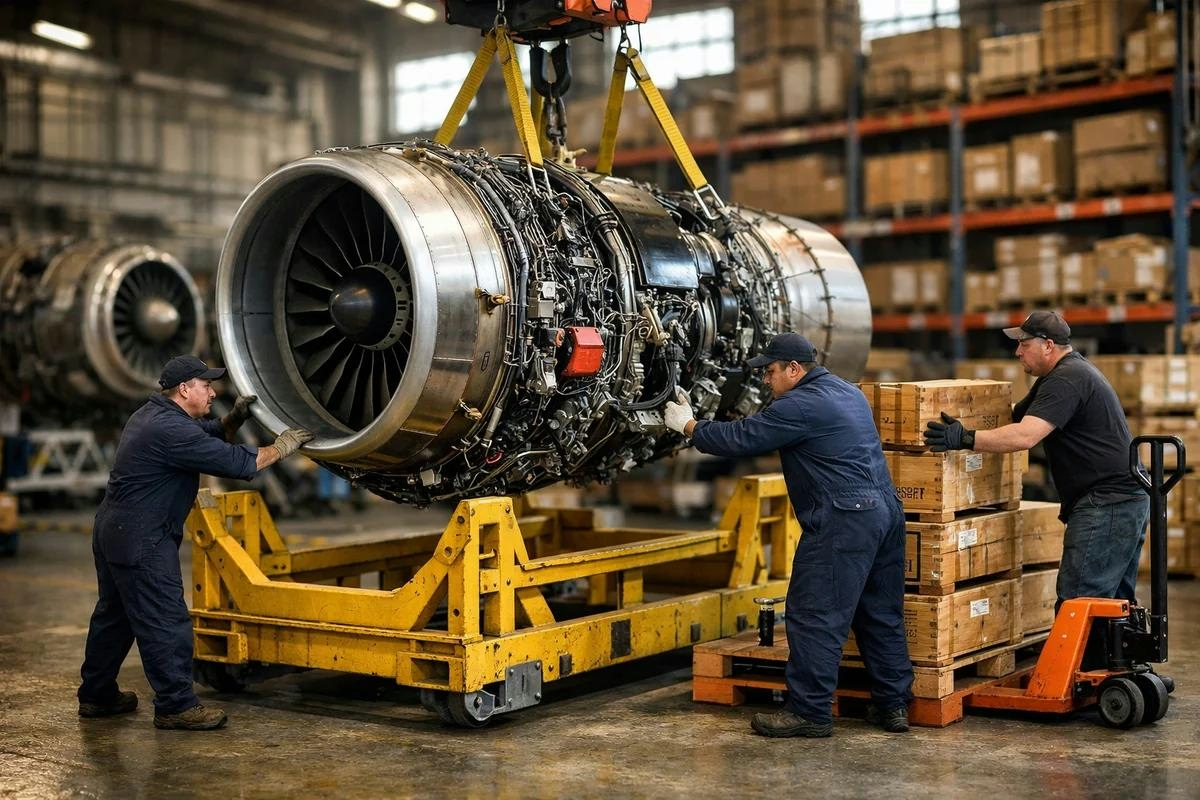
Willis Lease Operates as a Leveraged Spread Business with Moderate Returns
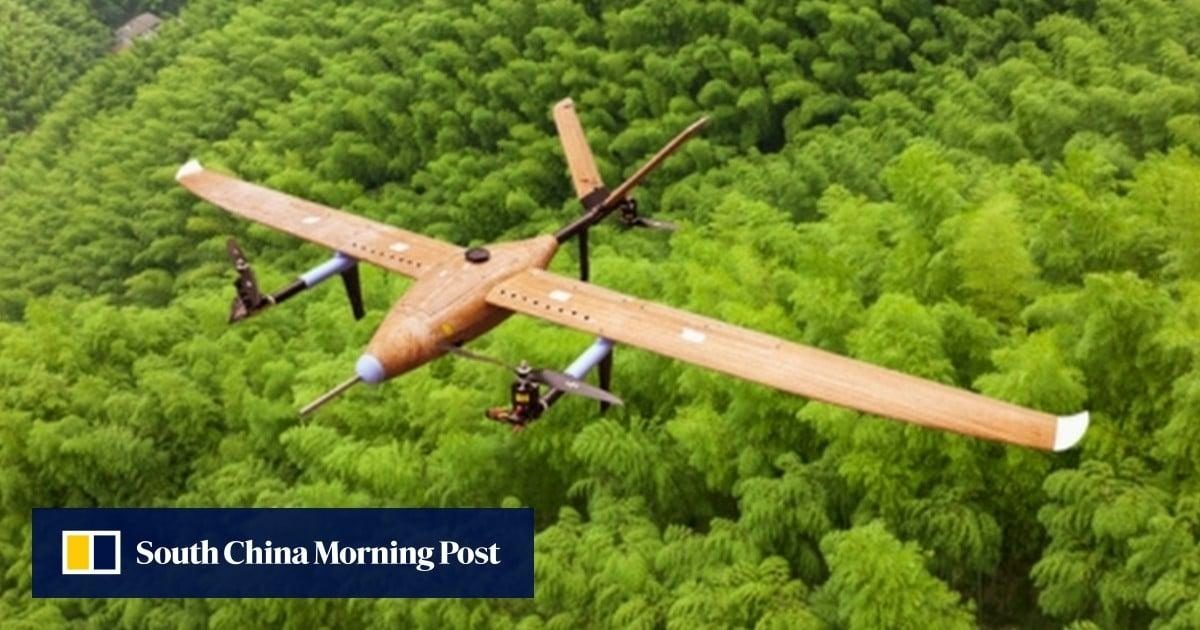
Chinese Team Develops First Flight Control Software for Bamboo Drones
Government Moves Forward with Boeing Purchase, Considers Airbus Leasing
SkyHope Appoints Aviation Industry Leader to Board
The Challenges of Certifying Autonomous Aircraft
KLM to Receive First Airbus A350, Announces Initial Routes
Saxon Air Receives Clean and Green Energy Innovation Award
