
AeroGenie — Tu copiloto inteligente.

Tendencias
Categories
Vietjet Adds Airbus A330 to Fleet
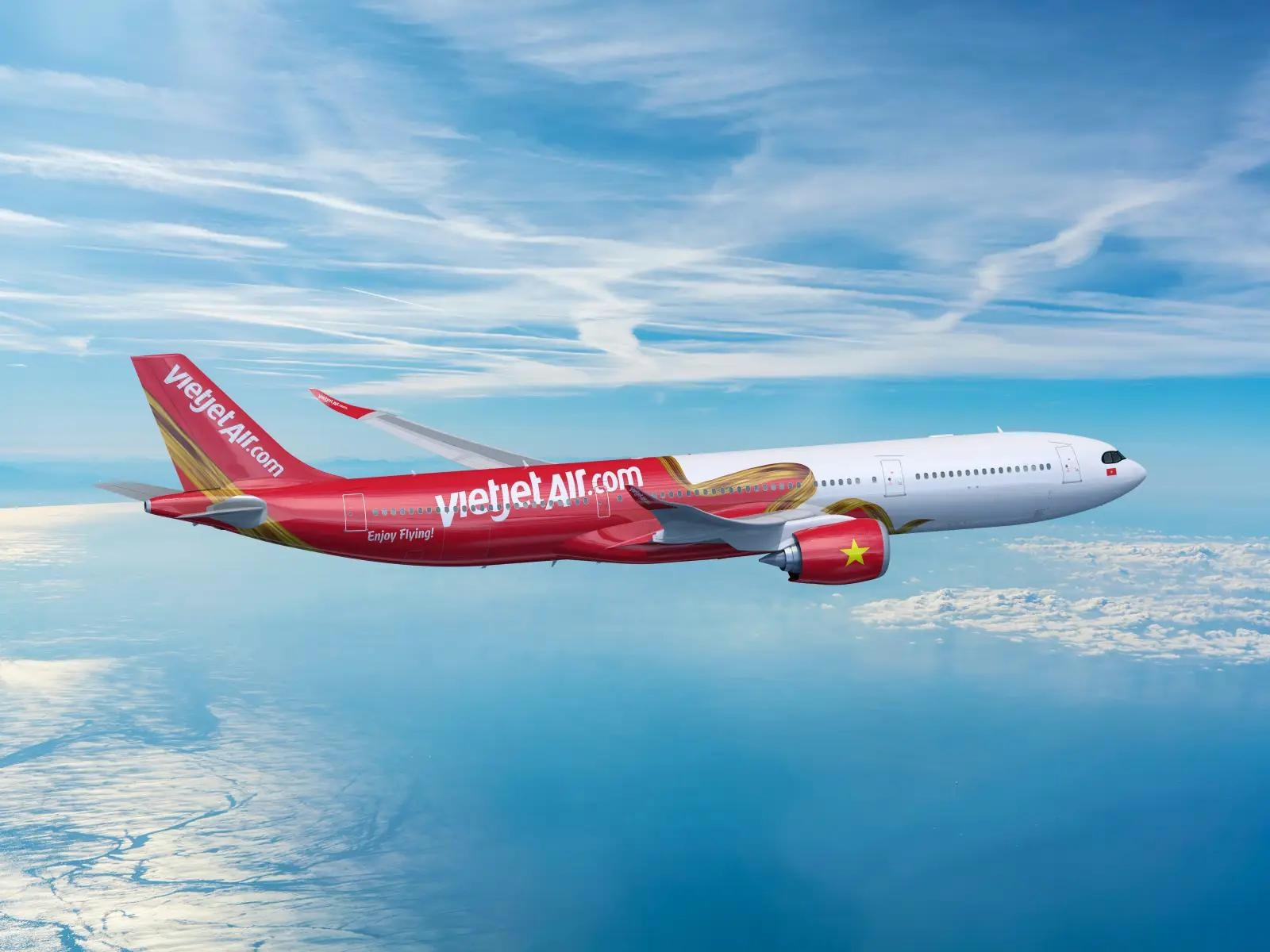
Vietjet Expands Fleet with Airbus A330 Widebody Aircraft
Vietjet has augmented its fleet by introducing an Airbus A330 widebody aircraft, increasing the airline group’s total to 121 planes. This addition marks a significant milestone in the carrier’s international expansion strategy. The new A330 will be deployed immediately on key routes connecting India and Vietnam, as well as services to Australia, Japan, and Kazakhstan, enhancing Vietjet’s capacity and service quality on these long-haul sectors.
Strengthening International Connectivity
Currently, Vietjet operates ten direct routes linking major Indian cities—including Delhi, Mumbai, Ahmedabad, Kochi, Hyderabad, and Bengaluru—with prominent Vietnamese destinations such as Hanoi, Da Nang, and Ho Chi Minh City. The integration of the A330 is expected to bolster these connections by accommodating increased passenger demand and improving overall service standards. This move aligns with Vietjet’s broader objective to expand its international network and compete more effectively in the global aviation market.
Operational Challenges and Regional Competition
The introduction of a widebody aircraft like the A330 also presents operational challenges. Maintenance and operational costs for widebody jets are generally higher than those for narrowbody aircraft, which may affect Vietjet’s cost structure. This development occurs amid intensifying competition in the Southeast Asian aviation sector, where carriers such as AirAsia X are expanding their fleets with Airbus A321neos and A321LRs. Industry analysts anticipate that competitors may respond with strategic pricing adjustments or by launching new routes to protect their market share.
Moreover, Vietjet’s fleet expansion could prompt neighboring airlines to reconsider their own strategies. Airlines such as RwandAir and Kenya Airways, which have recently faced financial difficulties due to aircraft groundings and operational disruptions, may reevaluate their fleet compositions in light of Vietjet’s growing presence.
Future Growth Prospects
Looking forward, Vietjet is pursuing an ambitious growth plan, with over 400 new aircraft on order from Airbus and Boeing through 2030. The airline aims to leverage a modernized fleet, adopt advanced technologies, and enhance operational efficiency as it seeks to strengthen its position in the increasingly competitive international aviation landscape.

Oklahoma’s Aerospace Industry Expands and Its Impact on the State Economy
Archer Aviation Confronts Setbacks Amid Declining Air Taxi Interest

FAA and EASA Mandates to Influence Flight Line Testing Equipment Market Through 2035
Willis Lease Operates as a Leveraged Spread Business with Moderate Returns
Chinese Team Develops First Flight Control Software for Bamboo Drones
Government Moves Forward with Boeing Purchase, Considers Airbus Leasing
SkyHope Appoints Aviation Industry Leader to Board
The Challenges of Certifying Autonomous Aircraft
KLM to Receive First Airbus A350, Announces Initial Routes
Saxon Air Receives Clean and Green Energy Innovation Award
