
AeroGenie — Tu copiloto inteligente.

Tendencias
Categories
FAA Approves Electric Air Taxis for U.S. Flights Starting Summer 2026

FAA Approves Electric Air Taxis for U.S. Flights Starting Summer 2026
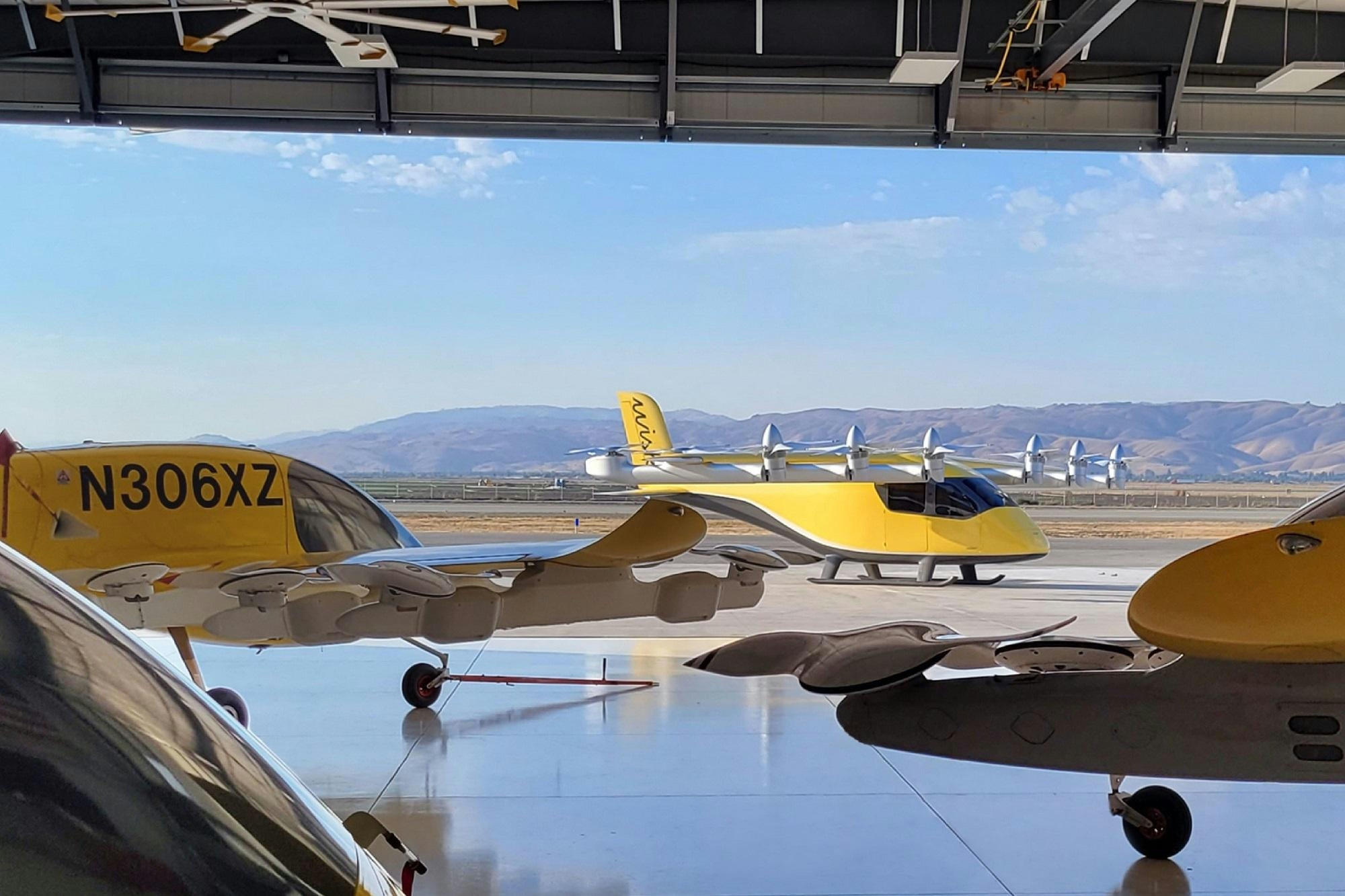
The Federal Aviation Administration (FAA) has authorized the operation of electric air taxis in the United States beginning as early as summer 2026, marking a pivotal advancement in urban air mobility. This approval comes with stringent safety requirements, mandating that these next-generation aircraft meet standards on par with commercial airliners. The FAA expects these electric vertical takeoff and landing (eVTOL) vehicles to achieve an exceptionally low failure rate—less than one incident per billion flight hours—making them significantly safer per mile than conventional road travel.
Accelerating Innovation Through Pilot Programs
After years of cautious regulation that many industry stakeholders viewed as a barrier to progress, the FAA is now actively expediting development through strategic political support and collaboration with private companies. The agency has approved eight pilot programs spanning 26 states, facilitating the transition from conceptual designs to operational testing. Leading companies such as Archer Aviation, Beta Technologies, Joby Aviation, and Wisk are at the forefront, each striving to demonstrate the commercial viability of eVTOL technology.
Test flights will take place in a variety of locations, including Florida, Manhattan, Texas, and Utah. Florida’s selection is particularly significant given its well-documented traffic congestion, providing an ideal environment to showcase the potential of air taxis to revolutionize urban commuting. These aircraft are designed to be cleaner and quieter than traditional helicopters, while offering fare prices competitive with popular ride-hailing services like Uber.
Expanding Applications and Industry Challenges
The scope of the pilot programs extends beyond passenger transport to include cargo delivery and emergency response, underscoring the broad utility of electric air taxis. Urban planners and technology investors are closely monitoring these developments, intrigued by the possibility of integrating eVTOLs into existing city infrastructure. Nonetheless, the path forward remains complex. Regulatory challenges, safety assurances, and the establishment of new infrastructure—such as rooftop landing pads and charging stations—pose significant hurdles to widespread adoption.
Market responses have been mixed. Established aviation sectors have expressed skepticism, concerned about competition and the complexities of managing eVTOL traffic within already congested airspace. Some companies are pursuing strategic partnerships to strengthen their positions, while others are preparing for intensified rivalry as the market evolves.
Notably absent from the list of test sites is Los Angeles, a city widely anticipated to be an early adopter, especially with the 2028 Olympic Games approaching. This exclusion may affect the ambitions of firms like Archer Aviation, which had planned to leverage the global spotlight to showcase their technology.
Despite these uncertainties, the federal pilot program reflects a robust governmental commitment to fostering innovation in air mobility. By concentrating on urban environments and practical use cases, the FAA aims to establish a regulatory framework that ensures the safe and efficient integration of electric air taxis into American airspace. If successful, this initiative could transform urban transportation by providing a cleaner, quieter, and potentially more affordable alternative to traditional modes of travel.

Plane lands on Pennsylvania highway due to ‘engine issues,’ FAA says

LEVEL Suspends San Francisco Flights Due to Engine Shortage

China Conducts First Flight Test of Megawatt Hydrogen Turboprop Engine

Oklahoma’s Aerospace Industry Expands and Its Impact on the State Economy
Archer Aviation Confronts Setbacks Amid Declining Air Taxi Interest

FAA and EASA Mandates to Influence Flight Line Testing Equipment Market Through 2035

Willis Lease Operates as a Leveraged Spread Business with Moderate Returns

Chinese Team Develops First Flight Control Software for Bamboo Drones
Government Moves Forward with Boeing Purchase, Considers Airbus Leasing

Changes in Airline Industry Leadership, Alliances, and AI
