
AeroGenie — Ihr intelligenter Copilot.

Trends
Categories
Supersonic X-59 jet soars over California desert in first test flight
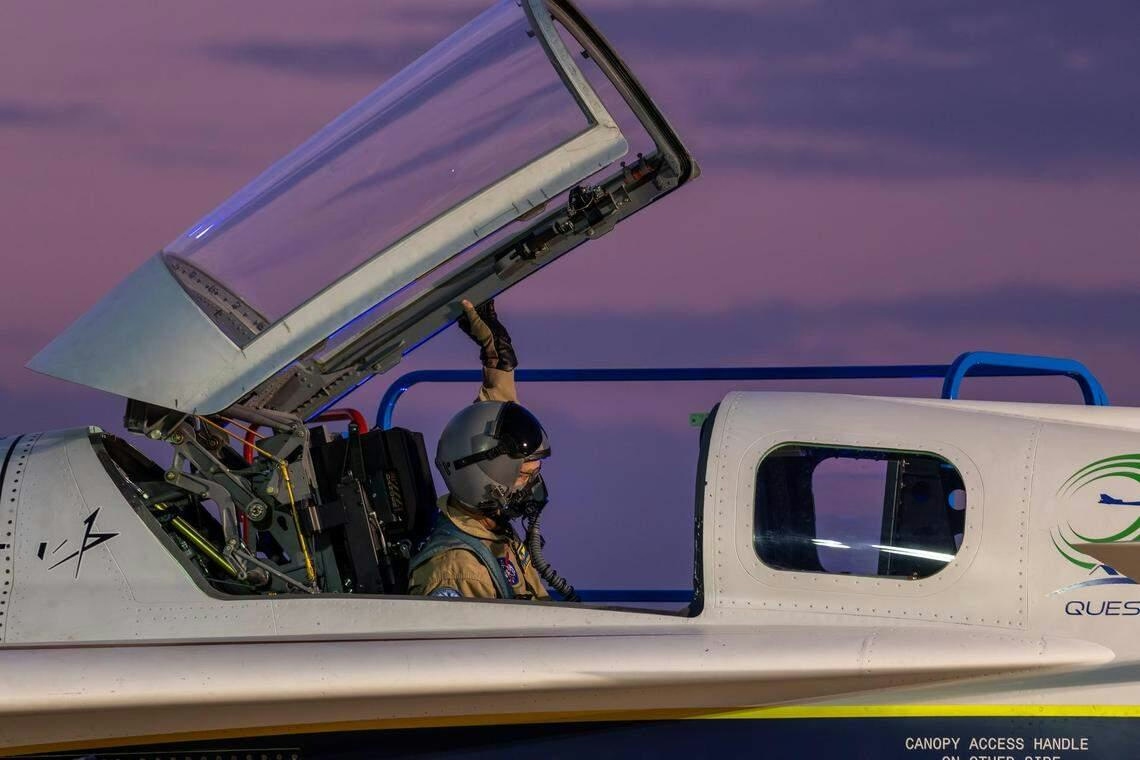
Supersonic X-59 Jet Completes Maiden Flight Over California Desert
NASA’s experimental X-59 Quesst jet successfully completed its first test flight over the California desert, marking a pivotal advancement in the pursuit of quiet supersonic travel. Developed in collaboration with Lockheed Martin, the aircraft took off from Runway 7 at Palmdale’s USAF Plant 42 on October 28, 2025. Although the initial flight was conducted at subsonic speeds, the X-59 is designed to cruise at Mach 1.4 at an altitude of 55,000 feet.
Innovations in Quiet Supersonic Travel
The X-59 project seeks to overcome one of the most significant obstacles to commercial supersonic flight: the disruptive sonic boom. Through innovative aerodynamic design, the aircraft aims to reduce the intensity of sonic booms to a soft “thump.” This breakthrough has the potential to enable regulatory approval for supersonic travel over land, a restriction that has hindered the viability of such flights since the era of the Concorde.
Despite this progress, several challenges remain. Regulatory authorities will need to thoroughly assess the X-59’s performance and its impact on communities before permitting routine supersonic operations over populated areas. Public acceptance is a critical factor, as concerns about noise pollution and environmental consequences continue to persist. From a technological standpoint, further testing and refinement are necessary to maintain the jet’s quiet supersonic profile while ensuring safety and operational efficiency.
Implications for the Future of Aviation
The successful inaugural flight has already generated heightened interest in the future of supersonic travel. Industry analysts suggest that the X-59’s advancements could stimulate new investments in aerospace technologies and prompt competitors to accelerate their own supersonic aircraft development. This momentum may lead to the emergence of new business models and significant shifts within the aviation sector, as companies seek to capitalize on the potential resurgence of commercial supersonic service.
As NASA and Lockheed Martin proceed with their testing program, the X-59 Quesst stands as a symbol of innovation and the ongoing effort to make faster-than-sound travel both practical and widely acceptable. The coming months will be crucial in determining whether the promise of quiet supersonic flight can be realized for passengers and airlines alike.
LEVEL Suspends San Francisco Flights Due to Engine Shortage
China Conducts First Flight Test of Megawatt Hydrogen Turboprop Engine
Oklahoma’s Aerospace Industry Expands and Its Impact on the State Economy
Archer Aviation Confronts Setbacks Amid Declining Air Taxi Interest

FAA and EASA Mandates to Influence Flight Line Testing Equipment Market Through 2035

Willis Lease Operates as a Leveraged Spread Business with Moderate Returns
Chinese Team Develops First Flight Control Software for Bamboo Drones
Government Moves Forward with Boeing Purchase, Considers Airbus Leasing
SkyHope Appoints Aviation Industry Leader to Board
The Challenges of Certifying Autonomous Aircraft
