
AeroGenie — Ihr intelligenter Copilot.

Trends
Categories
Southwest Airlines Highlights Challenges of AI Integration
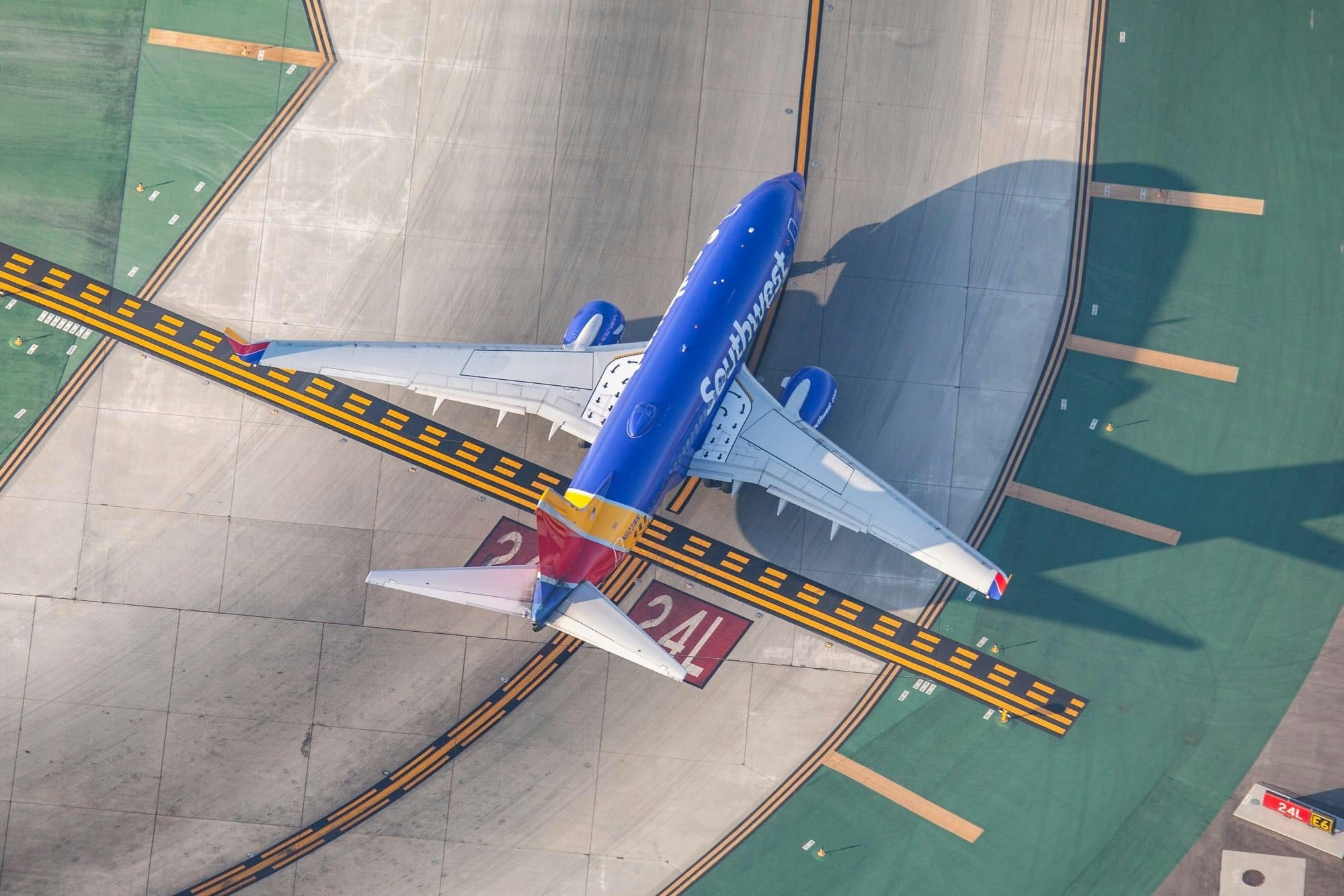
Southwest Airlines Highlights Challenges of AI Integration
At Salesforce’s annual Dreamforce event in San Francisco, CEO Marc Benioff emphasized a significant disconnect in the technology sector’s rapid push to integrate artificial intelligence (AI) across various industries. Benioff remarked on the overwhelming pace of technological innovation, noting that the acceleration of new technologies far outstrips the rate at which customers and companies can adopt them. This disparity is particularly pronounced in the airline industry, where the adoption of AI is advancing swiftly but unevenly.
Navigating Complexities in the Airline Sector
Stephen Berkowitz, a technology lead at Southwest Airlines, echoed Benioff’s observations during a breakout session at Dreamforce. He described the process of AI adoption at Southwest as more intricate than the polished marketing narratives often presented by technology firms like Salesforce. Southwest Airlines faces a distinct set of challenges in integrating advanced AI solutions, including stringent regulatory requirements and rigorous safety protocols. These factors, combined with the airline’s strong commitment to customer service, have led to a cautious and deliberate approach to AI implementation.
Unlike some competitors that have rapidly deployed AI-driven tools such as conversational bots and automated customer service agents, Southwest prioritizes responsible adoption over speed. Berkowitz explained that the airline carefully weighs multiple considerations before introducing AI technologies, particularly those that could affect its customer-centric culture. The focus remains on enhancing operational efficiency without compromising safety or service quality.
Balancing Innovation with Operational Realities
Industry analysts have noted that Southwest’s measured approach carries inherent risks. Moody’s has cautioned that slow AI adoption may result in diminished profit margins and loss of market share, as rivals capitalize on new technologies to streamline operations and improve customer experiences. Despite these pressures, Southwest remains steadfast in balancing innovation with the complex regulatory and operational demands of the airline industry.
Southwest’s experience underscores a broader challenge faced by legacy companies: the need to harness AI’s potential while preserving core values and adhering to strict industry standards. The airline’s strategy reflects an understanding that successful AI integration extends beyond technical implementation, requiring a strategic evaluation of both the risks and benefits involved.
Chinese Team Develops First Flight Control Software for Bamboo Drones
SkyHope Appoints Aviation Industry Leader to Board
The Challenges of Certifying Autonomous Aircraft
KLM to Receive First Airbus A350, Announces Initial Routes
Saxon Air Receives Clean and Green Energy Innovation Award
How BEB Tax Policies Impact Airlines’ International Leasing Contracts
Indonesia’s Danantara and Mandiri Partner with SMBC to Launch $800 Million Aviation Leasing Fund
South Korea’s SUM Air Places Order for New ATR Aircraft
Benoît Rollier Named Vice President of KLM Engine Service
Azorra Expands Engine Portfolio Through Deal with DAE
