
AeroGenie — Ihr intelligenter Copilot.

Trends
Categories
PH Aerospace and MRO Exports Reach $603 Million, Says DTI

Philippine Aerospace and MRO Exports Surge to $603 Million
The Philippines is intensifying its efforts to attract investments in aerospace manufacturing and maintenance, repair, and overhaul (MRO) services, capitalizing on steady export growth and deeper integration into global supply chains. According to the Board of Investments, aerospace exports from the Philippines reached US$590.2 million in 2024 and further increased to US$603.1 million in the first nine months of 2025. The country’s key export markets include the United States, Singapore, France, and China.
Strategic Promotion at Singapore Airshow 2026
Building on this positive momentum, the Department of Trade and Industry (DTI), through the Philippine Trade and Investment Centre in Singapore (PTIC-Singapore), actively promoted the nation’s aerospace manufacturing, parts production, sub-assemblies, and MRO services at the Philippine Pavilion during the Singapore Airshow 2026. Led by Commercial Counsellor Carla Grepo, the DTI Singapore team facilitated business matching and targeted introductions between Philippine firms and potential foreign investors, buyers, and partners.
This engagement also sought to strengthen industry collaboration, notably between the Aerospace Industries Association of the Philippines and the Association of Aerospace Industries Singapore. The Philippines hosts established aerospace manufacturers and global MRO operators, supported by a growing local supplier base specializing in precision machining, components, and assemblies. These operations are strategically located within investment-ready industrial zones and airport-linked developments.
Challenges Amid Regional Competition and Market Dynamics
Despite these advances, the sector faces significant challenges in expanding its global footprint. Competition from established industry leaders remains intense. For instance, RTX, a major multinational aerospace and defense firm, recently committed $139 million to MRO investments in Singapore, highlighting the competitive environment in the region. Such developments may lead to increased scrutiny from regulators and customers regarding service quality and cost efficiency, while competitors may respond with aggressive pricing or enhanced service offerings to maintain market share.
Operational challenges persist as well, including regional workforce constraints and the need to develop new engine MRO capabilities. These issues were underscored in recent industry discussions such as the Aviation Week MRO Podcast. The Asia-Pacific engine MRO market is projected to exceed $30 billion by 2035, presenting both significant opportunities and complex challenges amid evolving technological and regulatory demands.
Collaborative Industry Presence and Future Prospects
The Philippine Pavilion at the Singapore Airshow brought together economic agencies, infrastructure operators, and private-sector firms engaged in aviation and aerospace. Delegates included representatives from the Civil Aviation Authority of the Philippines, Philippine Airlines, Clark International Airport Corporation, Aerospace Industries Association of the Philippines, LIPAD Corporation, Poro Point Management Corporation, European Chamber of Commerce of the Philippines, Berthaphil Inc., Skytrack Aviation Services, Skyway Airlines, and Wingbox Aviation. Sponsored by the Bases Conversion and Development Authority and the Department of Tourism, the Pavilion was open to visitors from February 3 to 6, 2026.
Singapore’s role as a regional headquarters hub for global aviation and aerospace firms provides a strategic platform for investment discussions, particularly for companies seeking manufacturing and service partnerships in Southeast Asia. Interested parties are encouraged to contact PTIC-Singapore at singapore@dti.gov.ph for further engagement.

Plane lands on Pennsylvania highway due to ‘engine issues,’ FAA says

LEVEL Suspends San Francisco Flights Due to Engine Shortage
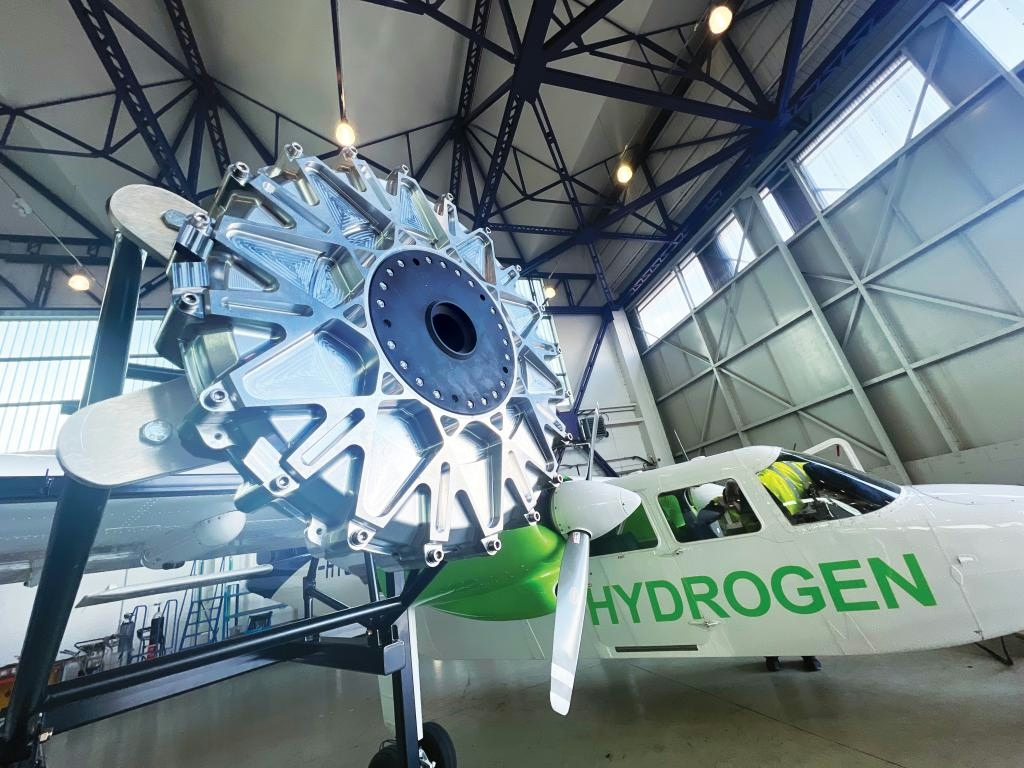
China Conducts First Flight Test of Megawatt Hydrogen Turboprop Engine

Oklahoma’s Aerospace Industry Expands and Its Impact on the State Economy

Archer Aviation Confronts Setbacks Amid Declining Air Taxi Interest

FAA and EASA Mandates to Influence Flight Line Testing Equipment Market Through 2035
Willis Lease Operates as a Leveraged Spread Business with Moderate Returns

Chinese Team Develops First Flight Control Software for Bamboo Drones
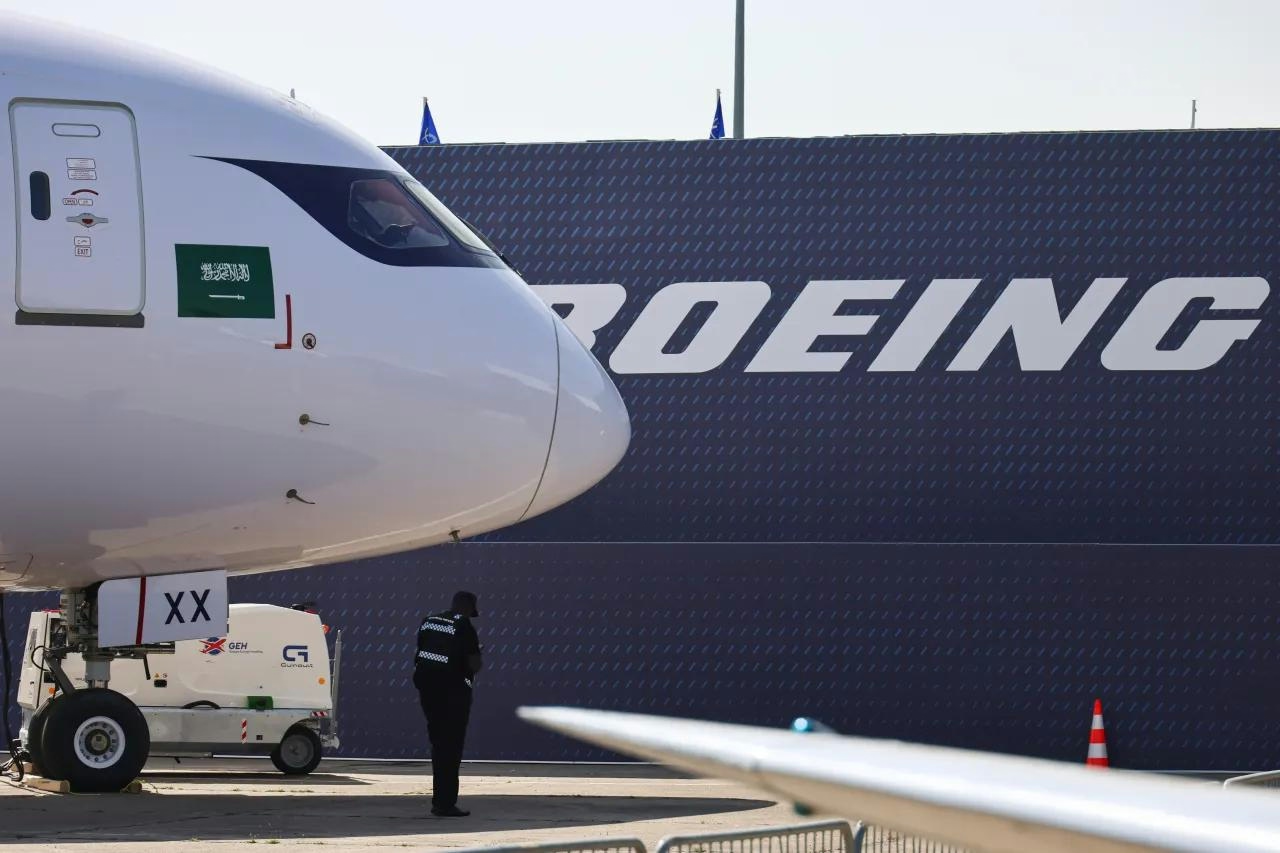
Government Moves Forward with Boeing Purchase, Considers Airbus Leasing

Changes in Airline Industry Leadership, Alliances, and AI
