
AeroGenie — Ihr intelligenter Copilot.

Trends
Categories
Palantir Integrates AI into Critical Systems
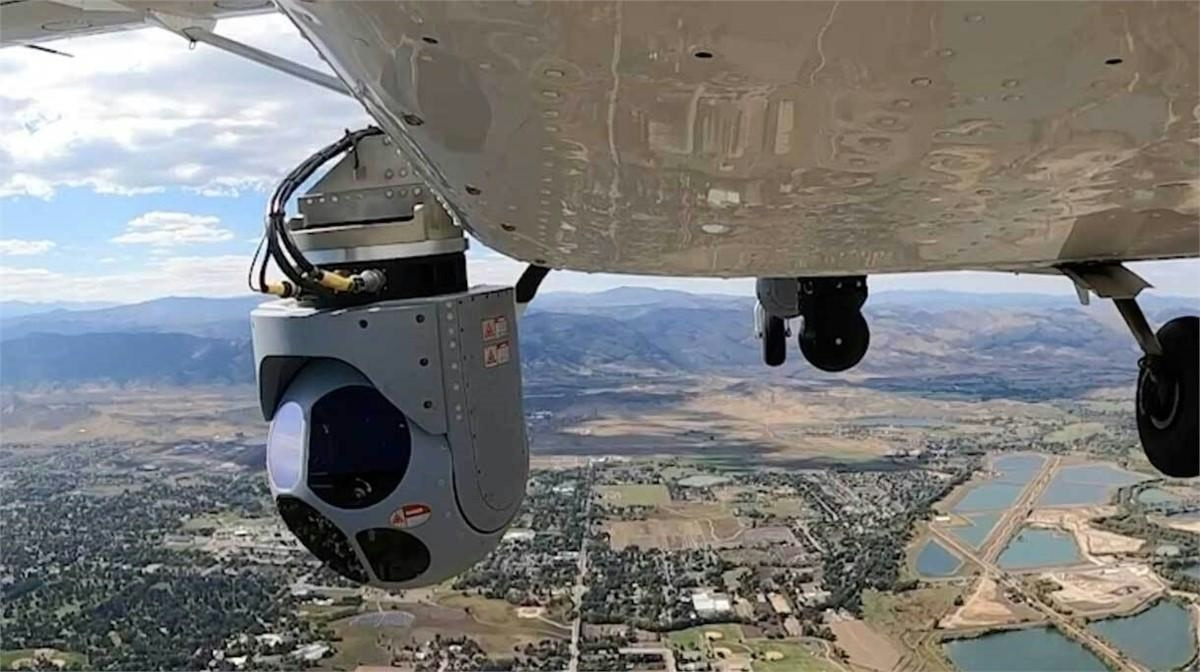
Palantir Integrates AI into Critical Systems
Artificial intelligence has transitioned from experimental applications to becoming an integral component of industries where failure is not an option. Its influence spans from optimizing airline operations to accelerating pharmaceutical research and enhancing emergency response efforts. At Palantir’s eighth AIPCon conference, leaders from aviation, healthcare, and public sectors showcased how the company’s platforms are now central to mission-critical systems that sustain safety, economic stability, and industrial progress.
Transforming Aviation Operations
American Airlines exemplifies the transformative impact of AI on complex operational workflows. Anne Moroni, the airline’s vice president of operations, described the previous reliance on manual spreadsheets and fragmented communication channels as a significant bottleneck. The adoption of Palantir’s Foundry platform, alongside a planning tool named Vector, has revolutionized these processes. Amit Shinde, director of operations, emphasized the collaborative effort to reimagine workflows through AI-driven recommendations that analyze the entire network for actionable insights. This integration has unlocked tens of millions of dollars in value within a single year, demonstrating the tangible benefits of AI in streamlining airline scheduling and management.
Accelerating Healthcare and Pharmaceutical Innovation
In the healthcare sector, AI’s role is equally transformative, particularly in drug discovery and patient care. Birgit Schoeberi, head of Data 42 at Novartis, outlined the formidable challenges inherent in bringing new medicines to market, a process traditionally requiring 12 years and $3 billion. Through a partnership with Palantir, Novartis developed Data 42, a platform that consolidates data from 700 million patient records and 3,000 clinical trials, enabling researchers to access and analyze information across previously isolated datasets. Schoeberi highlighted a dramatic reduction in the time required for human dose prediction by translational modelers—from one week to just two hours—underscoring AI’s potential to accelerate critical research phases. Additionally, hospitals are increasingly employing AI to enhance patient outcomes and streamline insurance workflows, further embedding the technology within essential healthcare infrastructure.
Industry Challenges and Competitive Dynamics
Despite these advancements, Palantir faces significant challenges, particularly in attracting and retaining the specialized talent necessary to manage and optimize sophisticated AI systems. Investor sentiment remains divided; while some are attracted to Palantir’s innovative approach, others favor the more predictable growth trajectories of established firms like IBM. The competitive landscape is intensifying as rivals accelerate their AI initiatives. Companies such as DXC Technology are forging strategic partnerships with startups to enhance their AI capabilities, especially in sectors like automotive and manufacturing.
As Palantir and its competitors deepen AI integration into critical operations, the technology’s expanding influence promises substantial benefits alongside emerging complexities, reshaping industries and daily life alike.

Archer Aviation Confronts Setbacks Amid Declining Air Taxi Interest
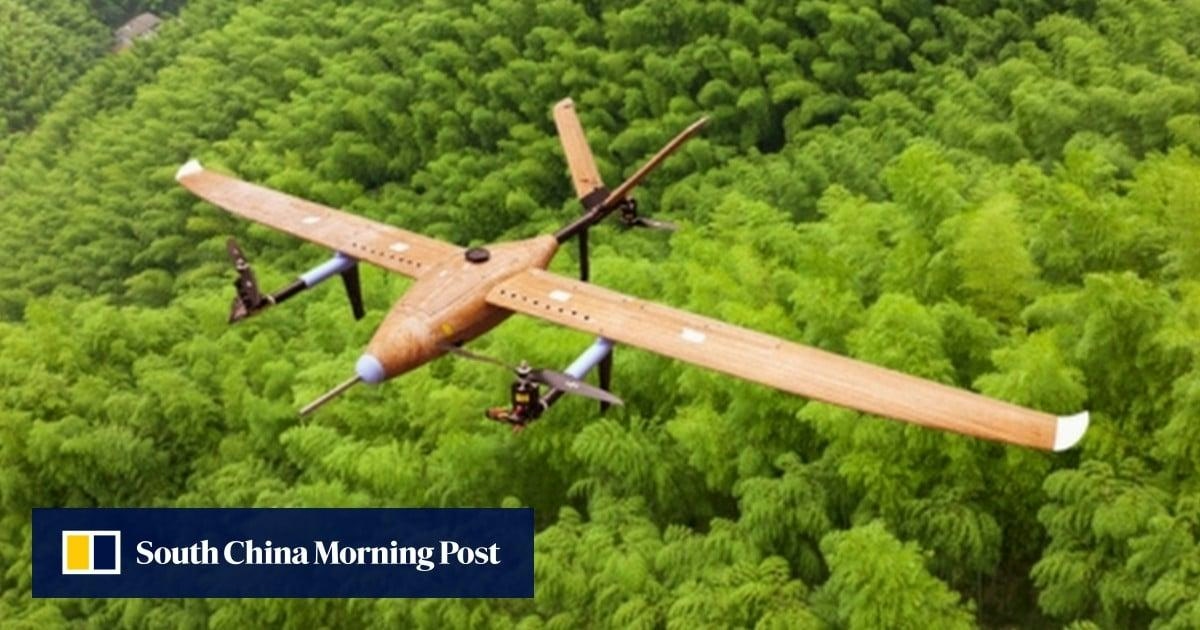
Chinese Team Develops First Flight Control Software for Bamboo Drones
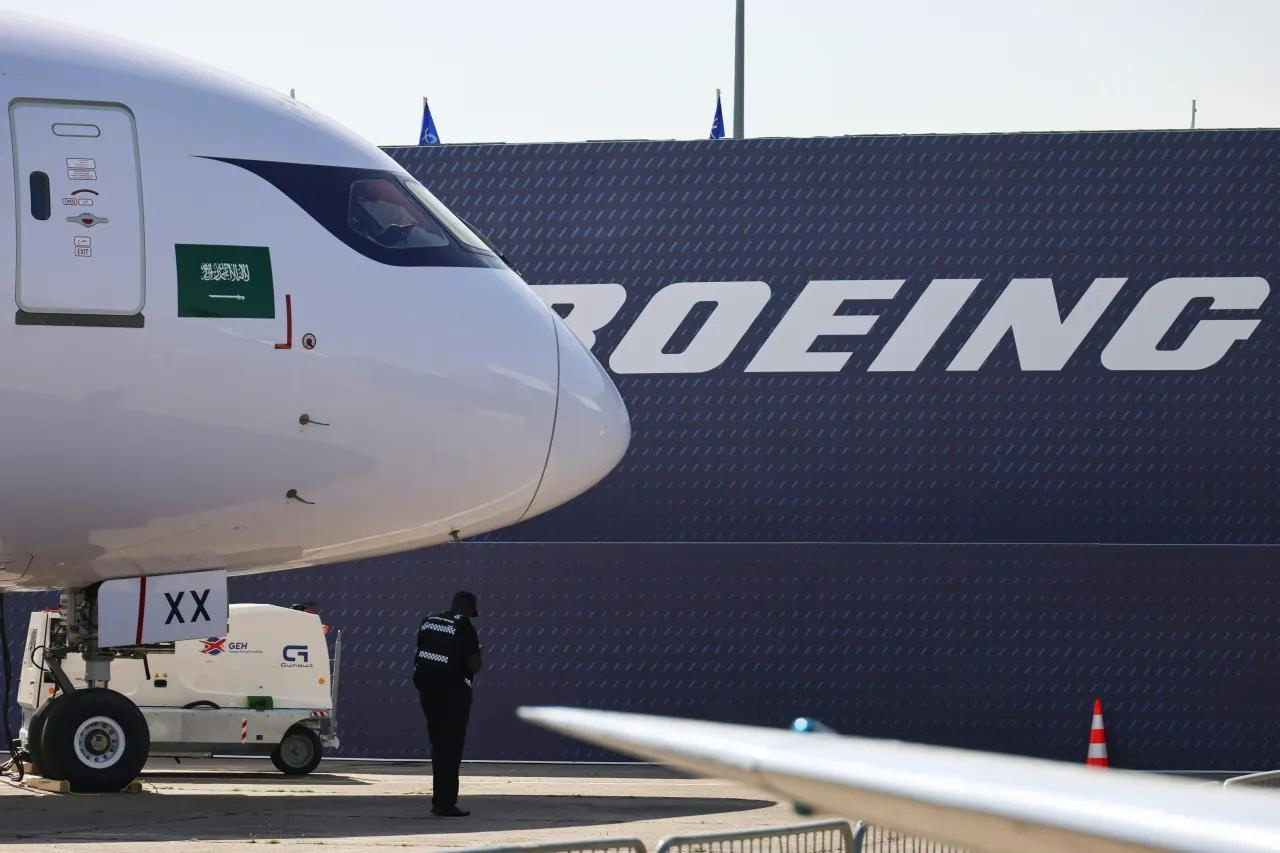
Government Moves Forward with Boeing Purchase, Considers Airbus Leasing

SkyHope Appoints Aviation Industry Leader to Board
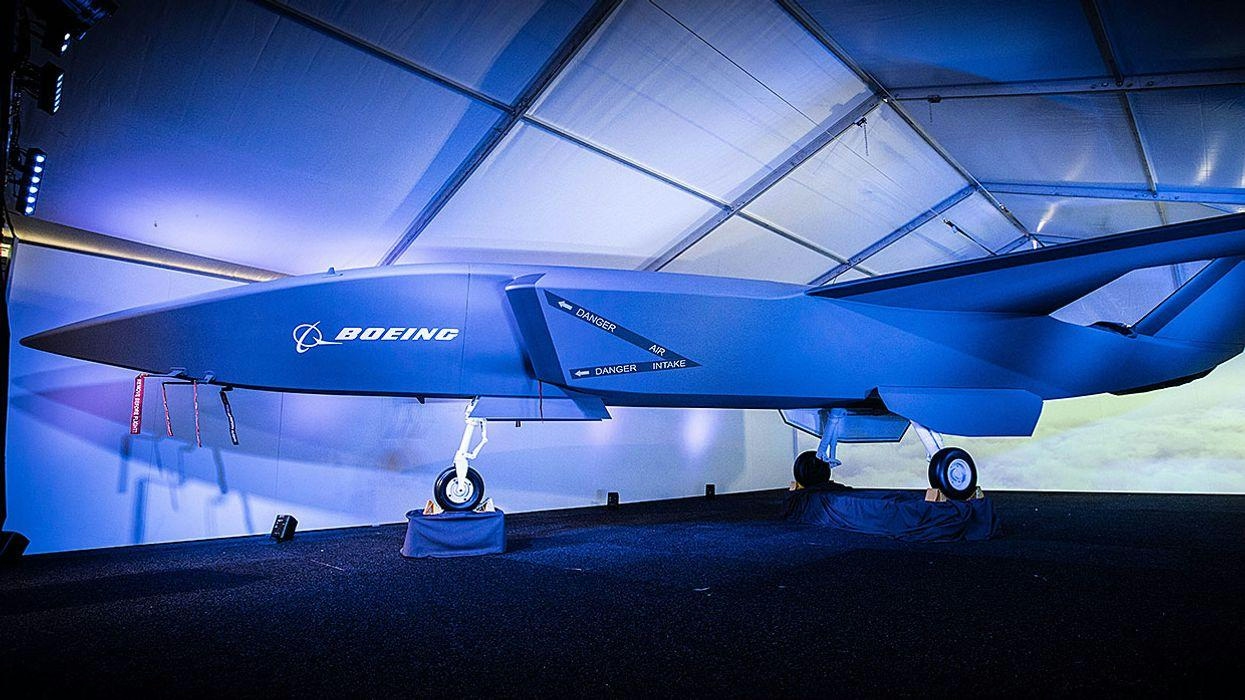
The Challenges of Certifying Autonomous Aircraft
KLM to Receive First Airbus A350, Announces Initial Routes

Saxon Air Receives Clean and Green Energy Innovation Award
How BEB Tax Policies Impact Airlines’ International Leasing Contracts

Indonesia’s Danantara and Mandiri Partner with SMBC to Launch $800 Million Aviation Leasing Fund

South Korea’s SUM Air Places Order for New ATR Aircraft
