
AeroGenie — Ihr intelligenter Copilot.

Trends
Categories
Industry Leaders Discuss Key Retail and Ancillary Trends for 2026

Industry Leaders Discuss Key Retail and Ancillary Trends for 2026
The commercial landscape of airports and airlines is experiencing a profound transformation driven by evolving passenger expectations. Modern travelers increasingly seek seamless, personalized experiences that emphasize sustainability and technological integration. In response, industry leaders are redefining ancillary and retail services, adopting dynamic, integrated strategies that combine digital convenience with human-centric engagement.
This shift compels airports and airlines to optimize the customer journey through data-driven, omnichannel retail ecosystems. The objective is to cultivate unique, experience-oriented environments that enhance customer satisfaction while driving revenue growth. As competition intensifies, the capacity to deliver both cutting-edge innovation and emotional connection emerges as a critical differentiator.
Technology-Enabled Journeys and Personalization
Sammy Patel, Vice President Commercial at Vantage Group, highlights that by 2026, the emphasis will be on creating smoother, more intuitive, and more human travel experiences. He describes airports not merely as transit points but as comprehensive experience platforms. Patel references successful transformations at LaGuardia Terminal B, Chicago Midway, and Kansas City International, with further developments planned for New York’s JFK Terminal 6. He underscores that thoughtfully designed retail and ancillary offerings extend beyond revenue generation; they alleviate friction, reduce traveler stress, and deliver meaningful value.
Retailing is evolving from simple add-on sales to orchestrated, technology-enabled journeys. Advances in artificial intelligence now enable airports, airlines, and concessionaires to understand traveler context in real time, facilitating more relevant and personalized offers. Patel notes this shift moves the industry away from static retail menus toward a concierge-like approach that enhances both guest satisfaction and commercial outcomes.
Collaboration and Integration: The New Competitive Edge
Despite these advancements, challenges remain. Industry experts, including those from retail software provider Lightspeed, caution that fragmented technology systems pose a significant competitive risk. The cost of inaction is substantial; organizations that integrate AI agents and connect systems such as Product Lifecycle Management (PLM) and Enterprise Resource Planning (ERP) stand to achieve considerable cost savings and operational efficiencies. Market leaders are responding by streamlining operations to meet consumer demands for speed and personalization.
Competitive strategies reflect this urgency. The Starboard Group emphasizes partnership, culture, and experiential momentum, while Harding+ is developing a systematized retail model grounded in emotion, data, and innovation. Nevertheless, as Erich Kahner of Dunnhumby observes, the future of retail will not be shaped by AI alone. Traditional retail fundamentals—price, promotions, and product quality—remain indispensable to success.
Looking Ahead
As airports and airlines deepen collaboration with commercial partners and brands, the ambition is to construct omnichannel, journey-wide retail ecosystems that engage travelers from pre-trip planning through post-trip interaction. Increasing integration of mobile platforms, airport environments, and inflight connectivity ensures that the future of air travel retail will be both technologically sophisticated and profoundly human. The forthcoming APEX FTE Ancillary & Retailing 2026 event in Dublin will provide a platform for industry leaders from Vantage Group, Iberia, Threedot, Munich Airport, and Icelandair to share insights on these transformative trends and business models shaping the future of air transport retailing.
LEVEL Suspends San Francisco Flights Due to Engine Shortage
China Conducts First Flight Test of Megawatt Hydrogen Turboprop Engine
Oklahoma’s Aerospace Industry Expands and Its Impact on the State Economy
Archer Aviation Confronts Setbacks Amid Declining Air Taxi Interest
FAA and EASA Mandates to Influence Flight Line Testing Equipment Market Through 2035
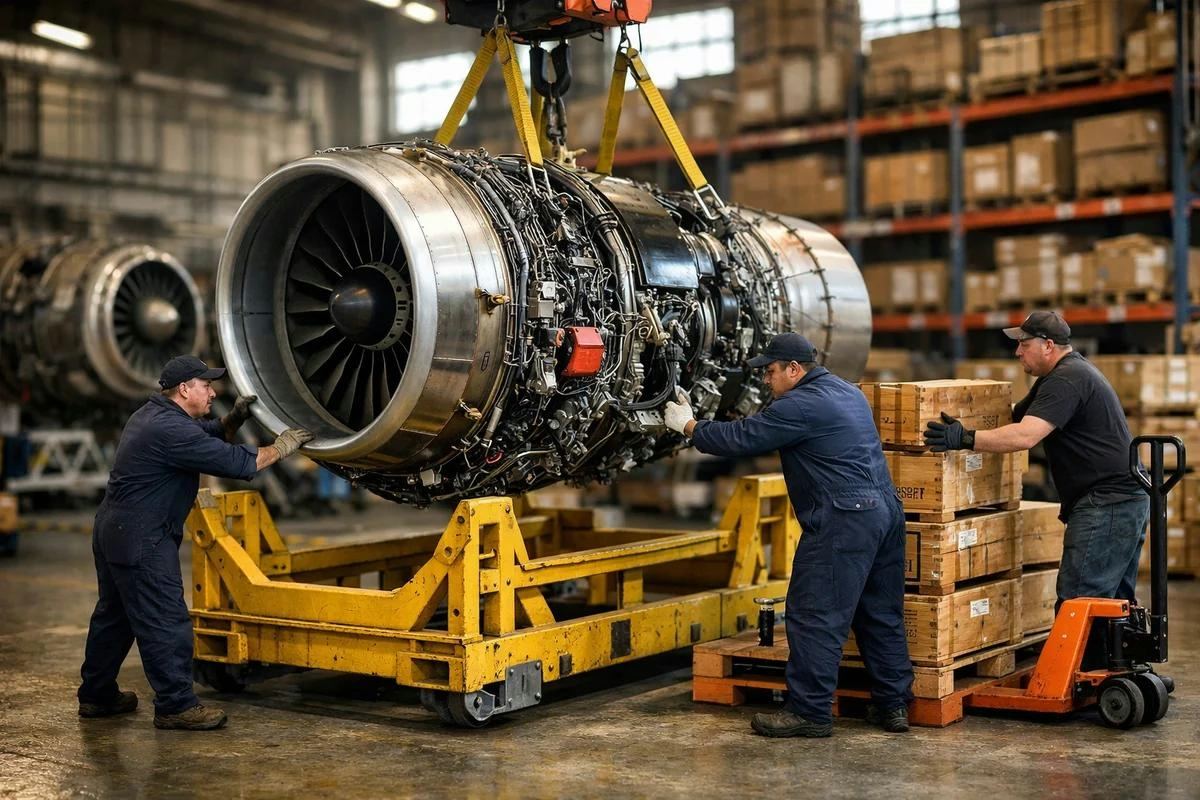
Willis Lease Operates as a Leveraged Spread Business with Moderate Returns
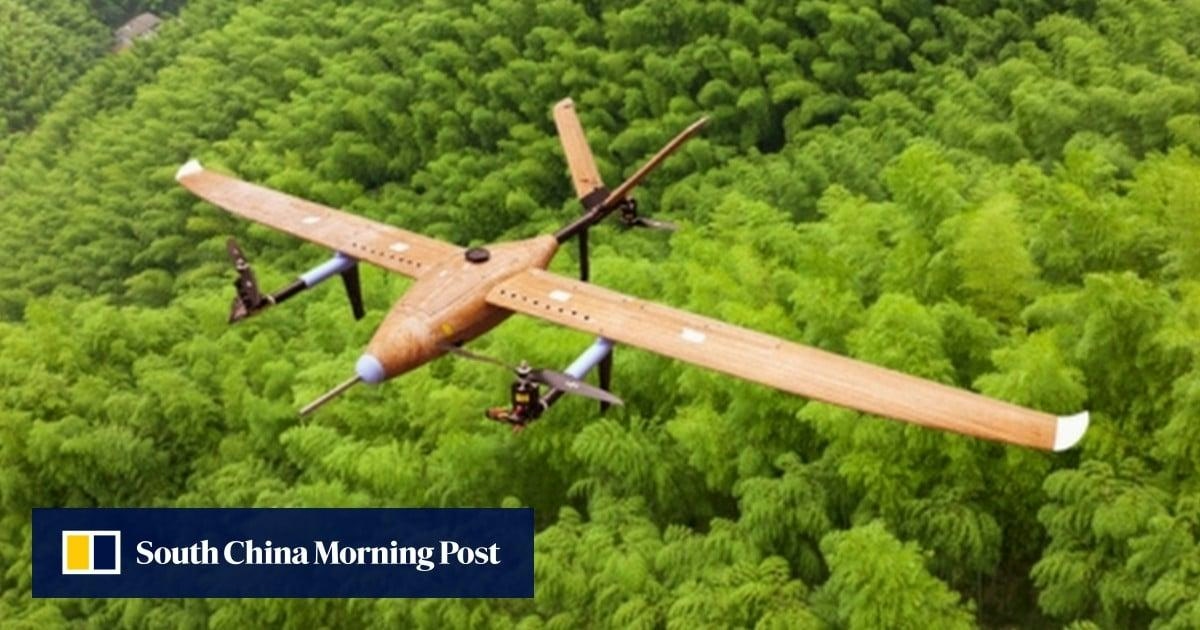
Chinese Team Develops First Flight Control Software for Bamboo Drones
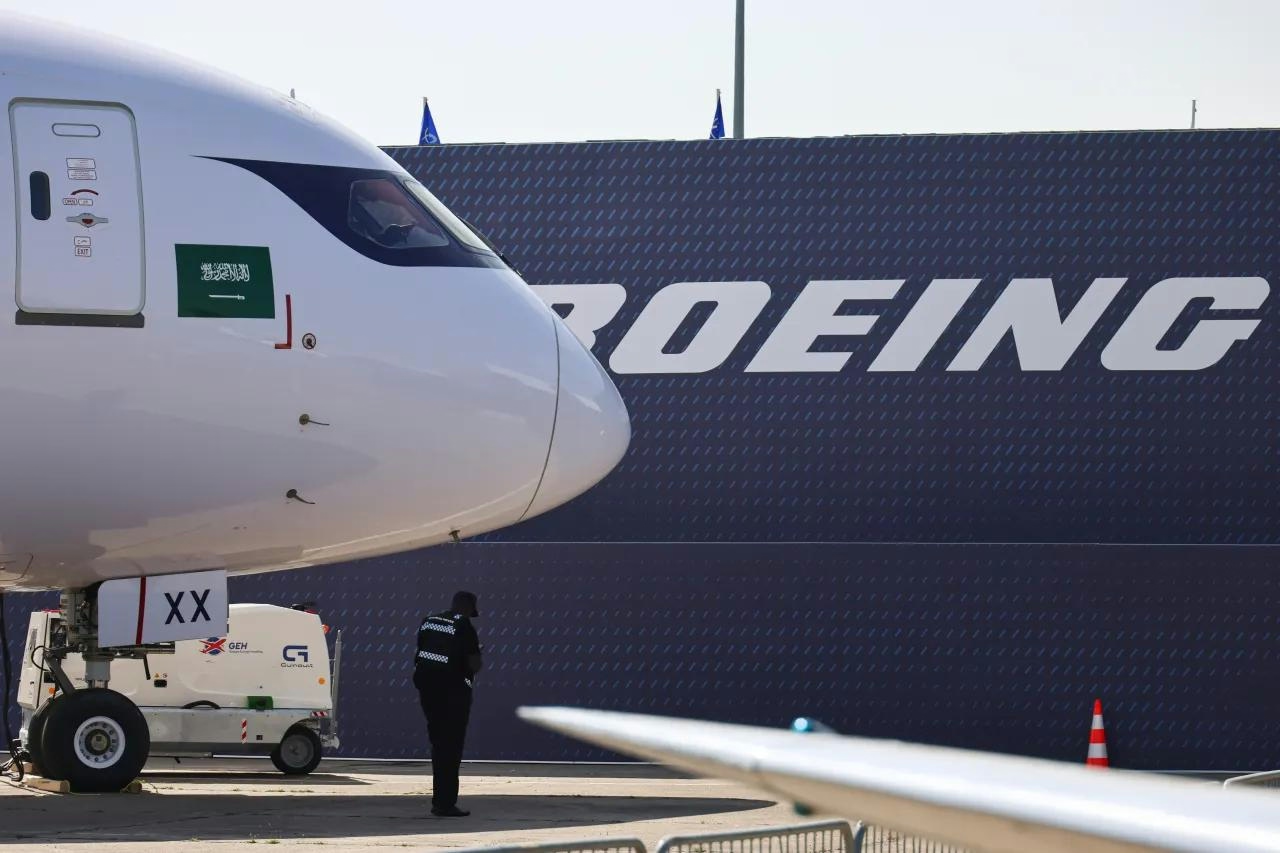
Government Moves Forward with Boeing Purchase, Considers Airbus Leasing
SkyHope Appoints Aviation Industry Leader to Board
The Challenges of Certifying Autonomous Aircraft
