
AeroGenie — Ihr intelligenter Copilot.

Trends
Categories
IATA Warns Supply Chain Issues Will Continue to Affect Airlines
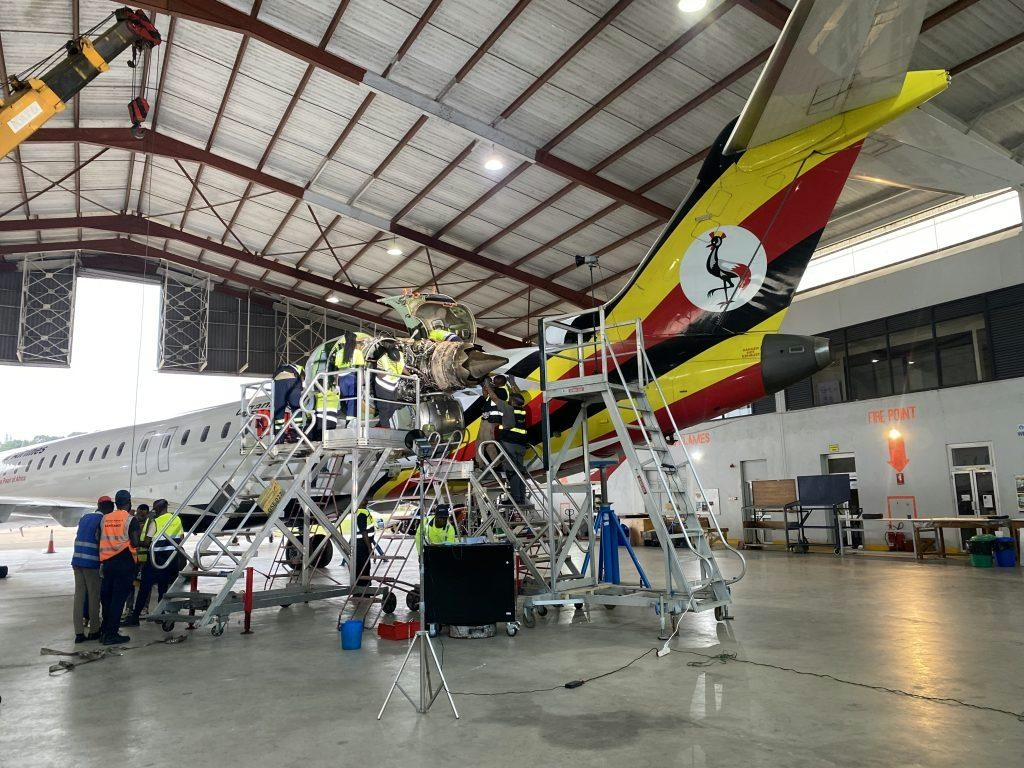
IATA Warns Supply Chain Issues Will Continue to Affect Airlines
Persistent Disruptions Impacting Global Aviation
The International Air Transport Association (IATA) has issued a stark warning that ongoing supply chain disruptions will continue to pose significant challenges for the global airline industry. Speaking at the Changi Aviation Summit in Singapore, IATA Director General Willie Walsh highlighted the enduring nature of these operational difficulties, which have persisted since the onset of the COVID-19 pandemic.
Airlines worldwide have struggled with delays and shortages as major aircraft manufacturers, including Airbus and Boeing, along with engine producers such as GE Aerospace and Pratt & Whitney, face continued obstacles in sourcing critical components and maintaining production schedules. These issues have been further compounded by geopolitical tensions and broader economic uncertainties, factors that analysts believe will extend the duration of supply chain bottlenecks.
Consequences for Industry Growth and Response Measures
The repercussions of these disruptions are evident across the aviation sector. Delays in aircraft deliveries and maintenance have slowed the pace of traffic growth, with IATA noting that after a robust post-pandemic recovery, industry expansion has now reverted to historical norms, in part due to these supply constraints.
In response, some industry stakeholders are taking proactive measures to enhance competition and stability. Notably, CFM International, a prominent engine manufacturer, has extended its aftermarket competition agreement with IATA through 2033. This initiative aims to encourage greater competition in aircraft maintenance and repair services, potentially mitigating some operational challenges.
Despite these efforts, IATA underscores the necessity for coordinated action among airlines, manufacturers, and regulators. The association stresses that addressing the root causes of supply chain disruptions is essential to support the sector’s recovery and ensure its long-term resilience.
Archer Aviation Confronts Setbacks Amid Declining Air Taxi Interest
Chinese Team Develops First Flight Control Software for Bamboo Drones
Government Moves Forward with Boeing Purchase, Considers Airbus Leasing
SkyHope Appoints Aviation Industry Leader to Board
The Challenges of Certifying Autonomous Aircraft
KLM to Receive First Airbus A350, Announces Initial Routes
Saxon Air Receives Clean and Green Energy Innovation Award
How BEB Tax Policies Impact Airlines’ International Leasing Contracts

Indonesia’s Danantara and Mandiri Partner with SMBC to Launch $800 Million Aviation Leasing Fund

South Korea’s SUM Air Places Order for New ATR Aircraft
