
AeroGenie — Ihr intelligenter Copilot.

Trends
Categories
DGCA Updates Regulations on Wet and Damp Leasing of Aircraft
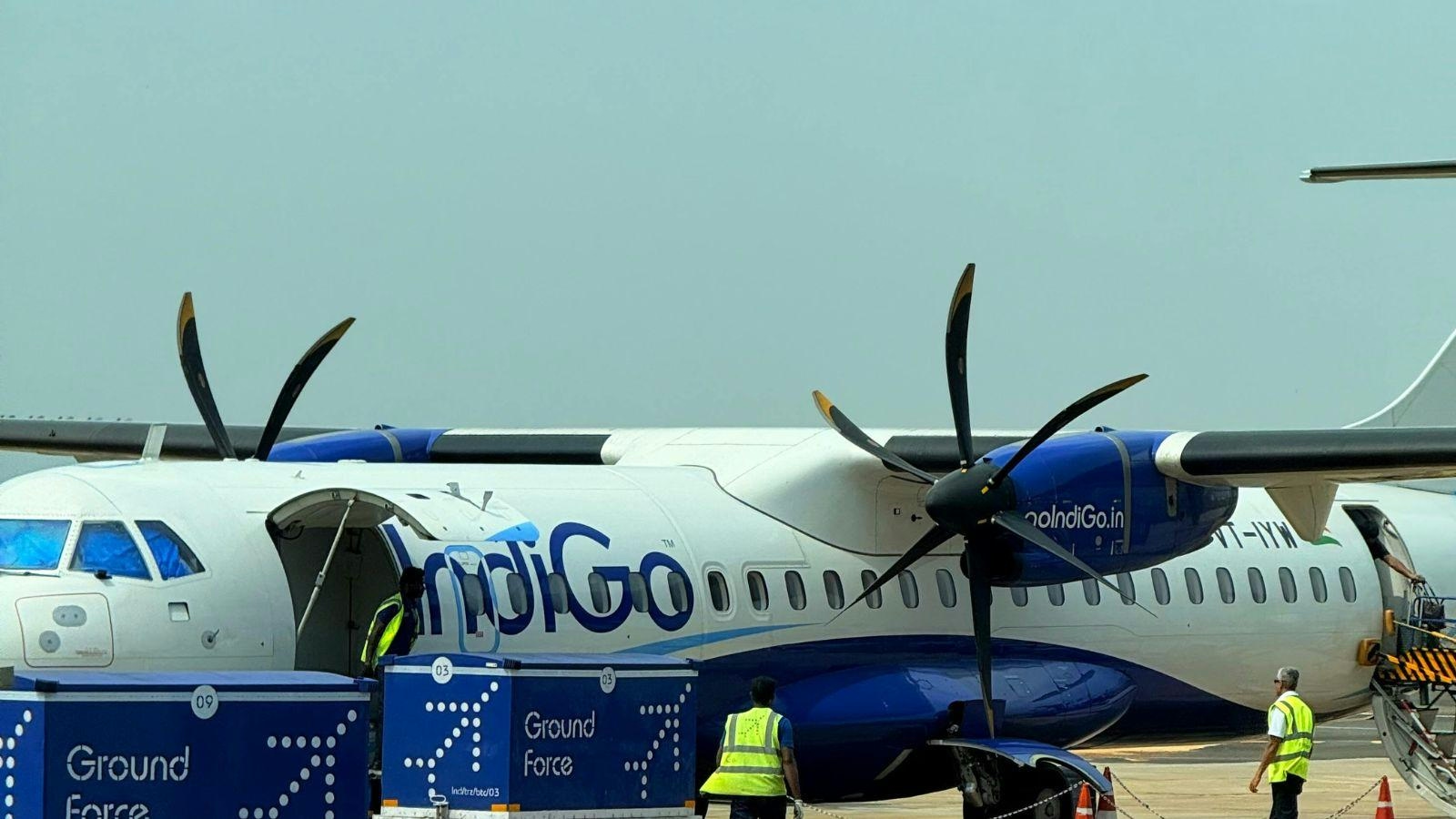
DGCA Updates Regulations on Wet and Damp Leasing of Aircraft
India’s Directorate General of Civil Aviation (DGCA) has revised its regulatory framework governing wet and damp leasing of aircraft by domestic airlines. These updated norms seek to balance operational flexibility with enhanced safety compliance, reflecting the regulator’s commitment to overseeing leasing practices amid a growing commercial aviation sector where the majority of over 800 aircraft are leased.
Revised Leasing Norms and Operational Flexibility
Wet leasing involves the lessor providing the aircraft along with crew, maintenance, and insurance, whereas damp leasing includes the aircraft and partial crew support, with the lessee supplying the remaining personnel. Under the new regulations, scheduled Indian airlines may now obtain DGCA approval to induct foreign-registered aircraft on a wet or damp lease basis during emergent operational situations, such as unexpected aircraft groundings or urgent maintenance requirements. Notably, leases related to government operations, including Haj flights, remain exempt from these updated restrictions.
The revised Civil Aviation Requirement (CAR) also empowers the DGCA to grant a one-time relaxation of the minimum ‘Effective Implementation’ (EI) score required for wet or damp leases, valid for up to six months. This concession is strictly limited to exigent circumstances and mandates that the aircraft be inducted within 45 days of receiving in-principle approval. Further relaxations will not be considered until 12 months after the conclusion of the previous relaxation period.
Additional provisions specify age limits for leased aircraft: passenger aircraft must be under 20 years old, while cargo aircraft may be up to 25 years old. The DGCA emphasized that operational control remains with the lessor under wet and damp lease arrangements, and all flight operations must adhere to the operational specifications of the ‘State of the Operator’. The lessor is also responsible for ensuring continuing airworthiness, which must be maintained through a maintenance, repair, and overhaul (MRO) facility approved by the ‘State of Registry’.
Industry Implications and Market Response
Industry experts suggest that while the updated framework offers Indian carriers greater operational flexibility, it also introduces new challenges. Airlines may encounter increased regulatory scrutiny and higher operational costs due to more stringent compliance requirements. Concerns have also been raised by pilots and maintenance personnel regarding safety standards and working conditions under these leasing arrangements.
Market reactions are already taking shape, with airlines expected to recalibrate their leasing strategies to comply with the new regulations. This adjustment could prompt shifts in partnerships and operational models as carriers evaluate the trade-offs between leasing benefits and compliance demands. Competitors may respond by modifying their practices or exploring alternative fleet management approaches, such as expanding direct aircraft ownership or adopting different leasing structures. The recent example of Cebu Pacific’s damp lease of Airbus A320s from Bulgaria Air highlights the continued reliance on such arrangements despite evolving regulatory landscapes.
The DGCA’s amendments, effective immediately, underscore a broader trend toward tightening oversight in India’s rapidly expanding aviation sector, aiming to uphold both operational efficiency and the highest safety standards.
Published on November 7, 2025

Chinese Team Develops First Flight Control Software for Bamboo Drones
SkyHope Appoints Aviation Industry Leader to Board
The Challenges of Certifying Autonomous Aircraft
KLM to Receive First Airbus A350, Announces Initial Routes
Saxon Air Receives Clean and Green Energy Innovation Award
How BEB Tax Policies Impact Airlines’ International Leasing Contracts
Indonesia’s Danantara and Mandiri Partner with SMBC to Launch $800 Million Aviation Leasing Fund

South Korea’s SUM Air Places Order for New ATR Aircraft
Benoît Rollier Named Vice President of KLM Engine Service

Azorra Expands Engine Portfolio Through Deal with DAE
