
AeroGenie — Ihr intelligenter Copilot.

Trends
Categories
Airlines are now adopting personalized pricing. Here’s how to avoid it

Airlines Embrace Personalized Pricing Amid Growing Concerns
Delta Air Lines recently announced plans to expand its use of artificial intelligence (AI) to offer individualized pricing to customers, a development that has ignited debate among travelers, lawmakers, and consumer advocates. This move is part of a broader trend across various industries, including finance and online gaming, where personalized pricing—charging different customers different prices for the same product—is becoming increasingly prevalent.
The rationale behind personalized pricing is straightforward: it allows companies to maximize profits by charging higher prices to those willing to pay more, while offering discounts to more price-sensitive consumers. Much like tailored clothing, prices can be adjusted to fit each individual’s willingness and ability to pay. However, this practice raises significant ethical and privacy concerns. Critics argue that AI-driven pricing models often operate without transparency and may disproportionately disadvantage financially vulnerable consumers. Lawmakers and consumer groups have expressed unease over the fairness of using personal data to determine fares, warning of potential misuse of sensitive information.
The Evolution and Implications of Personalized Pricing
While personalized pricing may seem novel, the concept itself is not new. Historically, prices were often negotiated face-to-face, with the final amount influenced by the bargaining skills and circumstances of both buyer and seller. An old anecdote captures this dynamic: when a wealthy man questions the high price of eggs at a restaurant, the owner replies, “Eggs are plentiful, but very rich men are quite rare.” Even today, industries such as automobile sales routinely engage in price negotiation, a practice economists refer to as “first-degree” or “perfect” price discrimination.
What distinguishes the current wave of personalized pricing is the scale and sophistication enabled by AI technologies. Airlines now have the capacity to analyze vast amounts of personal data—including browsing history, geographic location, and purchasing behavior—to dynamically adjust fares in real time. This capability has elicited mixed reactions. Some consumers express concern over the opacity of pricing algorithms and the risk of unfair treatment, while others appreciate the possibility of securing lower prices if they are more price-sensitive.
The airline industry is closely monitoring these developments. While some carriers may adopt similar AI-driven pricing strategies to remain competitive, others might eschew personalized pricing in favor of preserving customer trust and transparency.
Strategies to Mitigate Personalized Pricing
Consumers seeking to avoid personalized pricing can take several practical steps. Clearing cookies and browsing history before searching for flights can reduce the data available for profiling. Utilizing private or incognito browsing modes helps limit tracking, while comparing prices across different devices and browsers may reveal discrepancies. Employing virtual private networks (VPNs) to simulate different locations can also uncover fare variations. Additionally, booking flights early and monitoring prices over time can help consumers avoid last-minute AI-driven price adjustments.
As AI-powered personalized pricing becomes more widespread across airlines and other sectors, it is increasingly important for consumers to remain informed and vigilant. Understanding how these pricing systems operate and taking proactive measures to protect personal data can help ensure fairer outcomes in the marketplace.

Archer Aviation Confronts Setbacks Amid Declining Air Taxi Interest

Chinese Team Develops First Flight Control Software for Bamboo Drones
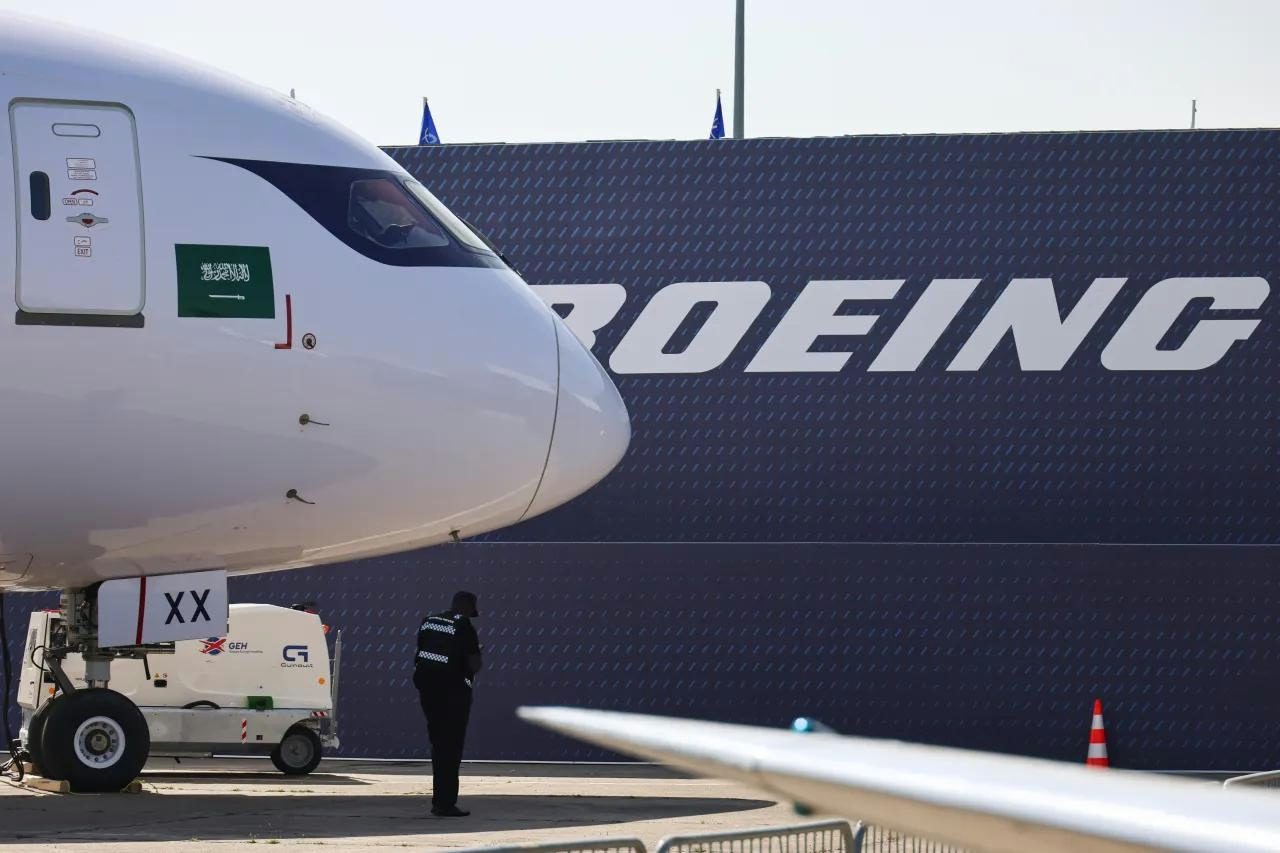
Government Moves Forward with Boeing Purchase, Considers Airbus Leasing
SkyHope Appoints Aviation Industry Leader to Board
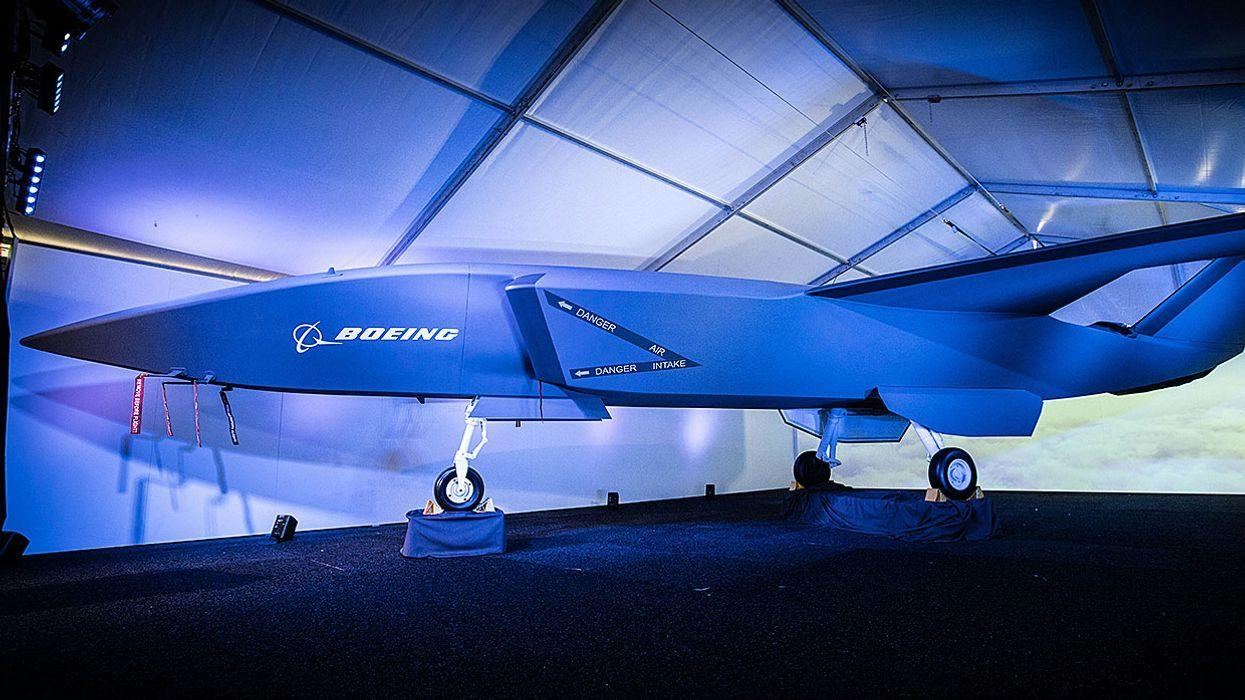
The Challenges of Certifying Autonomous Aircraft
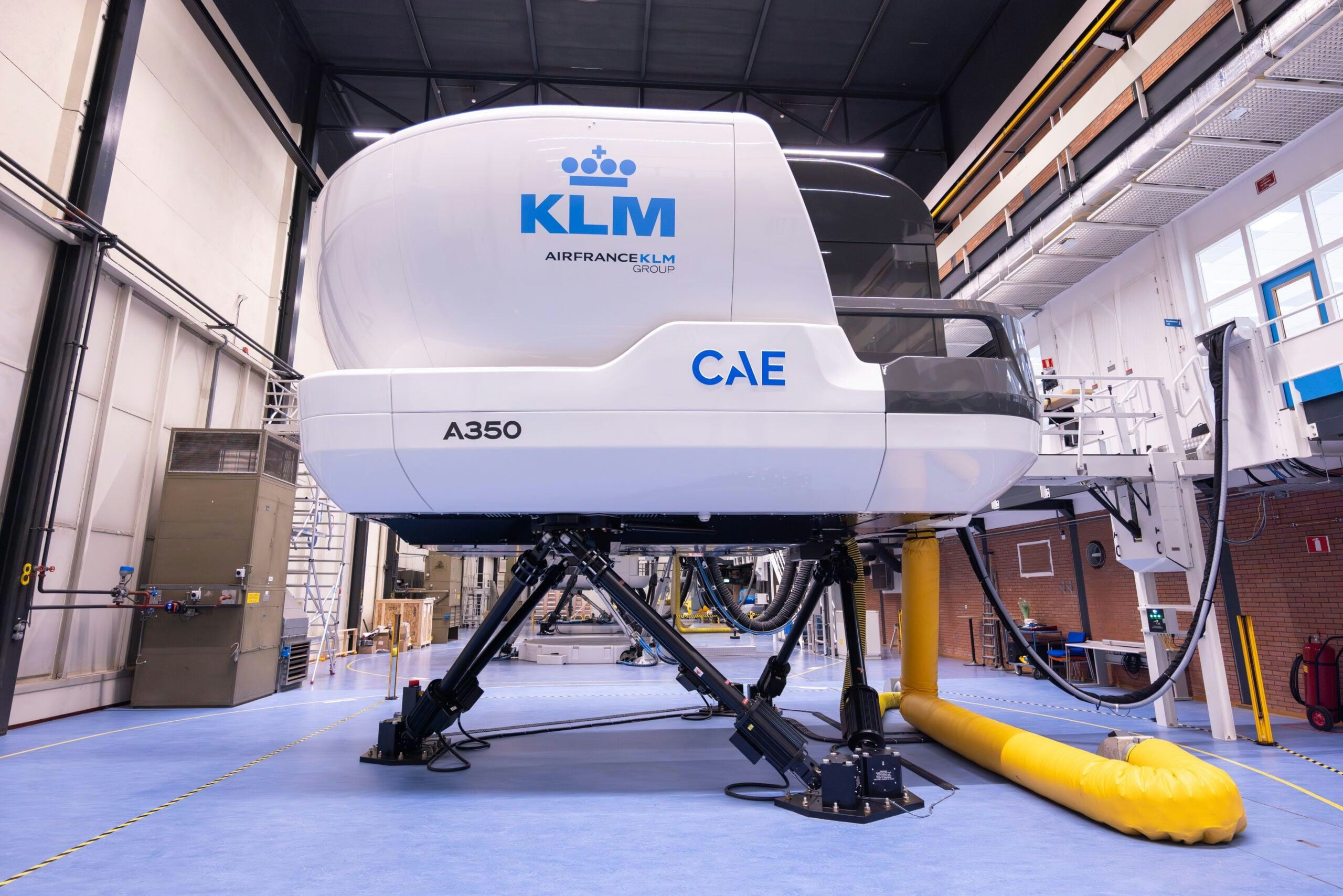
KLM to Receive First Airbus A350, Announces Initial Routes

Saxon Air Receives Clean and Green Energy Innovation Award
How BEB Tax Policies Impact Airlines’ International Leasing Contracts
Indonesia’s Danantara and Mandiri Partner with SMBC to Launch $800 Million Aviation Leasing Fund
South Korea’s SUM Air Places Order for New ATR Aircraft
