
AeroGenie — Ihr intelligenter Copilot.

Trends
Categories
AENA Executives' Tactics Do Not Justify Fee Increases

AENA Executives' Tactics Do Not Justify Fee Increases
Industry Response to AENA’s Safety Claims
The International Air Transport Association (IATA) has issued a strong rebuke of recent statements made by Maurici Lucena, Chairman and CEO of AENA, Spain’s leading airport operator. Lucena suggested that airlines’ demands for lower airport charges could jeopardize safety and security. IATA dismissed these assertions as unfounded “scaremongering,” reaffirming that safety remains the paramount concern for the entire aviation sector. The association emphasized that calls for more cost-effective airport fees are unrelated to safety standards and should not be conflated with security issues.
Willie Walsh, IATA’s Director General, criticized Lucena’s remarks as indicative of a disconnect from the core realities of aviation, both in terms of safety and economic considerations. Walsh underscored that airlines’ appeals for reasonable airport charges are legitimate and necessary, particularly as the industry grapples with increasing regulatory, environmental, and operational expenses.
Divergent Views on Fee Increases
The controversy surrounding AENA’s proposed 3.8% annual increase in airport charges has deepened divisions among key stakeholders. While ACI Europe, representing European airports, supports the fee hike as essential to underpinning AENA’s investment agenda, IATA contests the justification for such an increase. The association argues that the proposed rise does not align with passenger growth trends or the imperative to maintain affordable connectivity. IATA further highlights that, when adjusted for inflation, airfares in Spain have decreased by 9% since 2019, with reductions ranging from 6% to 37% across the country’s 15 largest airports over the past decade.
The dispute has also attracted political scrutiny. The regional party Coalición Canaria has demanded an urgent dialogue with Spain’s ruling PSOE party, expressing concern over AENA’s unilateral approach to fee adjustments. The party insists on greater involvement of the Canary Islands in managing strategic airport infrastructure, underscoring the broader regional and political ramifications of AENA’s fee policies.
Financial Performance and Regulatory Concerns
Financial data further intensifies the debate over AENA’s fee strategy. Reports indicate that over the last two regulatory periods, AENA has earned €1.32 billion in excess of the limits set by Spain’s economic regulatory framework. In 2024, the company’s combined regulated and non-regulated activities in Spain yielded a net profit margin of 36.4%, starkly contrasting with the average 3.5% net margin recorded by European airlines. IATA points to this disparity as evidence of the urgent need for independent, transparent, and consultative airport regulation that equitably balances the interests of all parties involved.
Willie Walsh concluded by advocating for constructive dialogue over inflammatory rhetoric, emphasizing that productive engagement is essential to ensuring Spain’s airports continue to foster growth, regional development, and high-quality passenger services. IATA remains committed to collaborating with AENA and other stakeholders to safeguard the competitiveness, sustainability, and accessibility of Spain’s aviation sector over the long term.
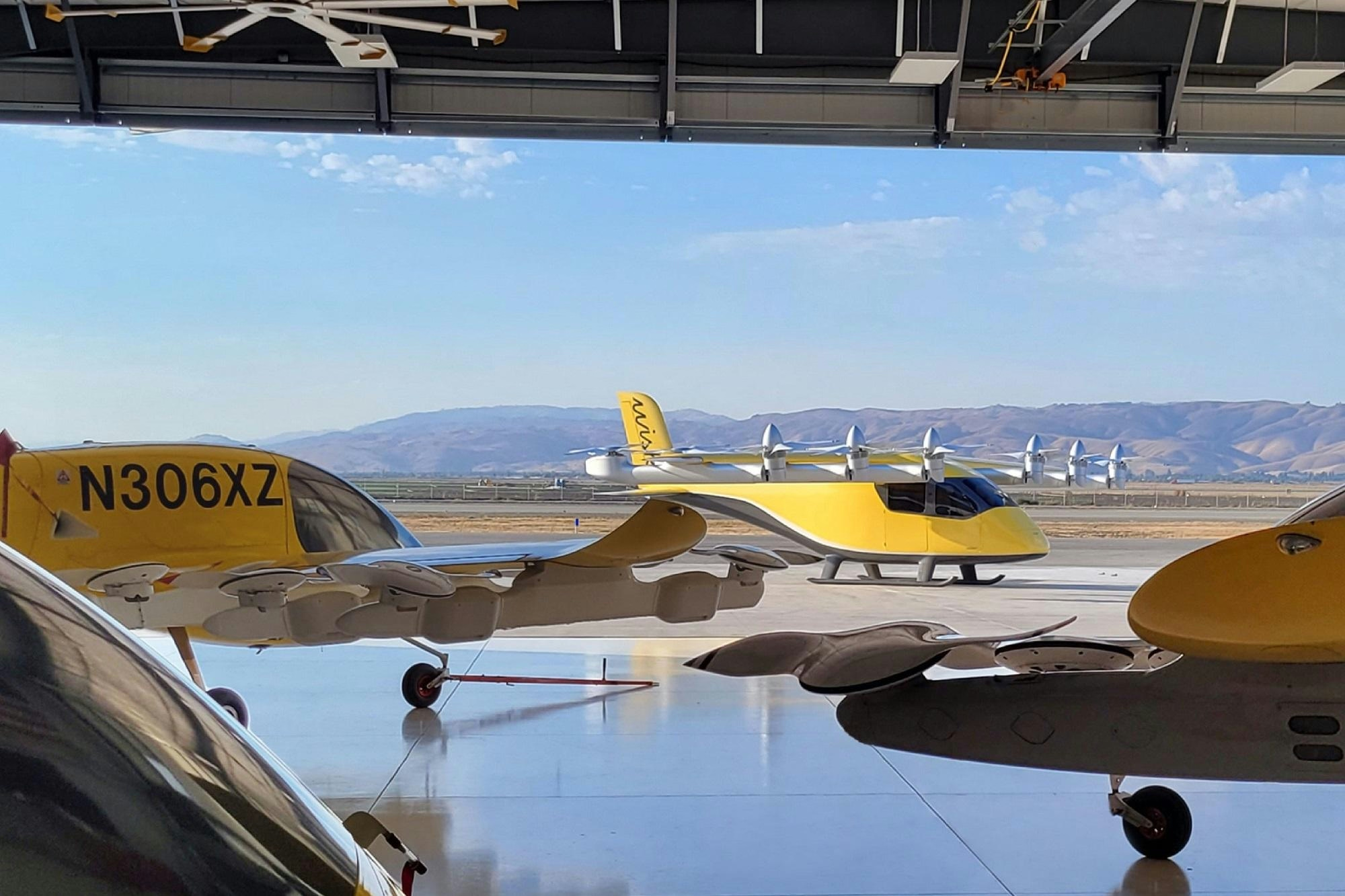
Archer Aviation Confronts Setbacks Amid Declining Air Taxi Interest

Chinese Team Develops First Flight Control Software for Bamboo Drones
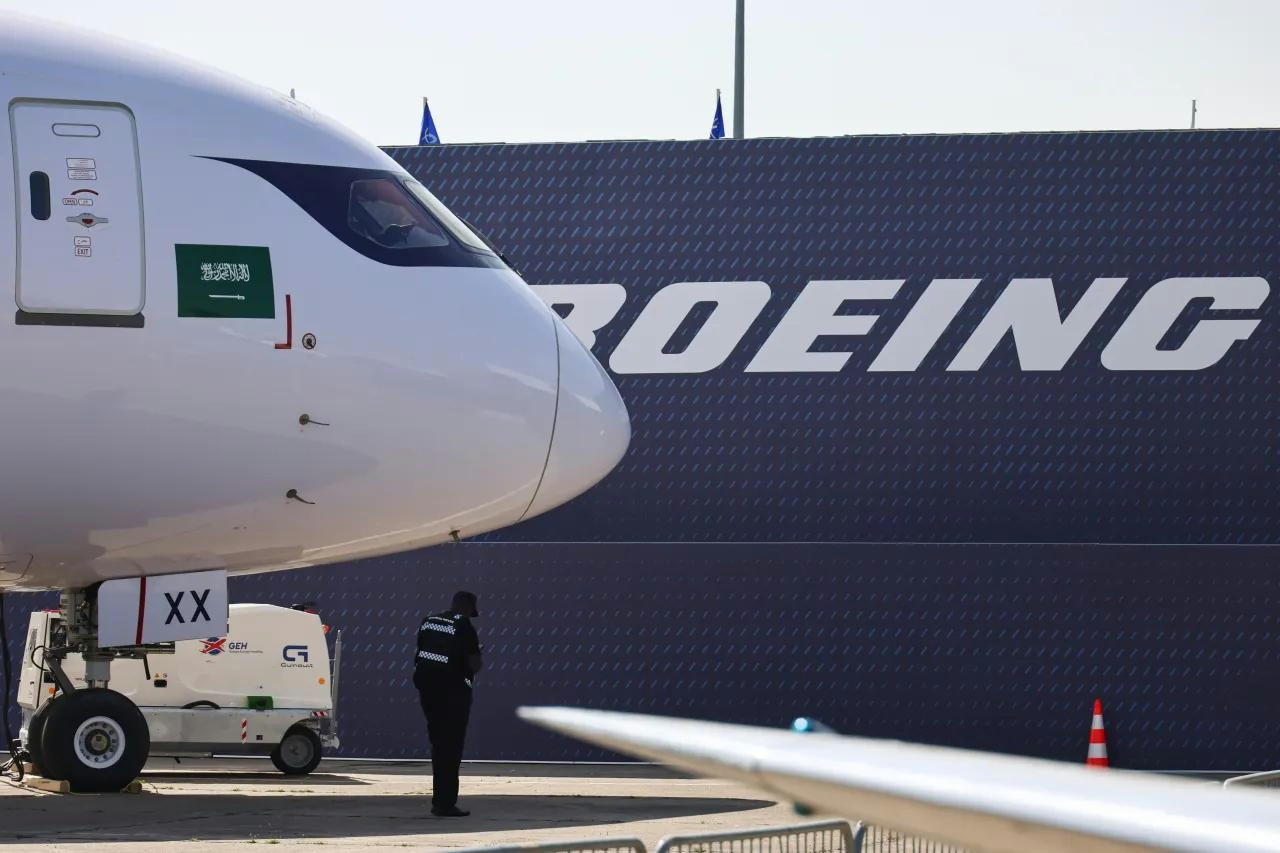
Government Moves Forward with Boeing Purchase, Considers Airbus Leasing
SkyHope Appoints Aviation Industry Leader to Board
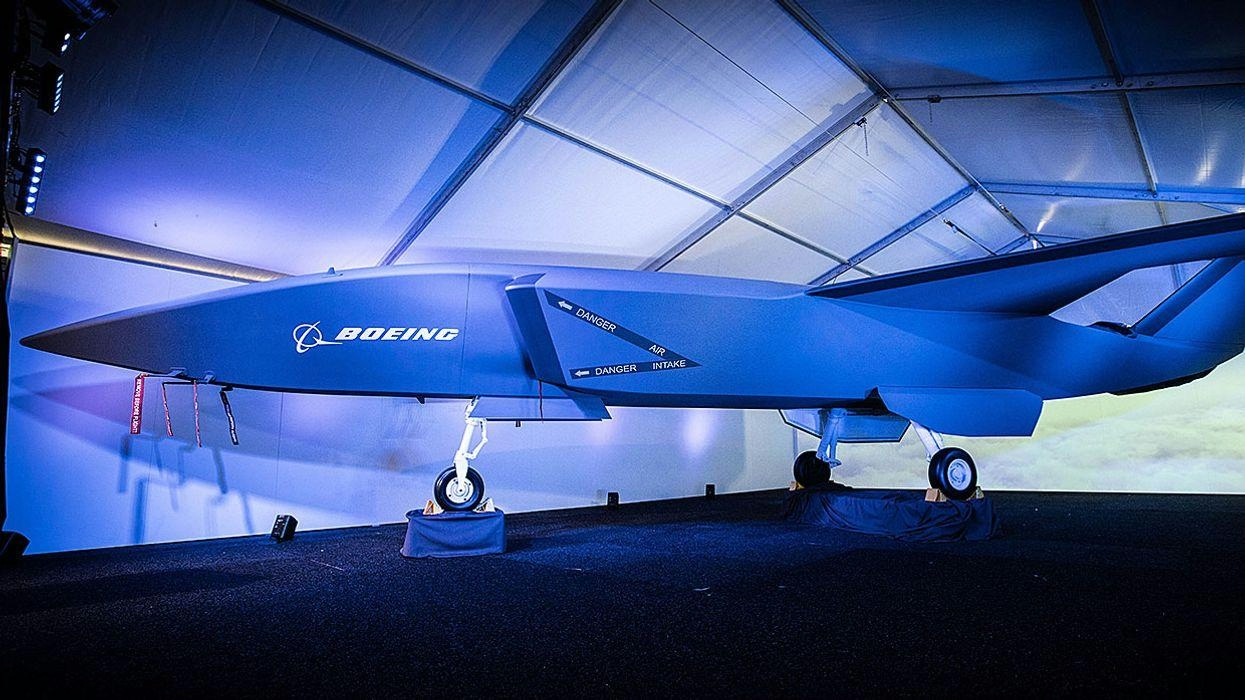
The Challenges of Certifying Autonomous Aircraft
KLM to Receive First Airbus A350, Announces Initial Routes
Saxon Air Receives Clean and Green Energy Innovation Award
How BEB Tax Policies Impact Airlines’ International Leasing Contracts

Indonesia’s Danantara and Mandiri Partner with SMBC to Launch $800 Million Aviation Leasing Fund
South Korea’s SUM Air Places Order for New ATR Aircraft
