
أيروجيني — مساعدك الذكي للطيران.

الرائج الآن
Categories
GE Aerospace Expands North Carolina Facility with $53 Million Investment to Address Supply Chain Issues
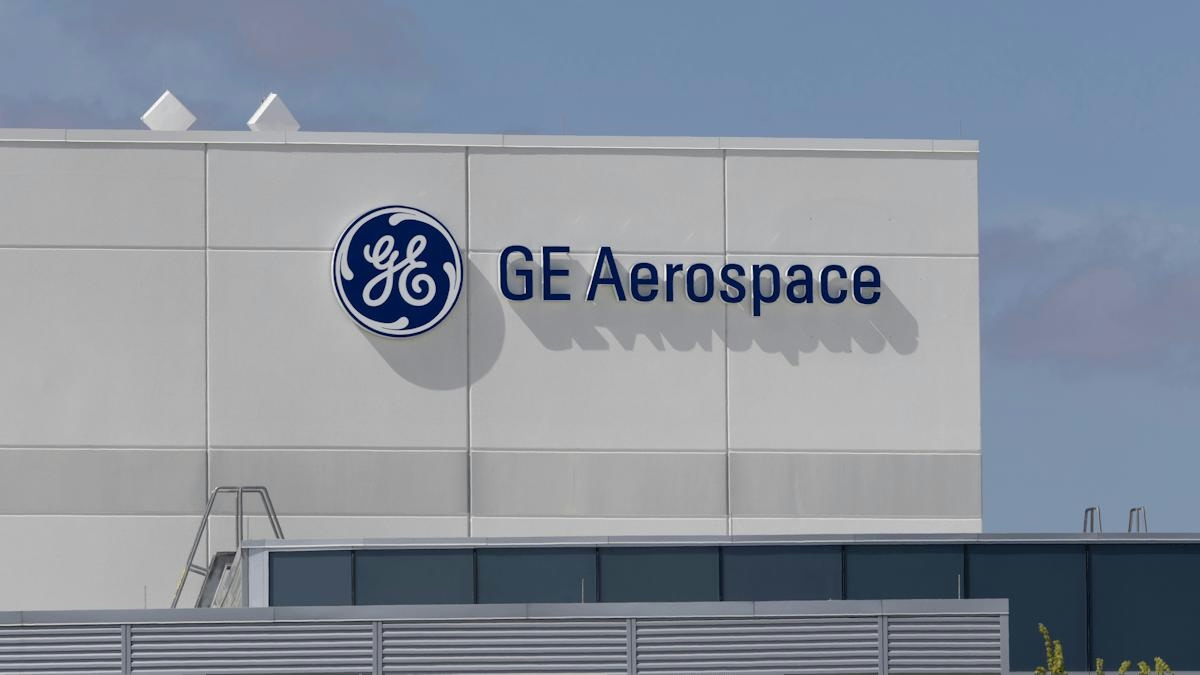
GE Aerospace Commits $53 Million to Expand North Carolina Facility Amid Supply Chain Challenges
GE Aerospace has announced a $53 million investment to expand its manufacturing operations in West Jefferson, North Carolina, with the objective of enhancing production capacity for narrowbody aircraft engines and mitigating persistent supply chain bottlenecks. The expansion will add 35,000 square feet to the existing facility and incorporate advanced manufacturing equipment. The project is slated for completion within the next three years and is expected to generate over 40 new jobs, including positions for engineers, inspectors, and apprentice machinists.
Strategic Importance of the West Jefferson Facility
The West Jefferson plant is integral to the production of components for the CFM LEAP engine, a critical power unit for commercial narrowbody aircraft. This site specializes in manufacturing high-precision parts such as rotating components, blisks, high-pressure turbines, and spools. Expanding the output of these components aligns with GE Aerospace’s broader strategy to meet the rising demand for narrowbody jets, where timely engine delivery remains a key factor for airframe manufacturers.
This investment complements GE Aerospace’s ongoing commitment to North Carolina, following a previous pledge exceeding $100 million across its four state locations, which collectively employ around 2,000 workers.
Financial Support and Workforce Development
To facilitate the expansion, GE Aerospace has secured financial incentives from both state and local authorities. The One North Carolina Fund has provided a $100,000 grant, while Ashe County, Ashe County Job Development Inc., and the Town of West Jefferson have collectively contributed $1 million in grants. The company intends to leverage its longstanding partnership with Wilkes Community College and the NC Edge program to train and prepare local workers for the new roles created by the expansion.
Challenges and Market Response
Despite the anticipated economic benefits for the region, GE Aerospace faces several challenges, including ongoing supply chain disruptions, escalating material costs, and potential delays in project completion. Nevertheless, the market has responded positively to the announcement. GE Aerospace’s stock recently reached record highs, supported by robust third-quarter earnings and a global increase in demand for jet engines.
Industry analysts suggest that this expansion may prompt competitors to pursue similar investments to maintain their market positions, although no specific responses from rival companies have been reported.
By increasing its capacity to produce essential engine components at West Jefferson, GE Aerospace aims to alleviate supply chain constraints and fulfill delivery commitments to aircraft manufacturers, thereby reinforcing its competitive standing in a rapidly expanding market.

Archer Aviation Confronts Setbacks Amid Declining Air Taxi Interest

Chinese Team Develops First Flight Control Software for Bamboo Drones

Government Moves Forward with Boeing Purchase, Considers Airbus Leasing

SkyHope Appoints Aviation Industry Leader to Board
The Challenges of Certifying Autonomous Aircraft
KLM to Receive First Airbus A350, Announces Initial Routes
Saxon Air Receives Clean and Green Energy Innovation Award

How BEB Tax Policies Impact Airlines’ International Leasing Contracts

Indonesia’s Danantara and Mandiri Partner with SMBC to Launch $800 Million Aviation Leasing Fund

South Korea’s SUM Air Places Order for New ATR Aircraft
