
أيروجيني — مساعدك الذكي للطيران.

الرائج الآن
Categories
EASA Issues Warning Following Theft of Expired Engine Parts

EASA Issues Warning Following Theft of Expired Engine Parts
Theft of Expired Aircraft Engine Components Raises Safety Concerns
The European Union Aviation Safety Agency (EASA) has issued a formal warning after a substantial shipment of expired commercial aircraft engine parts was stolen during transit to a destruction facility. The agency expressed serious concerns that these non-airworthy components could be illicitly reintroduced into the aviation supply chain, posing significant safety risks.
Spanish authorities reported that in January, twelve containers of engine parts, originally intended for mutilation to prevent reuse, were diverted following a sophisticated impersonation of the contracted destruction service. The stolen items include components from widely used engines such as the Pratt & Whitney PW1100G, CFM International CFM56, International Aero Engines V2500, and Rolls-Royce RB211. Among the nearly 630 stolen parts, critical items such as blades and disks were identified, with three containers containing life-limited or critical components, further amplifying the potential hazard.
Industry Implications and Regulatory Response
EASA has published the serial numbers of the stolen parts and categorically stated that these components are “unapproved” and “not eligible for installation” on any aircraft. The agency is urging aircraft operators and maintenance organizations to conduct thorough inspections of their fleets, verify part and serial numbers, and quarantine any suspect components while promptly notifying the appropriate authorities.
This incident is expected to have far-reaching consequences for the aviation sector. Airlines and maintenance, repair, and overhaul (MRO) providers are likely to face heightened regulatory scrutiny and increased pressure to authenticate engine parts rigorously. The introduction of additional verification protocols may disrupt operations and contribute to rising insurance costs as the industry grapples with the elevated risk of counterfeit or unapproved parts infiltrating the market.
In response, industry stakeholders are anticipated to strengthen security measures and enhance collaboration with regulatory bodies to combat fraud. Supply chain strategies may also evolve, with companies implementing tighter controls and improved traceability to mitigate the risks associated with counterfeit components.
Law enforcement agencies continue to investigate the theft, but EASA cautions that, given the scale and sophistication of the operation, the stolen parts may already be circulating on the open market. The agency remains vigilant and calls on all participants in the aviation industry to maintain heightened awareness to safeguard aircraft safety and integrity.

Plane lands on Pennsylvania highway due to ‘engine issues,’ FAA says

LEVEL Suspends San Francisco Flights Due to Engine Shortage
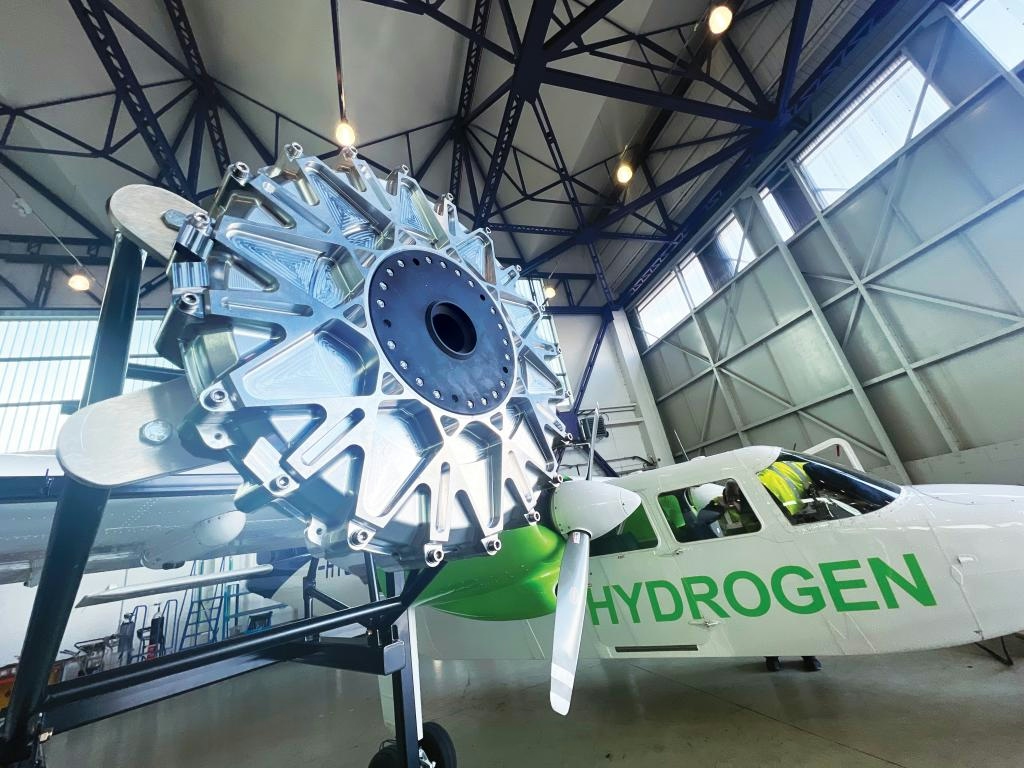
China Conducts First Flight Test of Megawatt Hydrogen Turboprop Engine

Oklahoma’s Aerospace Industry Expands and Its Impact on the State Economy

Archer Aviation Confronts Setbacks Amid Declining Air Taxi Interest

FAA and EASA Mandates to Influence Flight Line Testing Equipment Market Through 2035
Willis Lease Operates as a Leveraged Spread Business with Moderate Returns

Chinese Team Develops First Flight Control Software for Bamboo Drones

Government Moves Forward with Boeing Purchase, Considers Airbus Leasing

Changes in Airline Industry Leadership, Alliances, and AI
