
أيروجيني — مساعدك الذكي للطيران.

الرائج الآن
Categories
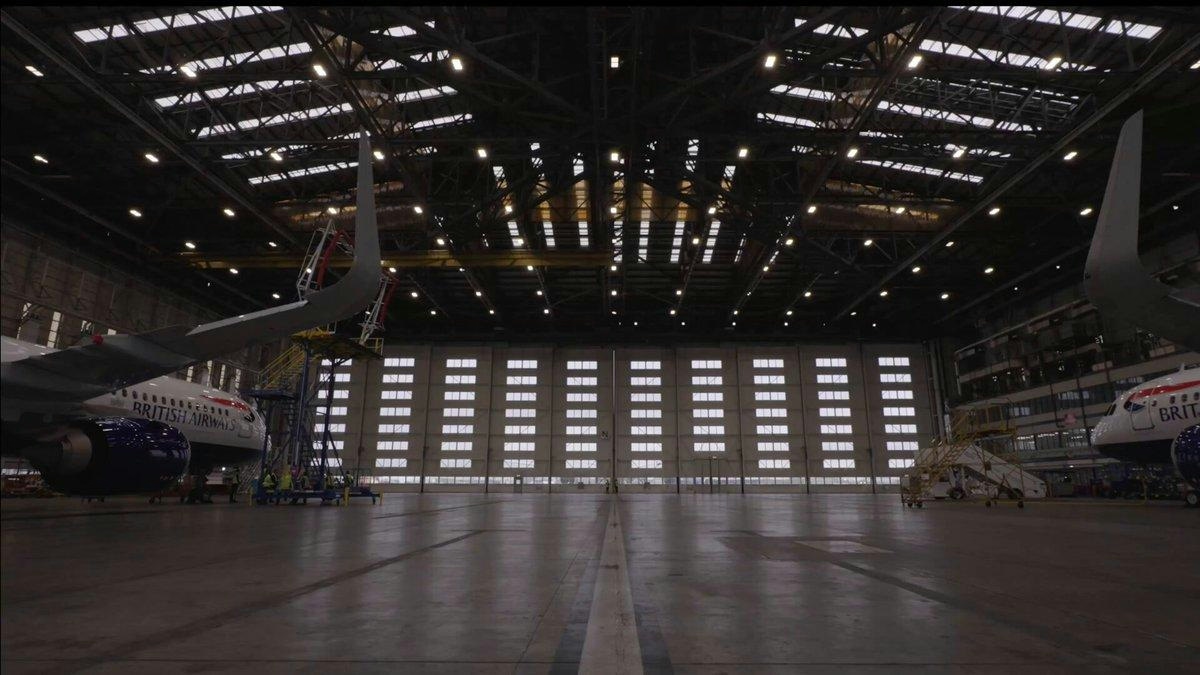
British Airways Introduces Starlink Wi-Fi on Boeing 787 and Select Routes
British Airways Introduces Starlink Wi-Fi on Boeing 787 and Select Routes
Deployment and Strategic Focus
British Airways (BA) has commenced the introduction of ultra-fast Starlink Wi-Fi across its fleet, beginning with its first Boeing 787-8 Dreamliner now in commercial operation. This aircraft, retrofitted at BA’s Heathrow engineering base between late February and mid-March, has already served routes to Mumbai, Montreal, and Cincinnati. The airline plans to equip its entire fleet with Starlink connectivity within three years, providing passengers with complimentary high-speed internet as competition in in-flight connectivity intensifies across Europe and North America.
The initial rollout targets the Boeing 787-8 fleet, which previously lacked onboard Wi-Fi capabilities. This focused approach facilitates streamlined installation and allows BA’s engineering teams to build expertise before undertaking more complex retrofits on aircraft already equipped with existing systems. Industry sources indicate that this phased strategy aims to minimize aircraft downtime and optimize efficiency during the broader implementation.
Following the completion of the 787-8 installations, British Airways intends to extend Starlink integration to other aircraft types, including select Boeing 787-9 Dreamliners and the Airbus A380. The program will eventually encompass both long-haul widebody aircraft and short-haul Airbus A320 family jets. This initiative forms part of a wider agreement within the International Airlines Group (IAG), which also includes Aer Lingus, Iberia, Vueling, and LEVEL. While British Airways will offer Starlink free of charge to its passengers, the group’s low-cost carriers are expected to treat the service as a paid add-on.
Market Challenges and Competitive Landscape
British Airways faces several operational and market challenges as it integrates Starlink Wi-Fi across its fleet and routes. Maintaining consistent service quality and managing potential price increases for users—issues highlighted in recent data—will be critical as the airline seeks to distinguish itself in a rapidly evolving market. Passenger satisfaction with the new service is likely to influence broader industry responses, with competitors potentially enhancing their own in-flight connectivity offerings or closely monitoring BA’s performance to gauge demand. Additionally, strategic partnerships or investments in similar satellite technologies may emerge as rival airlines strive to preserve their competitive positions.
The in-flight connectivity sector is becoming increasingly competitive. Air France has initiated Starlink installations on its short-haul fleet, while Lufthansa and SAS have also selected the service. In North America, United Airlines is deploying Starlink on regional and narrowbody aircraft, although its widebody rollout remains pending. Conversely, Ryanair has opted against Starlink, citing concerns over fuel efficiency and passenger demand—claims that have been contested within the industry.
Starlink’s technology, leveraging a constellation of low-earth orbit satellites, delivers high-speed, low-latency internet across most global regions and is rapidly supplanting legacy systems from providers such as Panasonic and Thales. Its primary competitor, Amazon-backed Leo, remains under development, with JetBlue as its sole committed airline partner and service activation anticipated in 2027.
As British Airways accelerates its Starlink rollout, the airline is positioning itself at the forefront of in-flight connectivity, setting new standards for passenger experience while navigating the operational and competitive complexities of this technological transition.

Plane lands on Pennsylvania highway due to ‘engine issues,’ FAA says
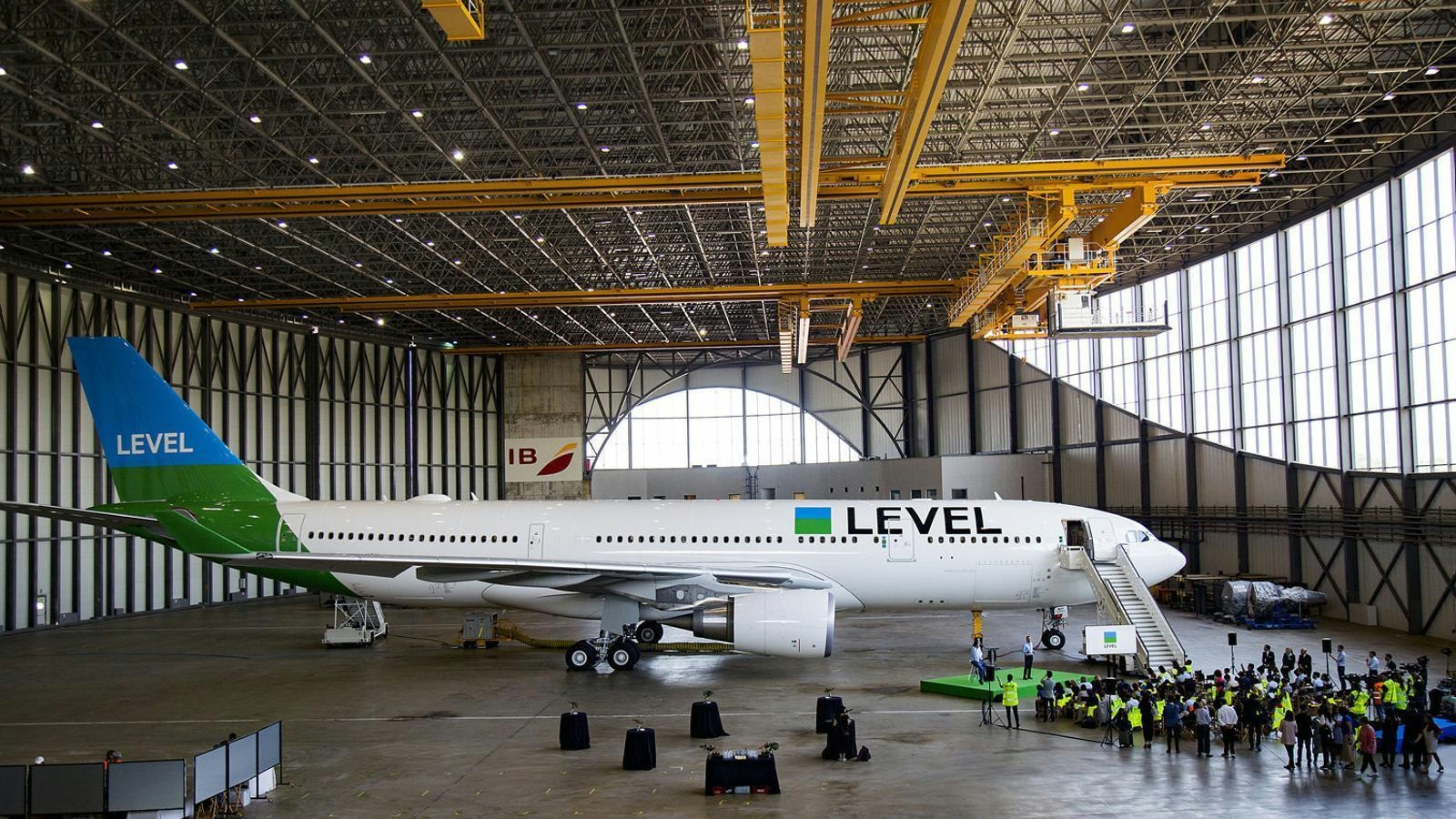
LEVEL Suspends San Francisco Flights Due to Engine Shortage

China Conducts First Flight Test of Megawatt Hydrogen Turboprop Engine

Oklahoma’s Aerospace Industry Expands and Its Impact on the State Economy

Archer Aviation Confronts Setbacks Amid Declining Air Taxi Interest

FAA and EASA Mandates to Influence Flight Line Testing Equipment Market Through 2035

Willis Lease Operates as a Leveraged Spread Business with Moderate Returns

Chinese Team Develops First Flight Control Software for Bamboo Drones
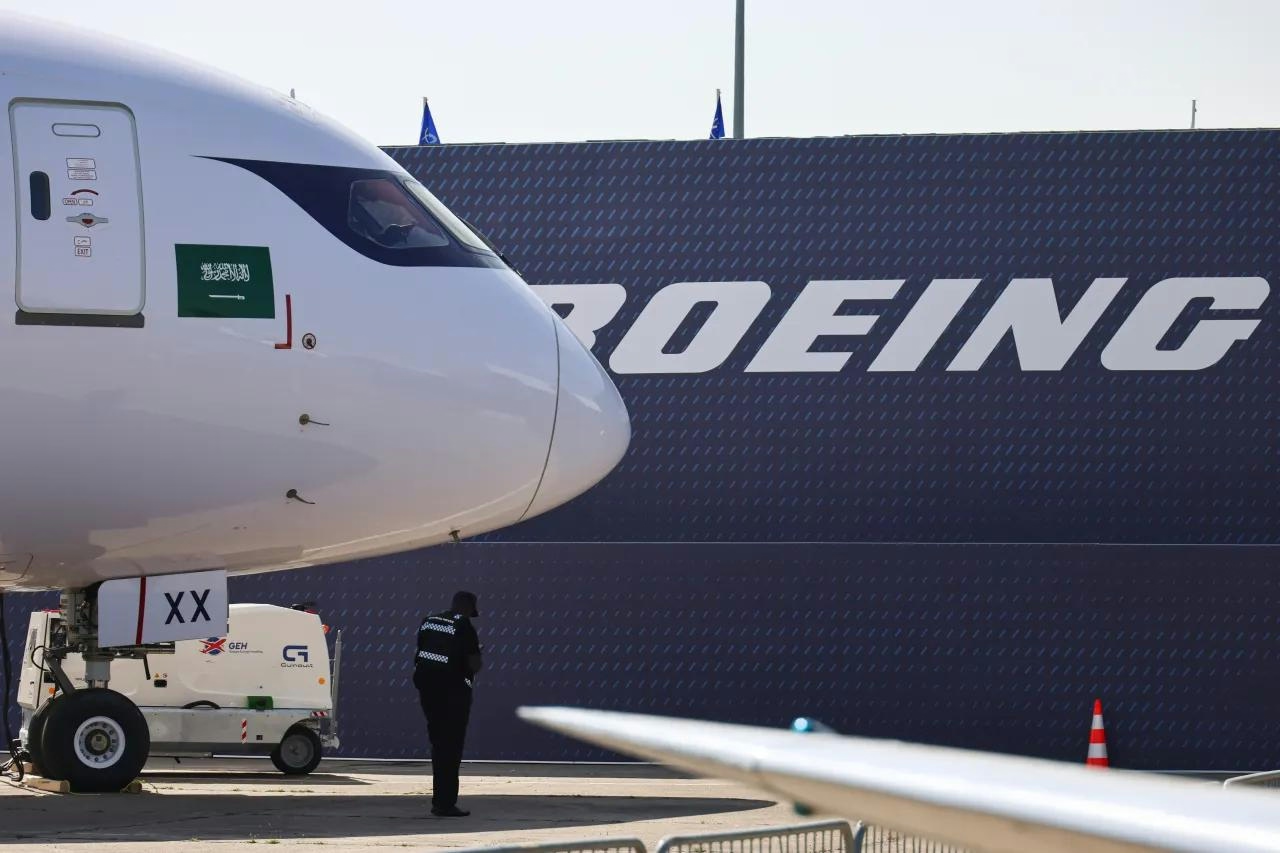
Government Moves Forward with Boeing Purchase, Considers Airbus Leasing

Changes in Airline Industry Leadership, Alliances, and AI
