
أيروجيني — مساعدك الذكي للطيران.

الرائج الآن
Categories
British Airways Implements New AI Technology
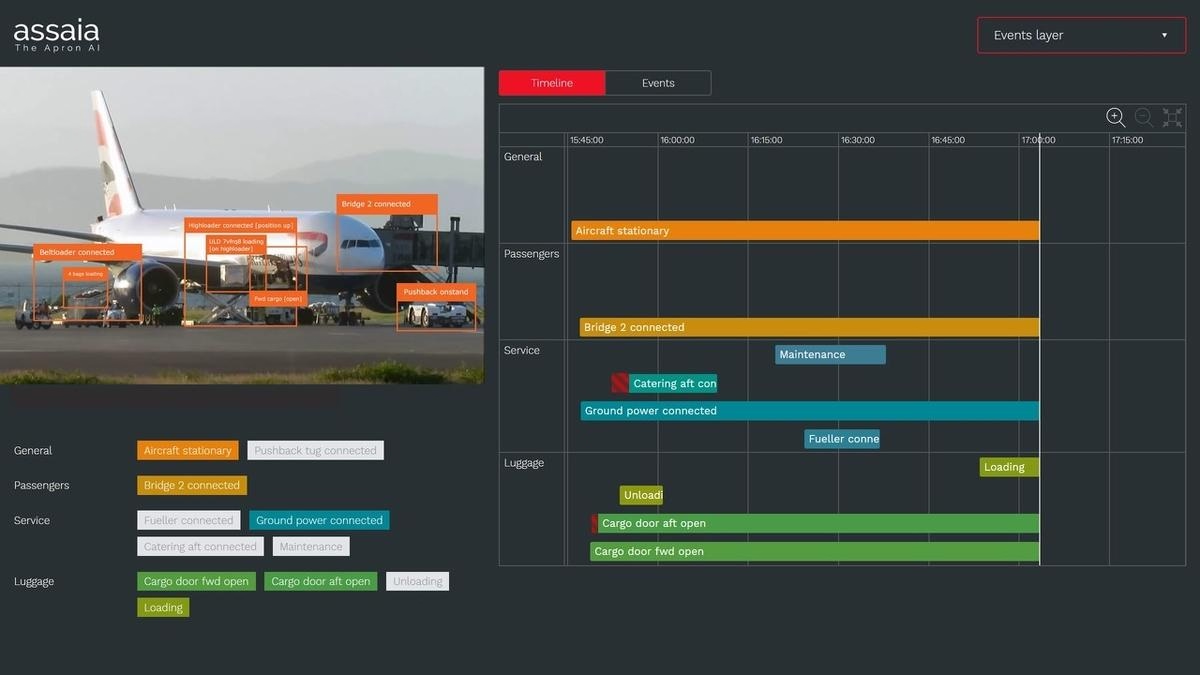
British Airways Implements New AI Technology to Enhance Flight Operations
British Airways has reported a marked improvement in flight punctuality and operational efficiency following the deployment of advanced artificial intelligence (AI) technology. During the first quarter of 2025, 86 percent of the airline’s flights departing from Heathrow Airport left on time, representing a significant turnaround after years of disruptions. This achievement is part of a broader £100 million investment aimed at strengthening operational resilience, which also included the recruitment of 600 additional staff members at Heathrow.
AI Integration and Operational Impact
The airline’s CEO, Sean Doyle, described the adoption of AI as a “game-changer” for British Airways’ performance. The new technology forms a core component of the airline’s efforts to modernize its IT infrastructure, which had previously been plagued by several high-profile outages in 2017, 2019, and 2022. The AI-driven decision support tools enable the airline to proactively manage disruptions by rerouting aircraft to avoid adverse weather conditions, making informed decisions on flight delays or cancellations, and minimizing passenger inconvenience by directing planes to more accessible gates.
Doyle emphasized the importance of investing in controllable factors, stating, “The tech colleagues now have at their fingertips has been a real game-changer for performance.” Despite these advances, the integration of sophisticated AI systems with existing legacy infrastructure presents ongoing challenges. British Airways must carefully manage this transition to ensure seamless operations, while also addressing data privacy and security concerns. Additionally, comprehensive staff training is essential to enable effective collaboration between employees and AI-driven processes.
Industry Implications and Future Outlook
Industry experts view British Airways’ AI adoption as indicative of a wider shift within the aviation sector. Jake Harvey, automation and analytics lead at Advania UK, highlighted AI’s growing role as a critical determinant of organizational success. He warned that companies failing to incorporate AI risk becoming irrelevant in an increasingly competitive environment. Harvey noted that while AI and machine learning hold the potential to revolutionize customer experiences and streamline workflows, their benefits depend heavily on strategic and targeted implementation.
The market has responded positively to British Airways’ operational improvements, with expectations of increased customer satisfaction and potential reductions in operational costs. This progress is likely to prompt competitors to accelerate their own AI initiatives, potentially catalyzing a broader transformation across the industry. Harvey advised that businesses adopt a “fail fast” approach to AI deployment, learning quickly from small-scale experiments rather than waiting for comprehensive solutions. He stressed that success often arises from precise, focused applications of AI aligned with specific business objectives rather than sweeping, generalized implementations.
As British Airways continues to refine its AI capabilities, its experience may serve as a valuable model for other airlines seeking to leverage technology to enhance reliability and customer service.
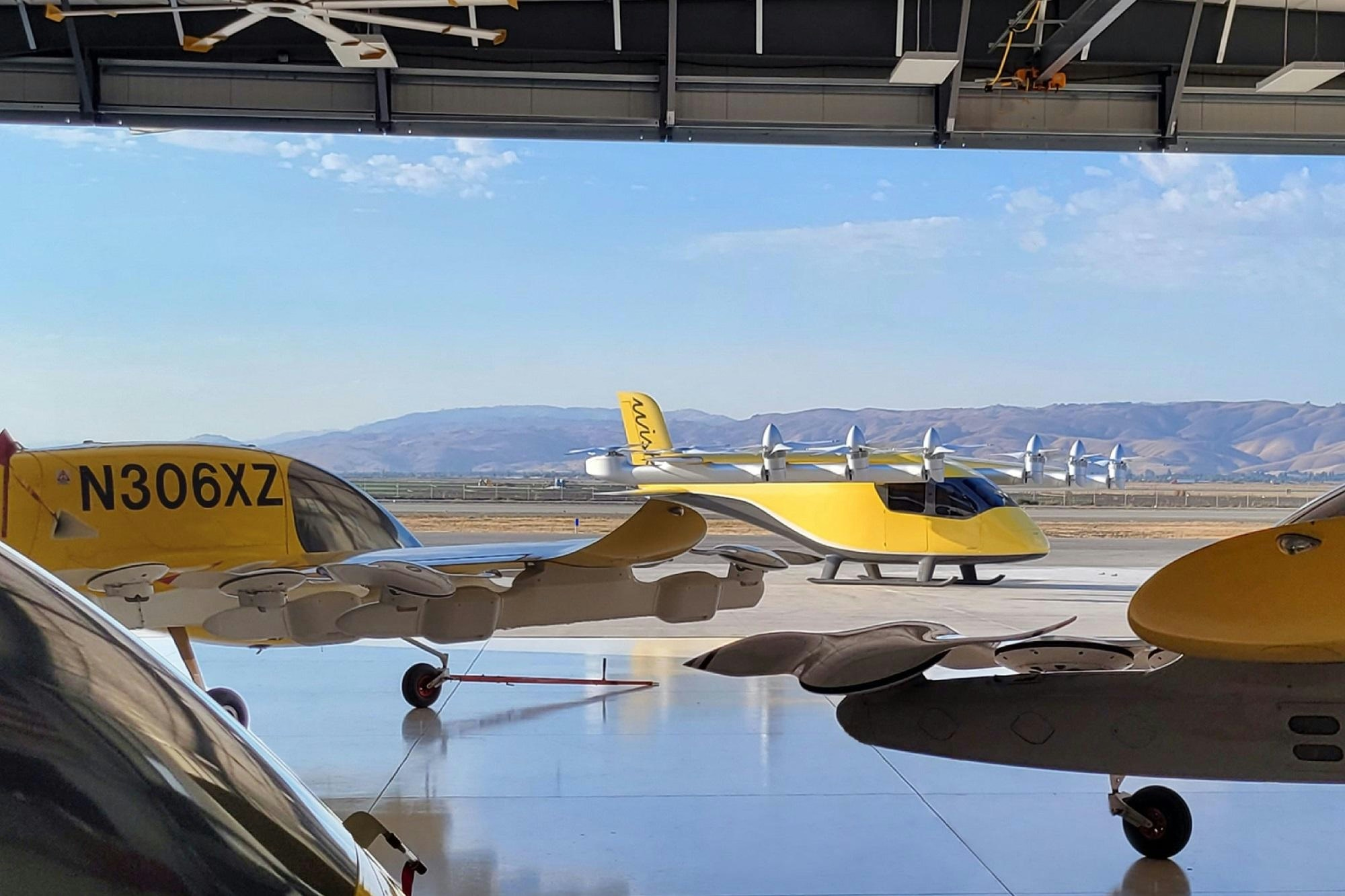
Archer Aviation Confronts Setbacks Amid Declining Air Taxi Interest
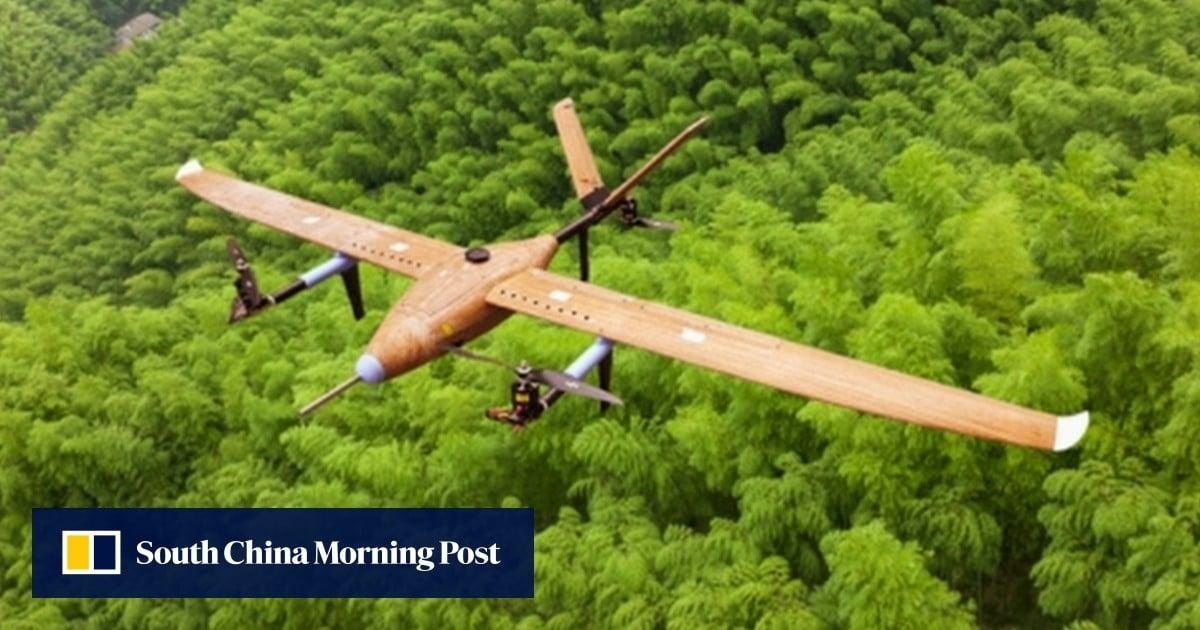
Chinese Team Develops First Flight Control Software for Bamboo Drones
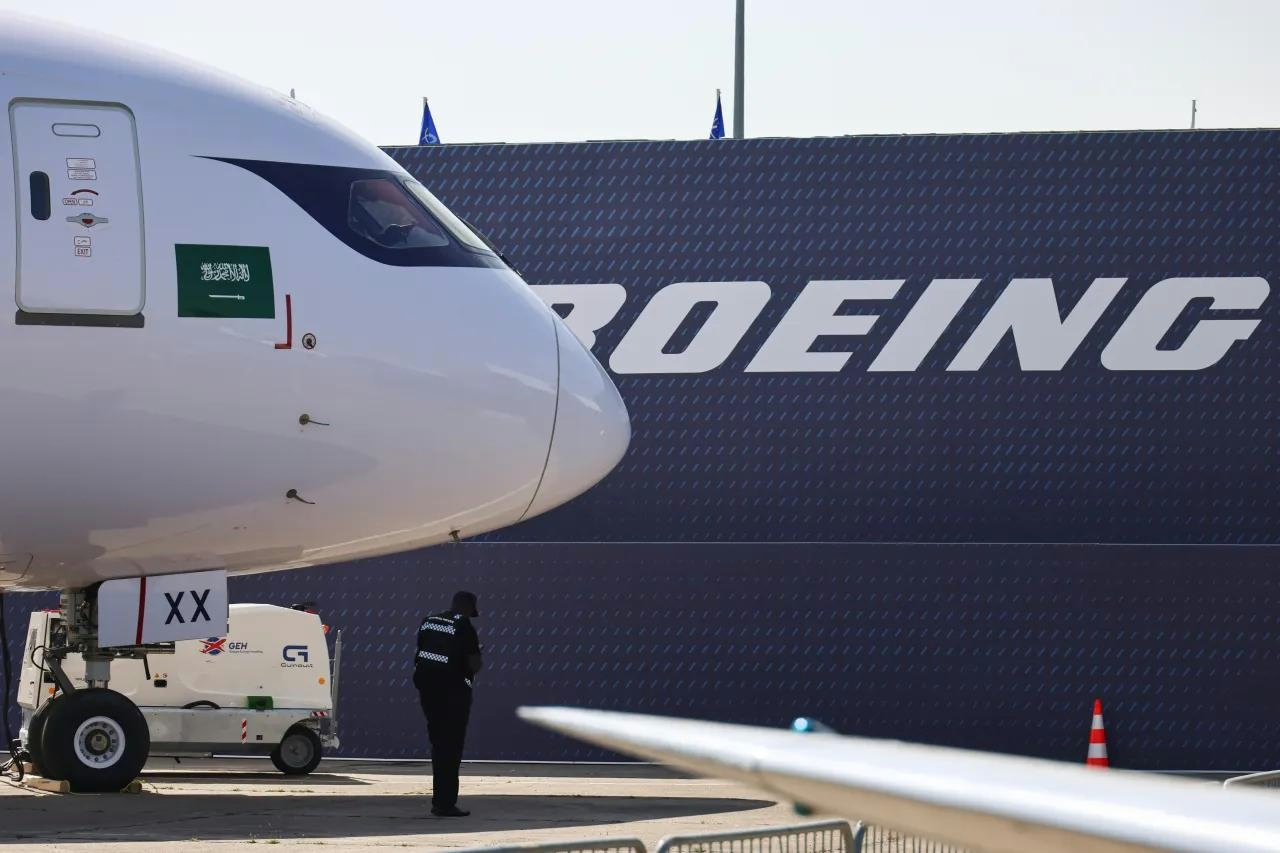
Government Moves Forward with Boeing Purchase, Considers Airbus Leasing
SkyHope Appoints Aviation Industry Leader to Board
The Challenges of Certifying Autonomous Aircraft
KLM to Receive First Airbus A350, Announces Initial Routes
Saxon Air Receives Clean and Green Energy Innovation Award
How BEB Tax Policies Impact Airlines’ International Leasing Contracts

Indonesia’s Danantara and Mandiri Partner with SMBC to Launch $800 Million Aviation Leasing Fund
South Korea’s SUM Air Places Order for New ATR Aircraft
